What is a ‘Social Story’?
A ‘Social Story’ is a step by step guide to assist visitors to become familiar and comfortable with ACCA before they visit. This social story provides information about how to access ACCA’s building, what to expect when you arrive at ACCA and what you may experience at ACCA.
I’m going to ACCA

You’re going to visit the Australian Centre for Contemporary Art! This gallery is called ACCA for short. ACCA is a contemporary art gallery housed in a large rusty steel building in Southbank, Melbourne. At ACCA, you will see an exhibition made up of lots of different contemporary artworks. The word ‘contemporary’ means new, or current. At ACCA, we only display artworks made by living artists. Everything you will see has been made recently, and some artworks have been made this year!
You may travel to ACCA by foot, by car, on a bus, a tram, or a train. There is only one entrance to ACCA.
There are large silver letters that spell ‘ACCA’ to the left of ACCA’s entrance. This is what the letters look like:

The entrance to ACCA has two sets of glass sliding doors that will open when you stand in front of them. You will walk through both sets of glass sliding doors:

Once you move through these doors, you will be in ACCA’s foyer.

You will see ACCA’s front desk on your left.

ACCA’s friendly staff and volunteers at the front desk will say hello to you and will help you cloak your belongings (e.g. bag and jacket) if needed. There may be other visitors putting their bags and jackets away, and if needed you will wait patiently until it is your turn. Your bag and jacket will be kept safely in ACCA’s cloaking cupboards until you are ready to leave the gallery.
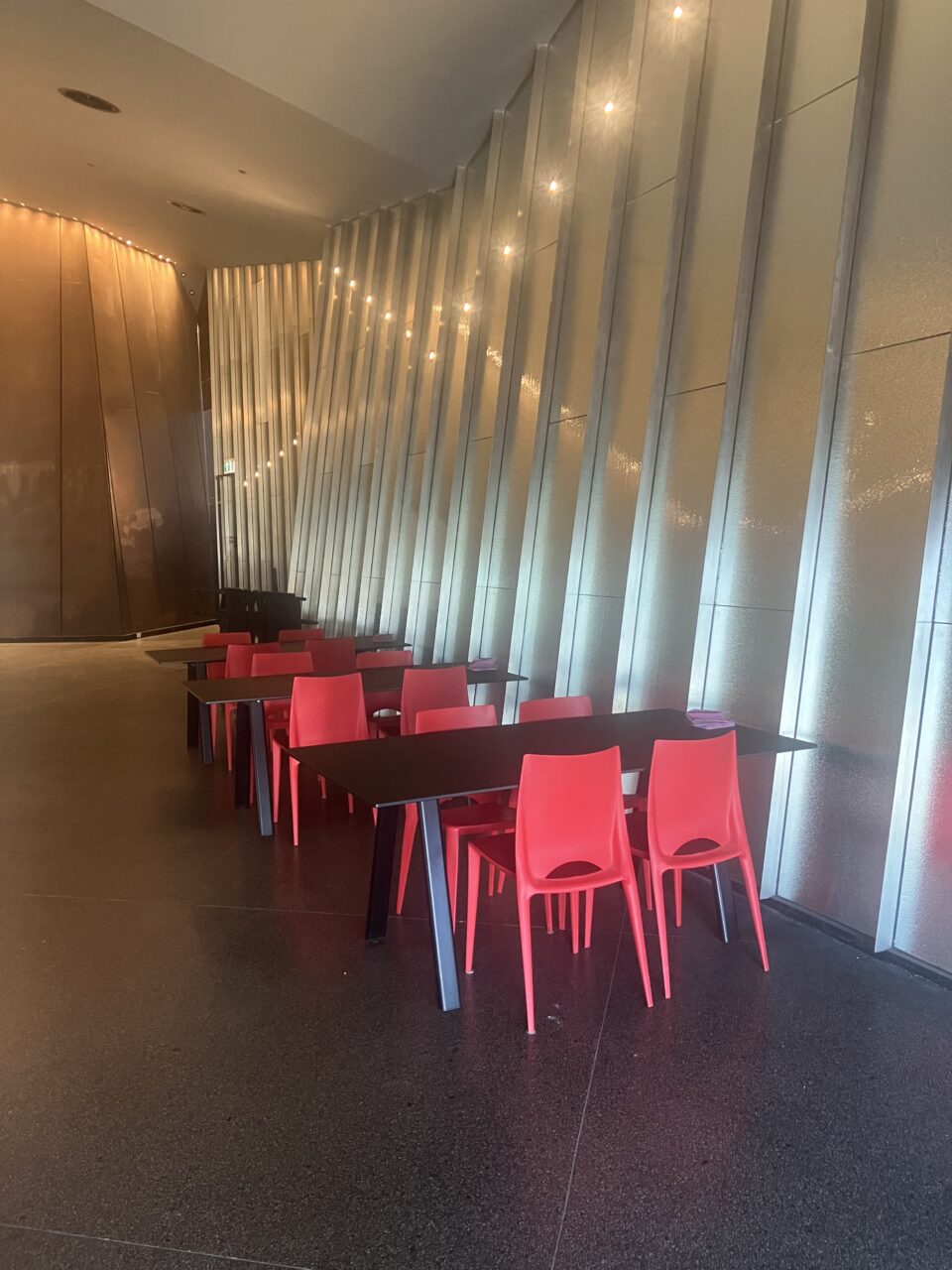
If you need to take a seat, we have three black tables with red chairs in the foyer where you are welcome to sit.
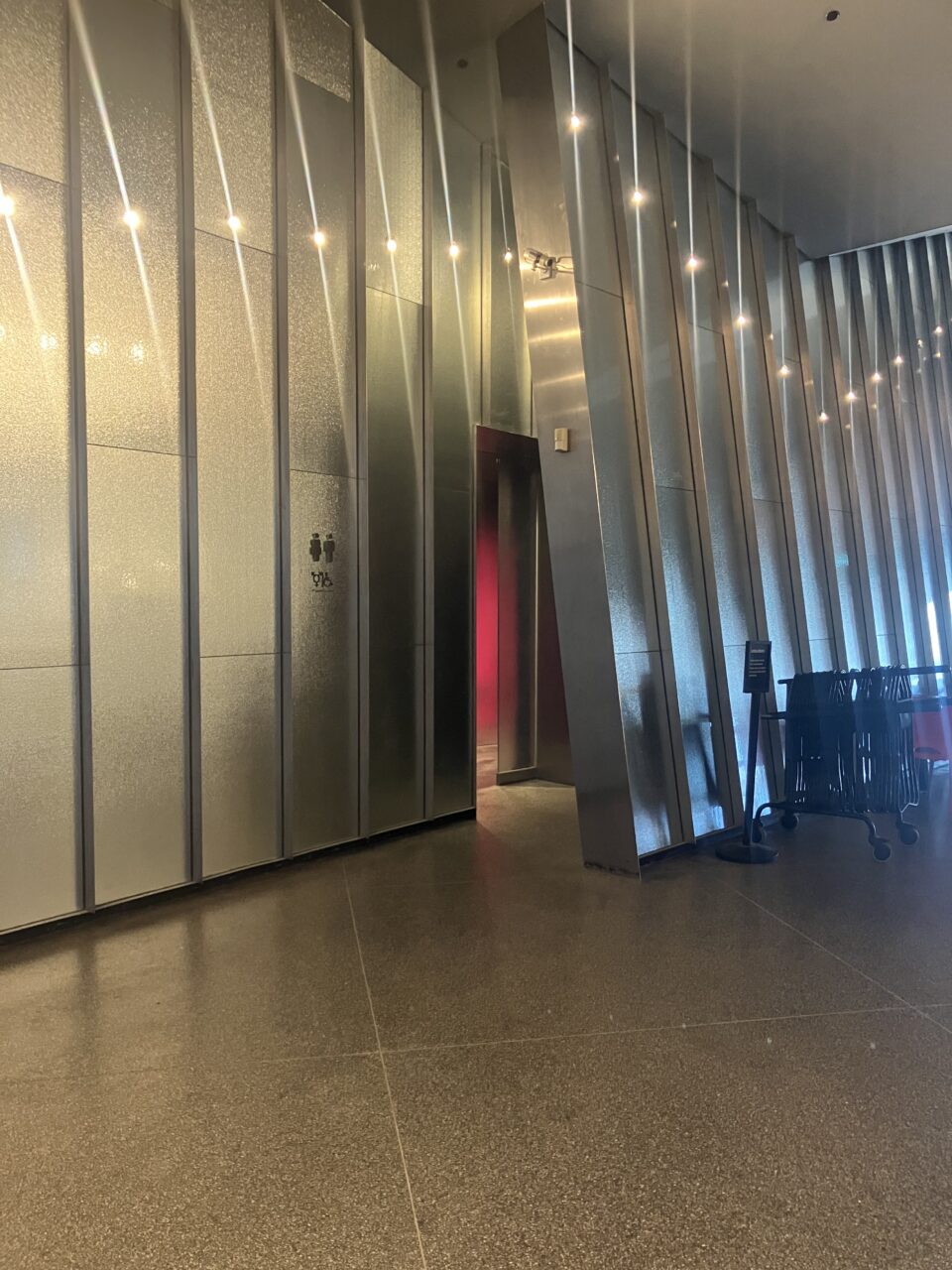
ACCA’s foyer is large. It has a high ceiling, lights in long rows and lots of shiny silver surfaces.

You may see lots of different people or school groups in the foyer. You may hear people talking or, depending on the exhibition, you may hear different sounds coming from the gallery spaces. The foyer can be very busy and very noisy at times. You can always go outside (e.g. to the courtyard or forecourt) if you need some quiet time.
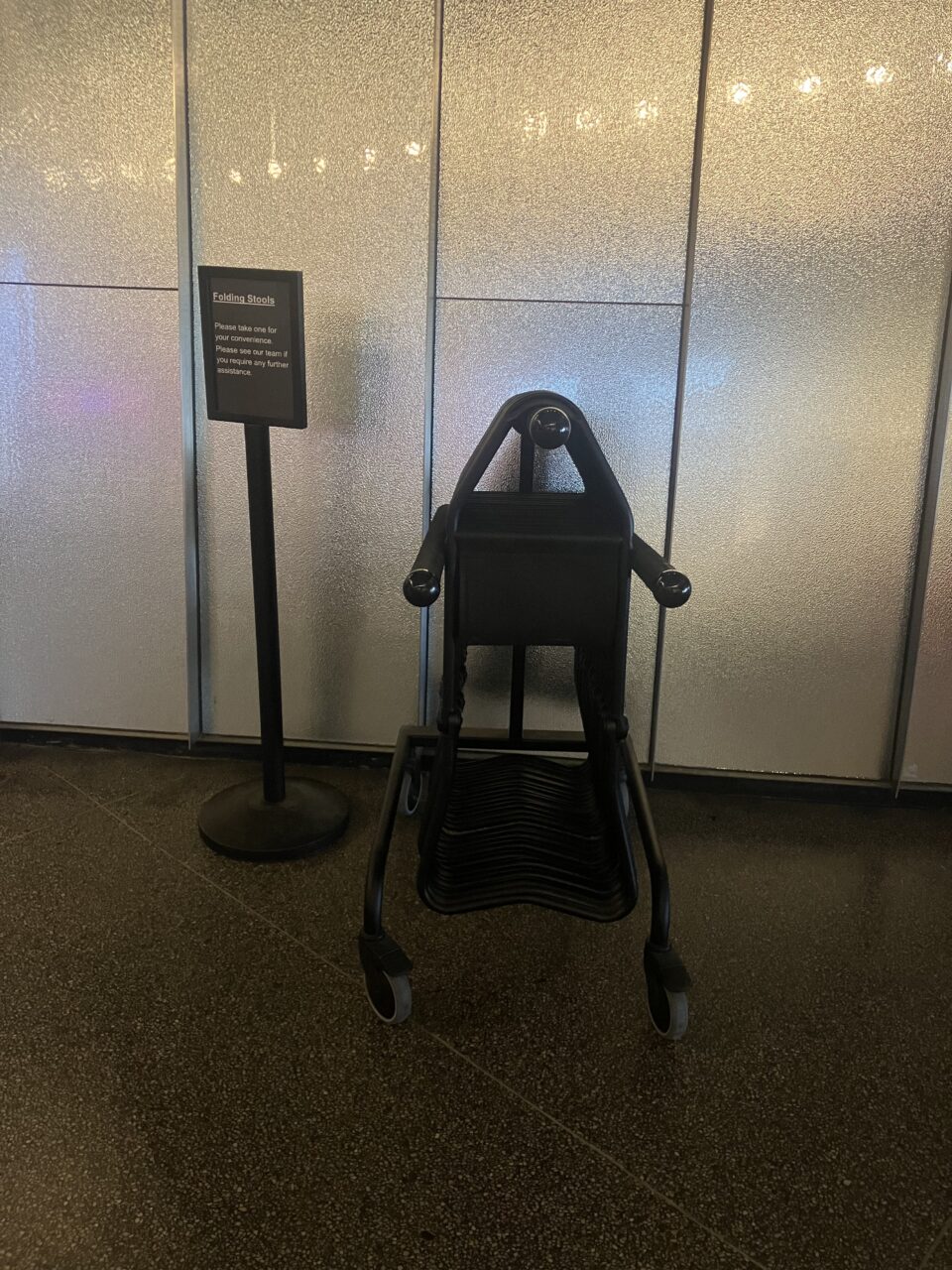
We have folding stools available which you can use in the gallery. Some of the spaces may have seating (e.g. for longer video works), but there may be rooms with no seats. You can ask a staff member if you need assistance with the stools.

The bathrooms are located to the far right of the foyer. For some exhibitions, the artworks are immersive, and you may be able to hear them in the foyer and even the bathroom spaces.

There is an accessible toilet on the right-hand side of the entrance to the bathrooms. The accessible toilet door is bright orange and is clearly marked.

For each exhibition, we have a ‘title wall’. This is the big wall at the entrance to the galleries, which includes the title of the exhibition, the dates and a statement from the curator. The location of the title wall may change from exhibition to exhibition, but it helps you know where to start exploring an exhibition!
Please note, there is no food or drink permitted in the gallery. You are welcome to eat and drink in the foyer.
Please don’t touch the artworks. Artworks can be very fragile and we need to keep them safe.
Speak in a quiet voice. Remembering to use a quiet voice means you won’t distract other visitors.
Walk in the galleries. When you walk slowly through the galleries you can look at all of the artworks on show.
Now you are ready to see the art!
When you go into the galleries you will see lots of different types of art. You will see objects, light and hear loud and different sounds! Here are examples of some artworks that you may see.

Tina Stefanou, You Can’t See Speed, installation view, Australian Centre for Contemporary Art, Melbourne, 2025. Courtesy the artists. Photograph: Andrew Curtis
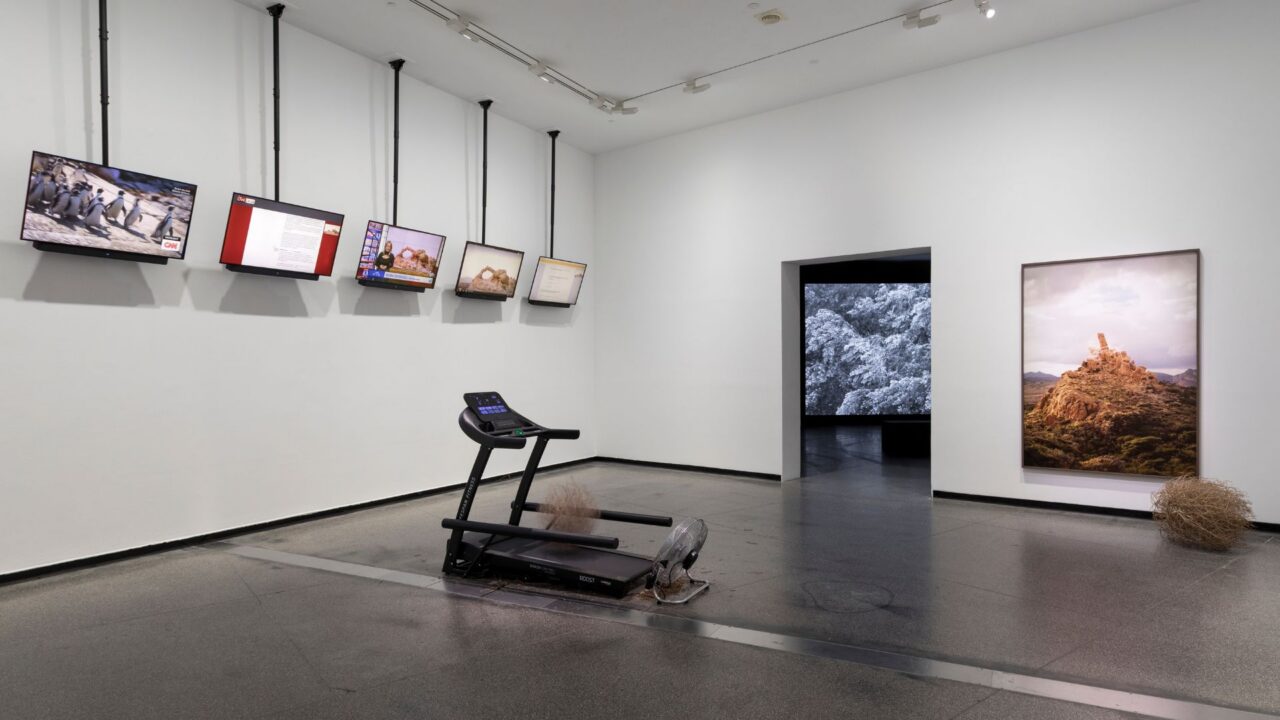
Inside the galleries, you will find ACCA’s Visitor Experience Team (VXT). You can identify the Visitor Experience Team by their black ACCA name tags/lanyards. The VXT’s job is to make sure that the artworks in the exhibition remain safe and to talk to visitors about the works on display. Sometimes the VXT may stand close to you when you are looking at the exhibition. The VXT can also help you move around the artworks in the exhibition carefully.
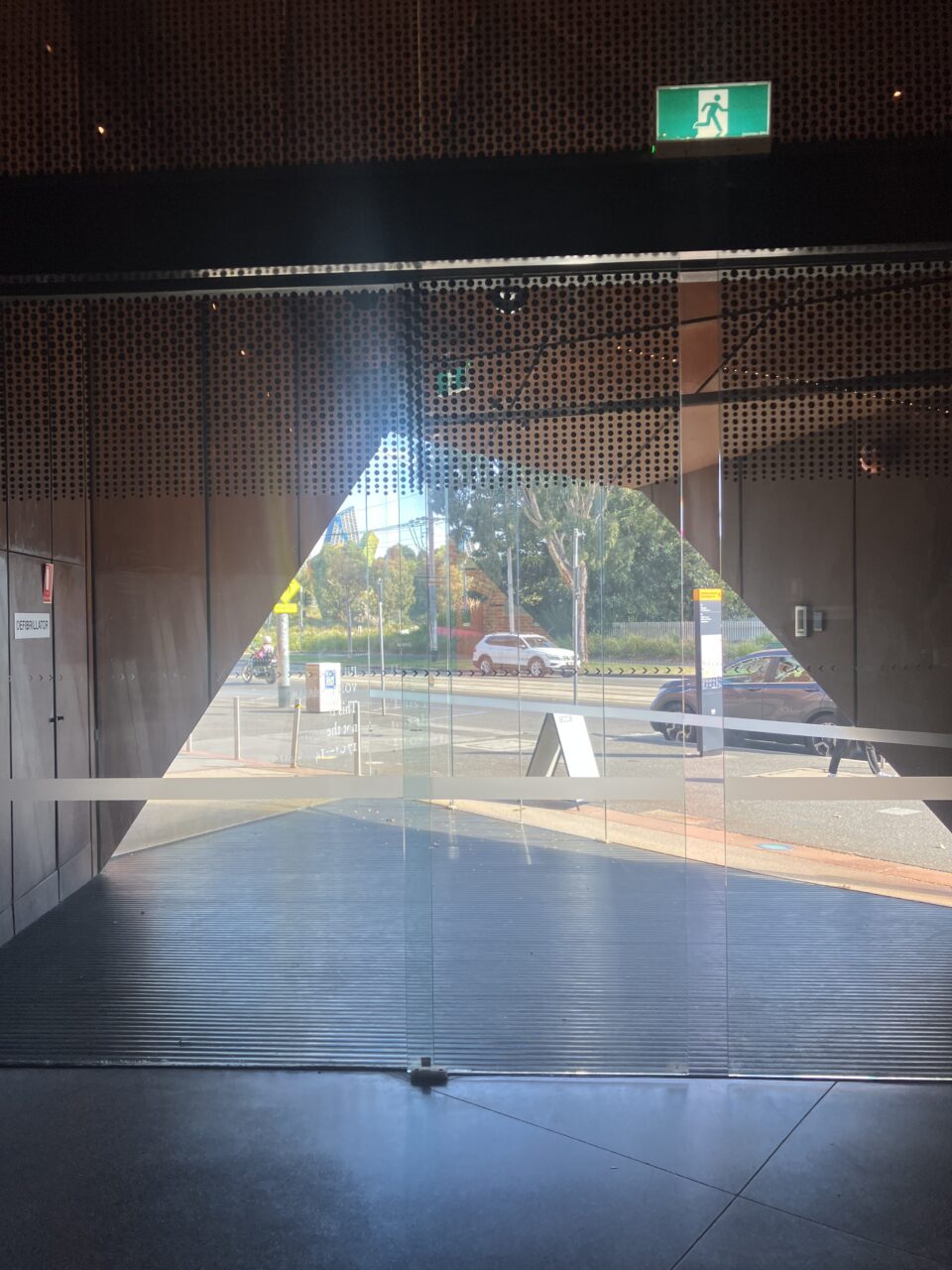
When you are finished in the gallery, you can collect your cloaked belongings from the front desk and exit ACCA through the glass sliding doors.
We hope that you enjoy your time at ACCA! Remember, you can visit ACCA any time you like, our exhibitions are always free.
If you have feedback or questions for ACCA about this Social Story please contact us at programs@acca.melbourne or on +61 3 9697 9999