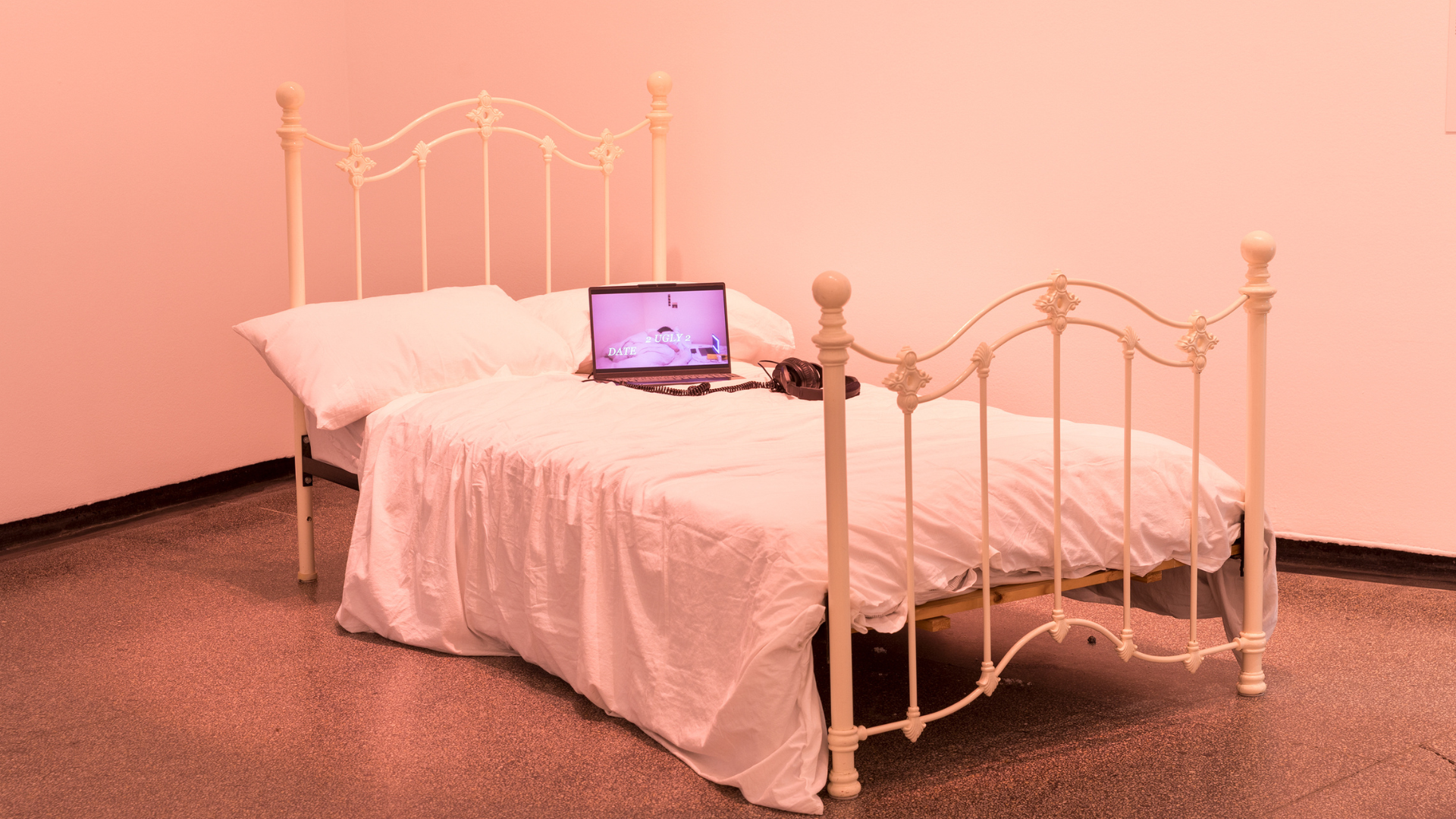
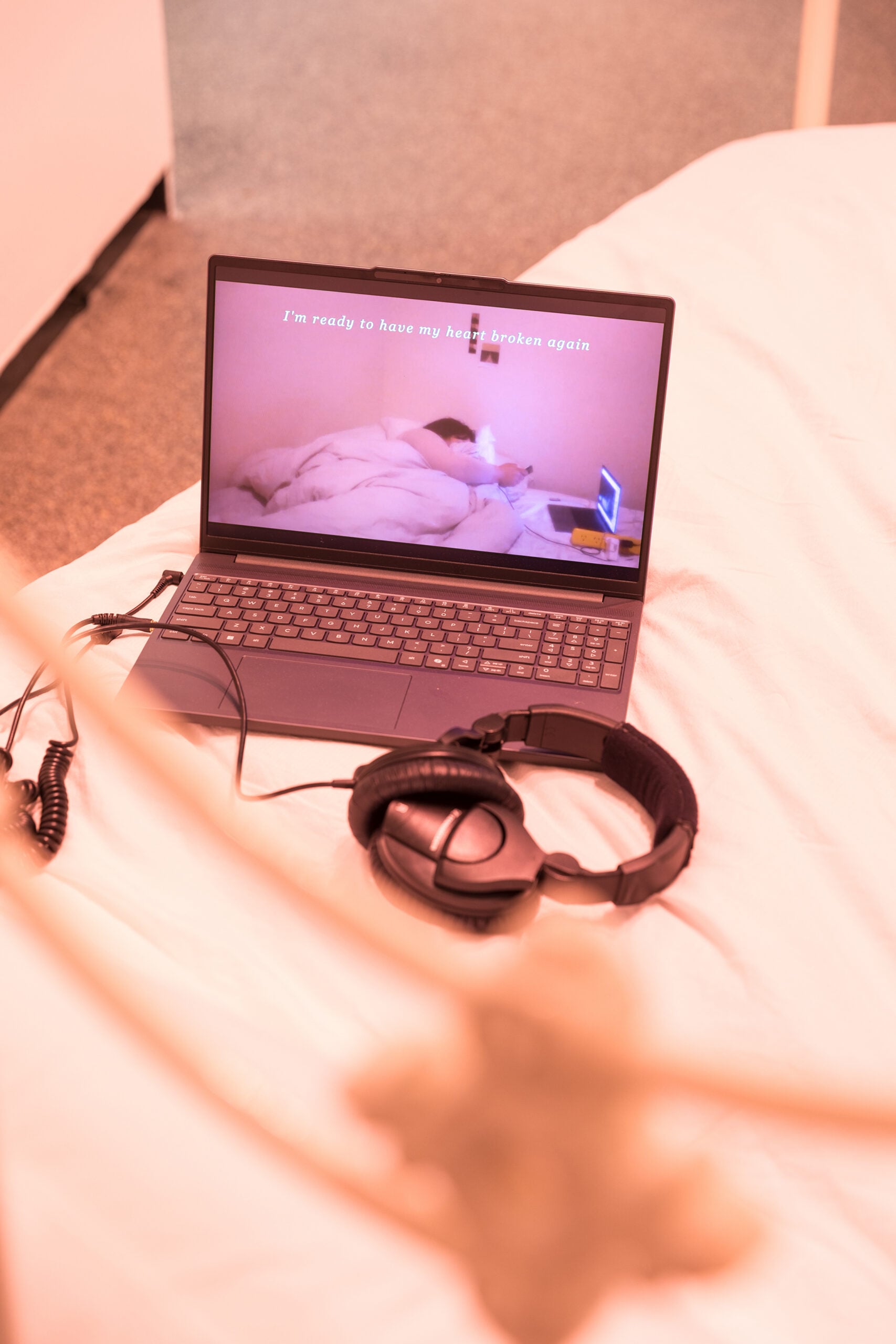
Are you lonely tonight? I’m so lonesome I could cry | Exhibition Kit

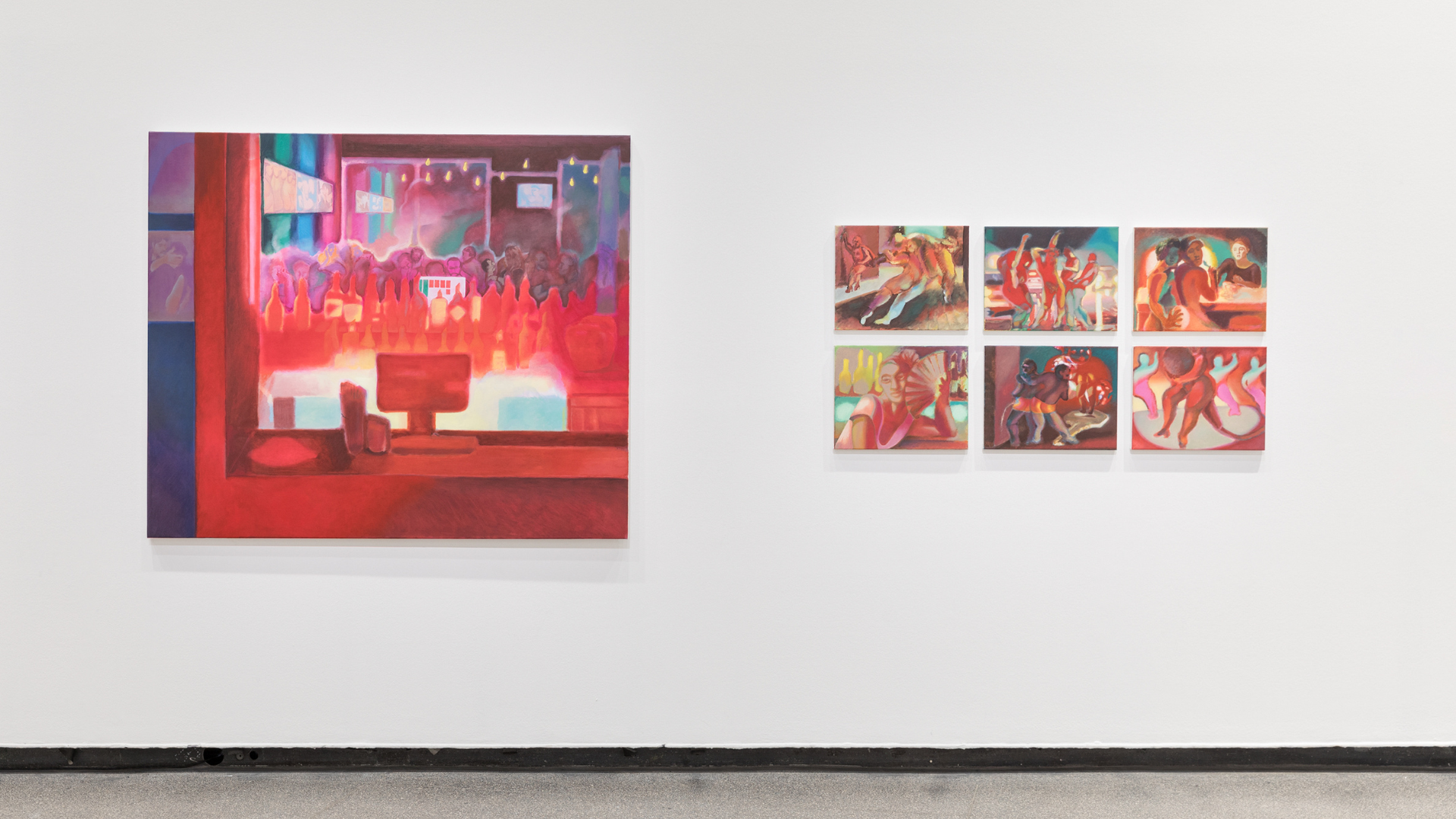
Are you lonely tonight? I’m so lonesome I could cry. is the first instalment in ACCA’s new Art and Emotion series. Beginning with loneliness, and followed by rage, joy and other emotional states in the years to come, the series explores the strange, contradictory and deeply subjective nature of human emotion through contemporary art.

Bringing together the work of eleven artists spanning multiple geographies, generations and material practices, Are you lonely tonight? I’m so lonesome I could cry. considers loneliness as both an intrinsic part of the human experience and a profoundly personal condition. Through sculpture, installation, photography, film and tapestry, the exhibition approaches loneliness not as a problem to be solved, but as a complex state of being: one that can be painful or productive, isolating or connective, fleeting or enduring.

Artists: Gideon Appah, Polly Borland, Seth Brown, Lucy Liu, Natasha Matila-Smith, Kayla Mattes, Callum McGrath, Nick Mullaly, Melissa Nguyen, Patrick Pound, Kelly Yu

Curated by: Sophie Prince & Myles Russell-Cook

Download the Exhibition Wall Labels
Download the Exhibition Catalogue 

How to use this kit

This exhibition kit has been developed by ACCA Education to support learning in conjunction with the ACCA exhibition, Are you lonely tonight? I’m so lonesome I could cry. Three key artworks from the exhibition have been highlighted, with discussion questions included to prompt students’ thinking. Primary and secondary activities, mapped to the Victorian and Australian Curriculum, can be found in the For Teachers section. Upon request, VCE students and teachers can view Support Material for further reading and teaching notes drawn from ACCA’s VCE Programs.

About the Artists

PATRICK POUND
Born 1962, Tāmaki Makaurau/Auckland, Aotearoa/New Zealand
Lives and works in Naarm/Melbourne

Patrick Pound is an Australian artist who challenges notions of singular authorship by creating works using found photographs and objects from his personal archives, which have been amassed through years of obsessive searching and sorting. Pound has amassed 70,000 vernacular* photographs and numerous objects. His collections are categorized according to specific characteristics, each containing their own highly subjective logic. 

His 2017 survey exhibition Patrick Pound: The Great Exhibition was held at the National Gallery of Victoria. In 2019 Pound was shortlisted to represent Australia at the Venice Biennale. Pound has worked with many Public Gallery and Museum collections, alongside his ever-growing photo collection-based artworks. He has held over 50 solo exhibitions and been in over 80 curated exhibitions in New Zealand, Australia, France, Germany, England, Korea, Italy, Hong Kong, Indonesia, Malaysia, the UK and USA, and his work is held in many public galleries.

*vernacular – the, informal, spoken form of a language or dialect (Wikipedia)

MELISSA NGUYEN
Born 2000, Tandanya/Adelaide
Lives and works in Naarm/Melbourne

Melissa Nguyen is a Vietnamese Australian artist living and working in Melbourne/Naarm. Her painting-based practice explores the multiplicities of translation as a creative methodology. Through examination of cultural dissonance** and positionality*** as part of the Vietnamese diaspora, Melissa dissects the complex relationship between copy and original. Melissa’s practice takes ‘self-Orientalism’ as a conceptual framework through which she questions the relevance of cultural identity in art.

Melissa completed her Bachelor of Fine Arts (Honours) in 2022 at the Victorian College of the Arts and has since exhibited both nationally and internationally; spaces including Mary Cherry Contemporary, West Space, Bus Projects, TCB Art Inc., Conners Conners, and ISA Art Gallery. She was the winner of the Churchie emerging art prize 2025, and also a finalist at the Castlemaine Experimental Print Prize in 2021 and 2025.

**cultural dissonance – can mean a person or community that lives between two cultures (diaspora communities) and feels pulled in different directions by each one’s expectations, values, or traditions 

***positionality – the social and political context that creates your identity in terms of race, class, gender, sexuality, and ability status. Positionality also describes how your identity influences, and potentially biases, your understanding of and outlook on the world

KAYLA MATTES
Born 1989, Los Angeles County
USA Lives and works in Los Angeles, USA

Kayla Mattes is a visual artist living and working in Los Angeles who archives the ephemerality**** of digital culture through the interconnected threads of tapestry weaving. Her handwoven tapestries embrace the narrative and technological history embedded in the act of materialising thread into the woven grid. Driven by meme-culture, current events, and the chaos of our digital lives, her work weaves together narratives that simultaneously act as jokes and social commentary.

Mattes received her BFA from Rhode Island School of Design in 2011 and her MFA from University of California Santa Barbara in 2019. She has exhibited her work nationally and internationally including solo exhibitions at Charlie James Gallery, (Los Angeles), Eli & Edythe Broad Museum (Michigan), Asia Art Center (Taipei), Richard Heller Gallery (Los Angeles), and California Center for the Arts Museum (Escondido, CA). She teaches weaving in the Fibers department at California State University, Long Beach.

****ephemeral – lasting a very short time (Merriam-Webster)

Key Artworks

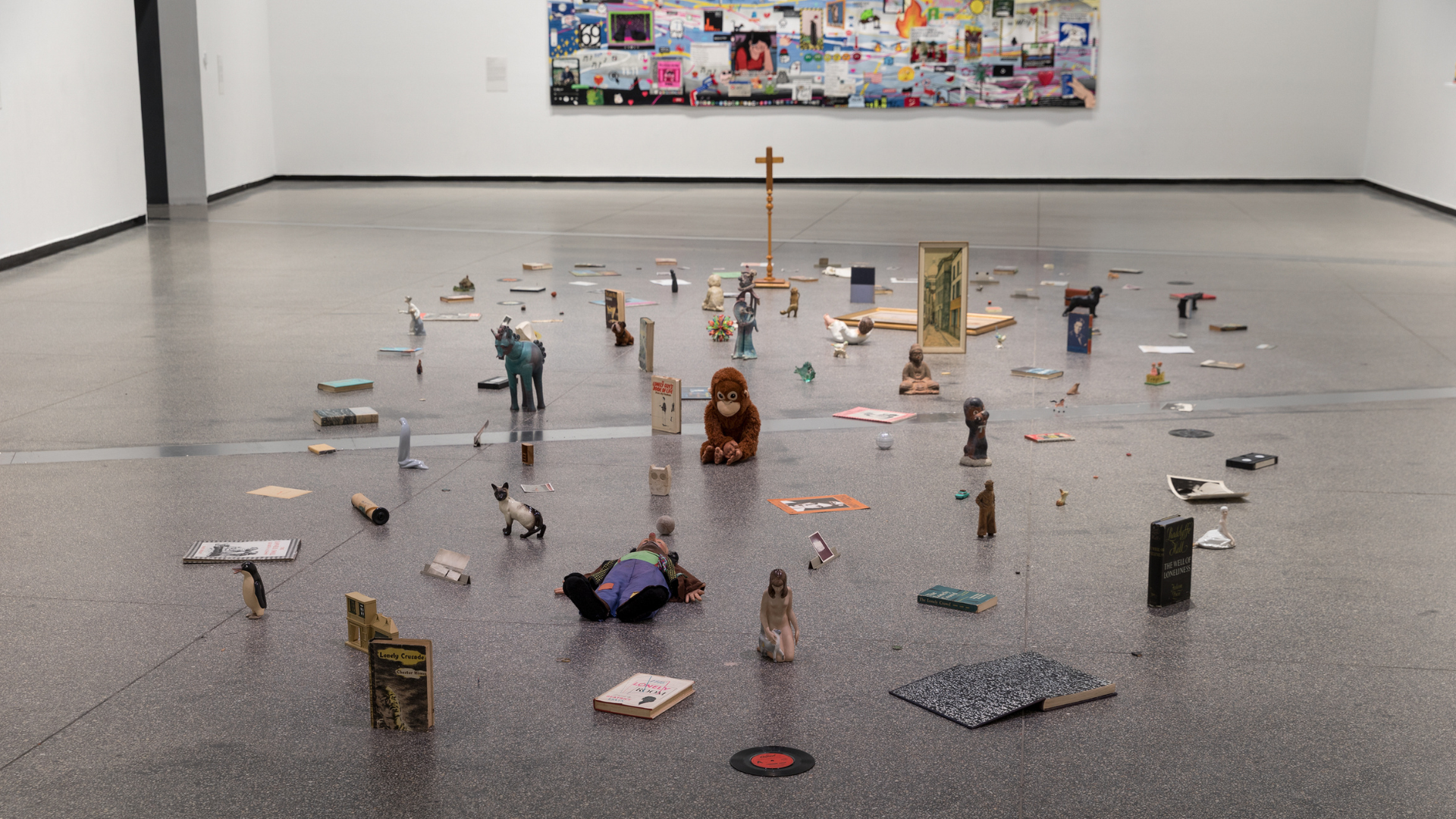
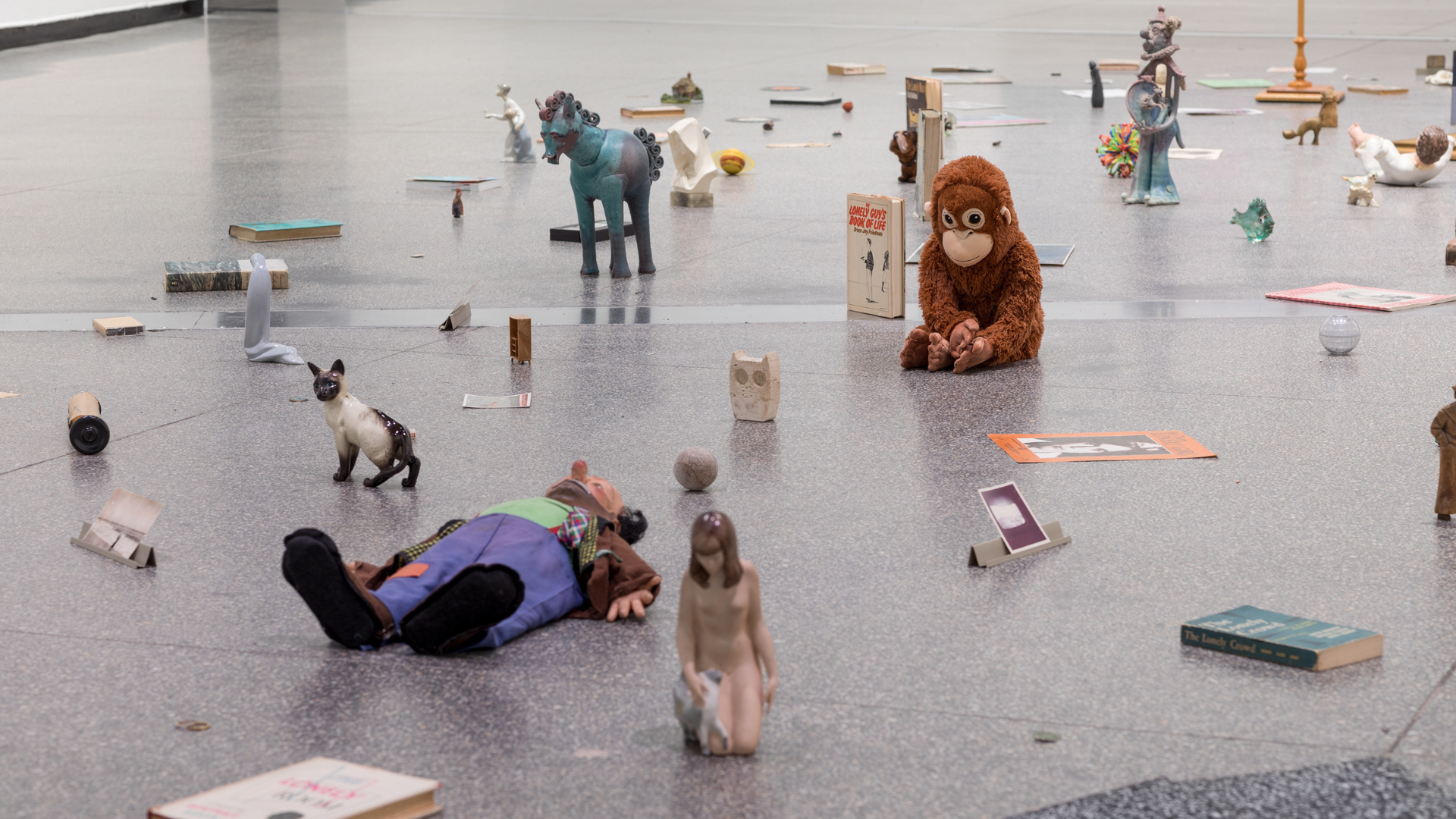
Patrick Pound, The museum of loneliness 2026 (detail), installation view. Commissioned by Australian Centre for Contemporary Art, Naarm/Melbourne. Courtesy the artist, STATION, Naarm/Melbourne, and Darren Knight Gallery, Gadigal/Sydney. Photograph: Andrew Curtis.

Patrick Pound The museum of loneliness 2026

mixed medium: found objects, photographs and ephemera, site specific installation
Created on Wurundjeri Woi Wurrung Country, Boonwurrung Country and Bunurong Country
Courtesy the artist and STATION, Naarm/Melbourne, and Darren Knight Gallery, Gadigal/Sydney
Commissioned by the Australian Centre for Contemporary Art, Naarm/Melbourne, 2026

PATRICK POUND
Born 1962, Aotearoa/New Zealand
Lives and works in Naarm/Melbourne

Key ideas/concepts: Found object, collection, archive, memory, site-specific installation, ready made

Patrick Pound is a compulsive collector. His work is built from an ever-growing archive of objects and photographs — things other people have left behind. He gathers and arranges these into careful, evocative displays, showing how time, distance, and memory shape our lives.

His practice tends to focus on gathering and stillness. Pound asks questions like, When a ‘thing’ is removed from its original context, what meanings stay with it? and What do our collections of ‘stuff’ say about us? The work suggests loneliness is not a single experience or feeling. Rather, it might be something more fragmented, numerous or contradictory, and yet eerily familiar.

The museum of loneliness (2026) is a site-specific piece that looks at how loneliness lives inside objects. For Pound, loneliness isn’t about dramatic emptiness — it’s found in the quiet presence of everyday things: ordinary, easy to overlook, yet essential to how we make sense of our inner and outer worlds. As Pound puts it, “The museum of loneliness is full of the tragicomic bric-a-brac of life and loneliness.” The exhibition brings together items like ceramics and sheet music, capturing the quiet sadness of things left behind.

Discussion Questions

  • What does it mean when an artwork is site-specific?
  • Do any of the objects hold memories or references to your own life?
  • If you were to add an object to ‘The museum of loneliness’, what object would it be and why?
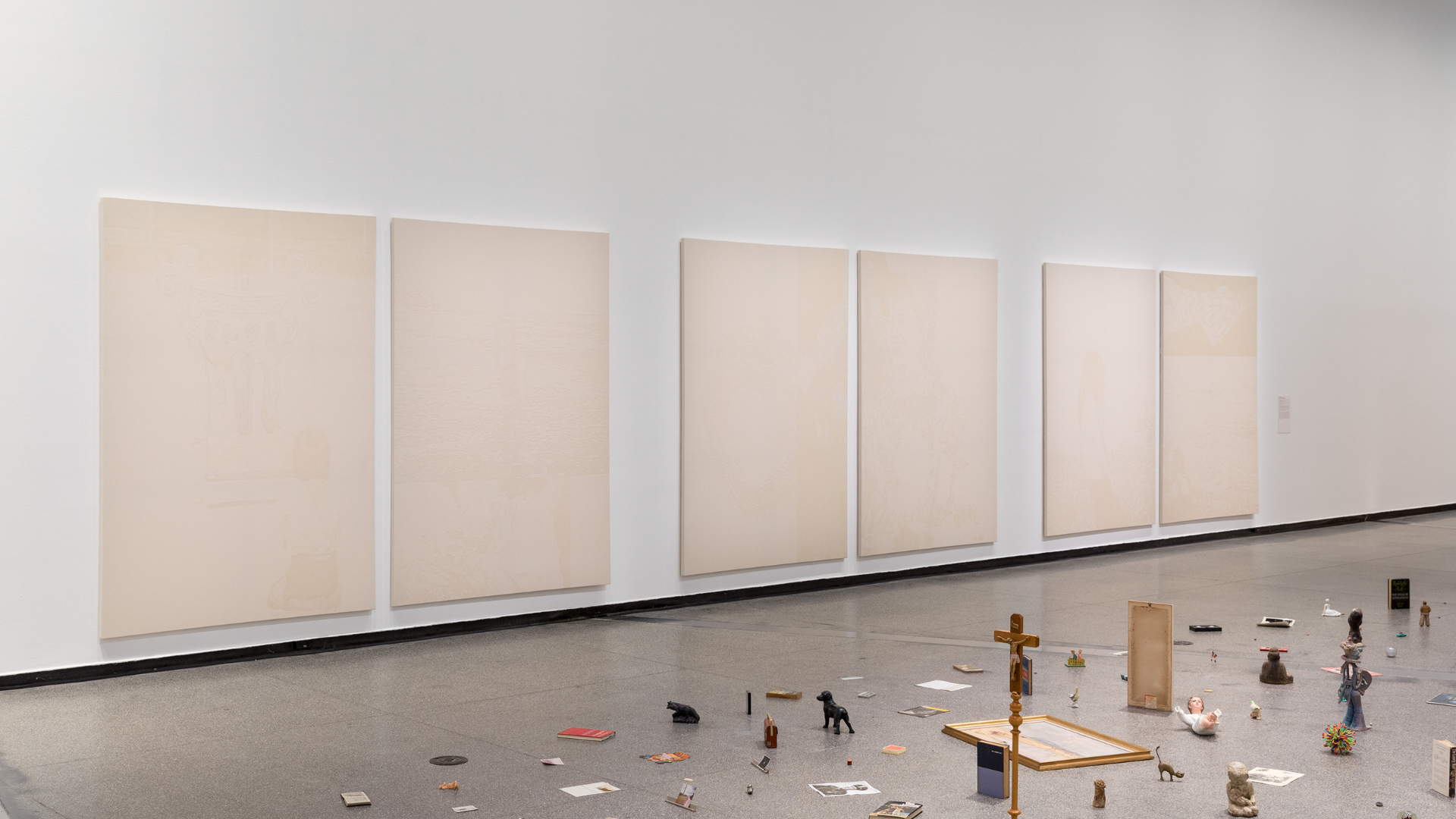
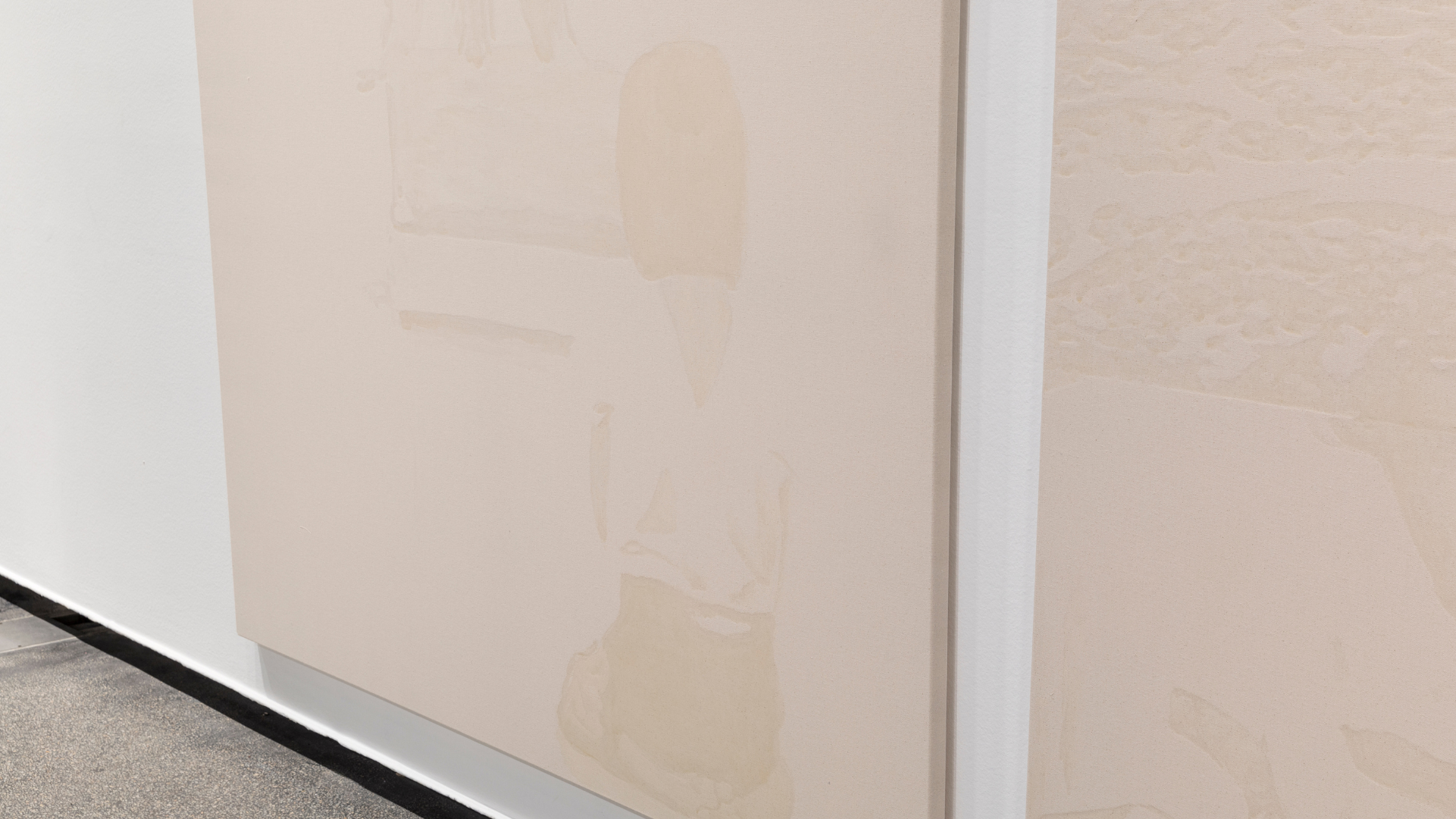
Melissa Nguyen, A letter to my mother; a letter to your mother 2026 (detail), installation view. Commissioned by Australian Centre for Contemporary Art, Naarm/Melbourne. Courtesy the artist. Photograph: Andrew Curtis.

Melissa Nguyen, A letter to my mother; A letter to your mother, 2026

rabbit skin glue on canvas
3 diptychs, 250.0 x 175.0 cm each
Created on Wurundjeri Woi Wurrung Country, Naarm/Melbourne
Courtesy the artist
Commissioned by Australian Centre for Contemporary Art, Naarm/Melbourne, 2026

MELISSA NGUYEN
Born 2000, Tandanya/Adelaide
Lives and works in Naarm/Melbourne

Key ideas/concepts: Painting, memory, family, diaspora, belonging, loss

Sourcing found family photographs from public archives, Melissa Nguyen intuitively selects scenes of intimacy, leisure, and joy, and through painting conflates these images with memories inherited from her parents. Nguyen is Vietnamese Australian diaspora and her new commission, A letter to my mother; A letter to your mother 2026 deftly moves between personal and universal experiences of displacement, memory and belonging.

Nguyen is compelled by the absence of family photographs of her mother’s life before she came to Australia. The only image she has of her mother from that time is from the 1970s when she was between twelve and fourteen years old in Indonesia at the Galang Island Refugee Camp after fleeing Vietnam. Painting with rabbit-skin glue on canvas, Nguyen’s three diptychs convey faint images of lost or nearly lost memories. The painted impressions seem to ask the viewer to spend time with them, revealing themselves gradually, as a visual analogy for the embodied process of intergenerational knowledge sharing.

Discussion Questions

  • How do you think Nguyen painted these images? 
  • A: Using rabbit skin glue, she has painted these two toned paintings. Using source photographs, Nguyen highlights where the lightsource illuminates the figures so that the shadows are revealed.
  • How does a work like this capture the impermanence of memory? 
  • A: It’s translucent and barely visible which references how memories are always fading and out of grasp.
  • During the process of making this work, the artist was writing letters to her mother. Have you ever written a letter to anyone, or have you ever received a letter? How is the experience of “analogue communication”, writing or receiving letters, different from digital communication?
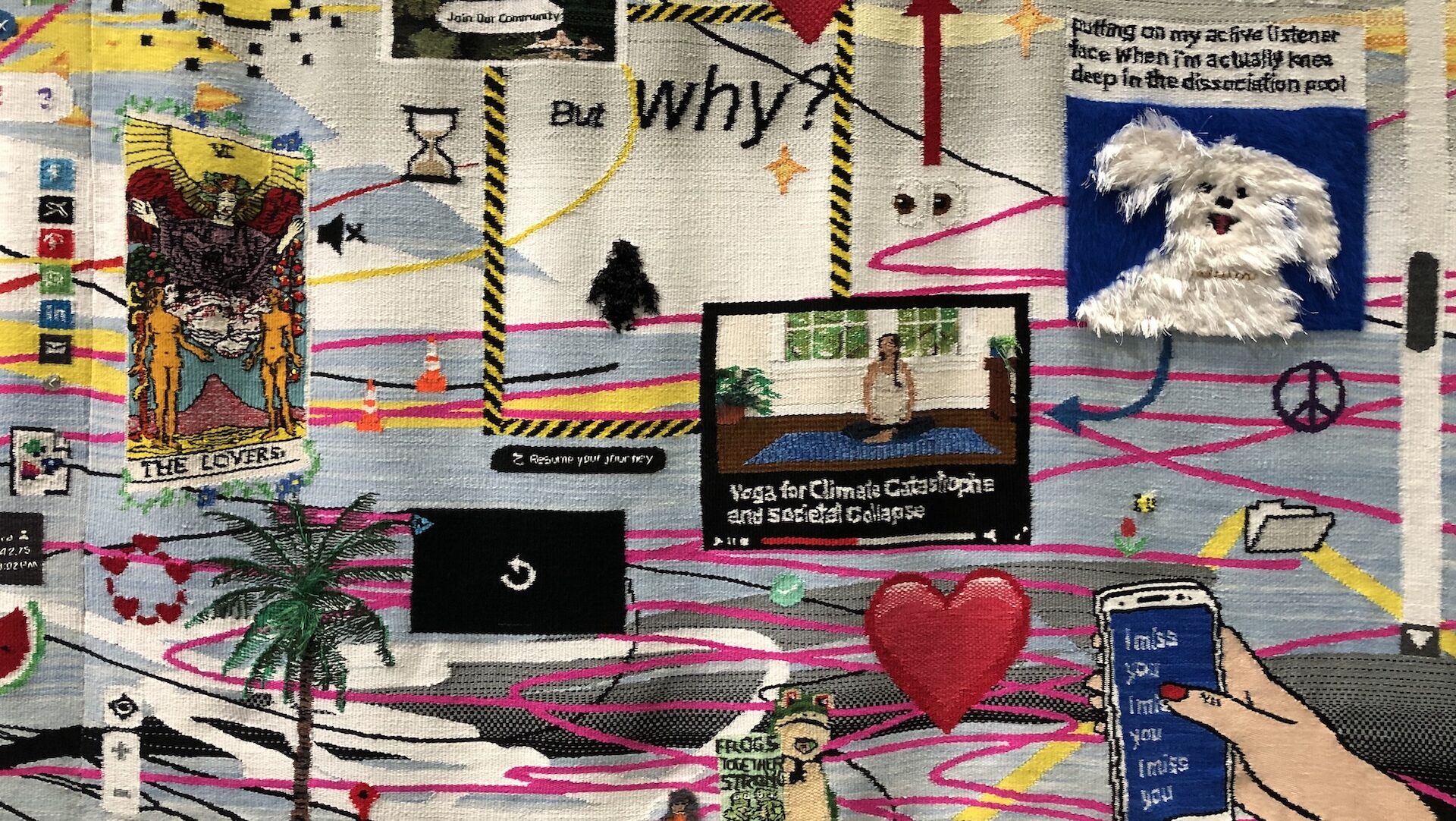
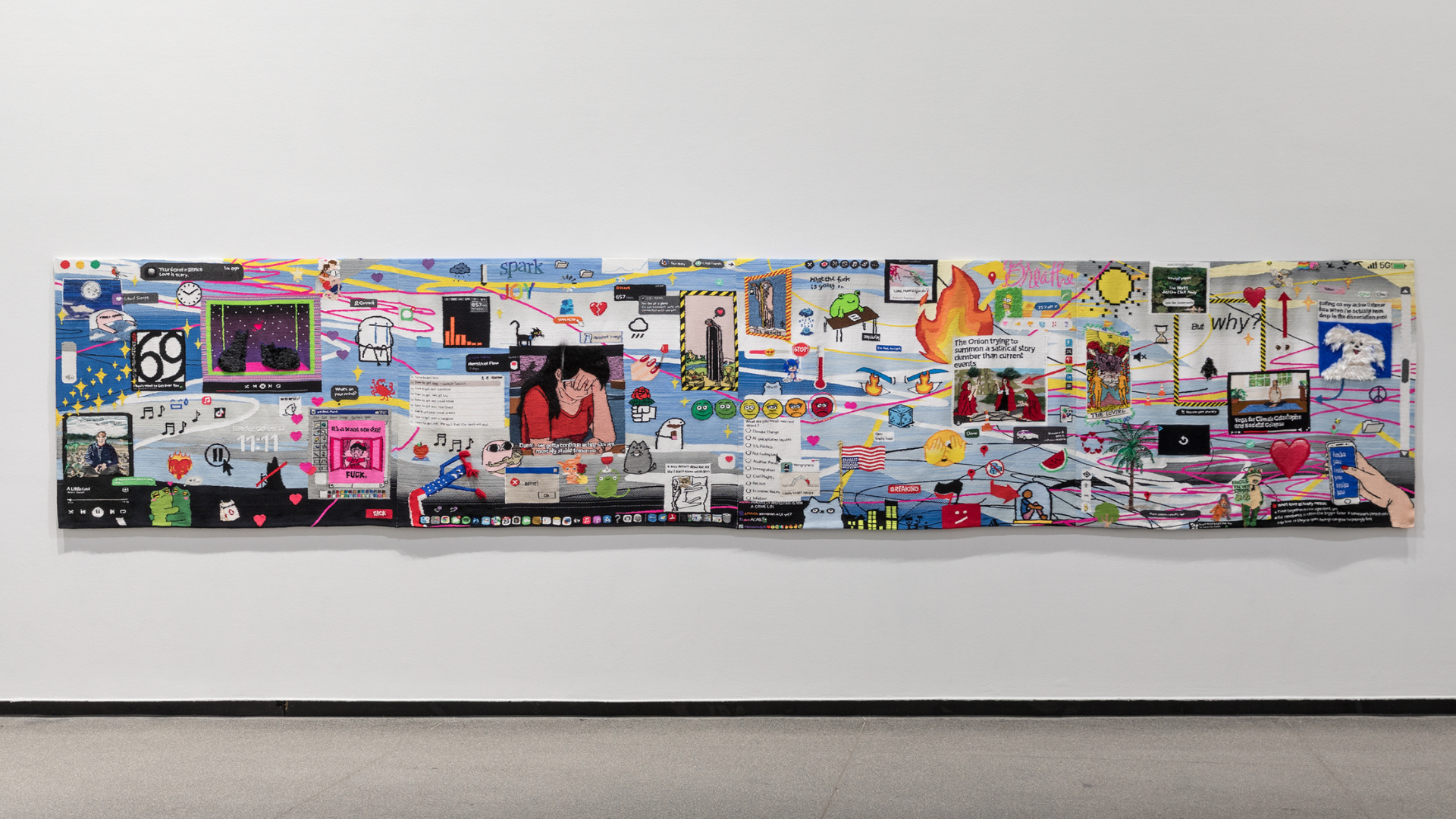
Kayla Mattes, Lonely Planet 2025-26, handwoven cotton, wool (hand-dyed), mohair, faux fur, silk, acrylic, polyester, beads, 130.0 x 655.0 cm. Courtesy the artist.

Kayla Mattes, Lonely Planet, 2025-2026

handwoven cotton, wool (hand-dyed), mohair, faux fur, silk, acrylic, polyester, beads
130.0 x 655.0 cm (approx.)
Courtesy the artist
Supported in part by a Foundation for Contemporary Arts Emergency Grant
Commissioned by the Australian Centre for Contemporary Art, Naarm/Melbourne, 2026

KAYLA MATTES
Born 1989, Los Angeles County, USA
Lives and works in Los Angeles, USA

Key ideas/concepts: weaving, visual culture, digital culture, the internet, memes, mass media, symbolism, humour

Kayla Mattes’ new commission Lonely Planet 2025–2026 invites the viewer to read the great document of our contemporary moment―the internet. The nearly seven-metre tapestry unfolds like a horizontal tablet of contemporary hieroglyphs that the artist describes as ‘a timeline or visual scroll, leading the viewer through congested scenes of digital interactions: ghosted conversations, infinite scrolling, curated personas, and the dopamine loops of likes, shares, and notifications’. 

By weaving screen culture into thread, Mattes juxtaposes the handmade with mass media, capturing the tensions between the playful and the tragic, the novel and the enduring, and the shifting nature of meaning itself.

Each section of Lonely Planet is densely layered with symbols from a shared online language, blending human feelings with internet culture. Tarot cards like the Hermit and the Five of Cups, symbols of loss and regret, coexist with comical symbols, such as a scale of ‘Hangryness’ and an upside-down American flag gif. Notable 2026 references include Punch the Monkey, lovingly rendered with tufted hair, and the nihilistic penguin meme, which came to be known on the internet as ‘But why?’ 

Discussion Questions

  • What symbols do you recognise in this artwork?
  • Why do you think Mattes is referencing internet culture, cartoons and text in her tapestries? Is this unusual for this artform?
  • To create this tapestry, Mattes had to plan the design methodically. What steps do you think this process might involve?
    The process includes:
    – Deciding on the scale of the work, based on the size of the loom being used
    – Mapping out the design in pencil
    – Once the composition is confirmed, going over it in pen
    – Selecting the wool colour palette
    – Weaving horizontally, starting from the bottom of the image and working up to the top.
    – Depending on the scale of the work, the weaving process alone can take months to complete. Mattes took 12-15 months to complete.

For Teachers

Primary activities

Installation with found objects

In this activity, students respond to Patrick Pound’s installation The museum of loneliness 2026, and create their own installations using found objects.

Step 1: Come up with a topic/theme you would like to explore in your installation. Patrick Pound is exploring loneliness in his installation but pick another topic for your own. The topic can be an emotion, historical event, friendship – anything really that inspires you!

Step 2: Collect 5-15 objects that relate to your topic. The objects can be collected from nature, your home, or you might even purchase some cheap finds from an op-shop. These objects can be simple everyday items, such as food wrapping, photographs, pages from a magazine, stationary etc. The relationship between your topic and the object can be abstract; perhaps it’s the colour of the object or the feeling of a material that reminds you of something. 

Step 3: Curate your objects and create an installation. Consider the relationship between the different objects you have collected when arranging your installation. Consider the different ways you can install your work; are the objects arranged on the floor, hanging from the ceiling, or hung on the wall, or is your installation a combination of these.

Step 4: Give your installation a title that provides your audience with extra information or a clue about your work. Titles are important – they can help direct how the audience is interpreting your work. Sometimes titles are borrowed from popular culture, for example ACCA’s exhibition title Are you lonely tonight? I’m so lonesome I could cry. borrows its title from lyrics popularised by Elvis Presley. 

Extension: Try this as a collaborative activity; the class can collaboratively choose the theme for their work, and each student can collect 1-3 objects. Students can then collaboratively curate and install the work and come up with a title. You could also extend this activity to a whole year level or even a whole school – what would an installation with hundreds of objects look like, arranged perhaps on the sports oval or in another open space?

Australian Curriculum / Visual Arts / Years F-6

  • Experiment and play with visual conventions, visual arts processes and materials AC9AVA2D01
  • Explore ways that visual conventions, visual arts processes and materials are combined to communicate ideas, perspectives and/or meaning in visual arts across cultures, times, places and/or other contexts AC9AVA6E01
  • Share and/or display artworks and/or visual arts practice in informal settings AC9AVA4P01

Victorian Curriculum / Visual Arts / Levels F-6

  • Explore ways of using visual conventions, visual arts processes and materials (VC2AVA2D01)
  • Use visual conventions, visual arts processes and materials to create artworks that communicate ideas, perspectives and meaning (VC2AVA4C01)
  • Select, present and display artworks and visual arts practice in informal and formal settings. (VC2AVA6P01)

Curriculum Interpretation

This activity is devised in response to Patrick Pound’s artwork The museum of loneliness 2026 in the exhibition Are you lonely tonight? I’m so lonesome I could cry. 

By undertaking these activities, students:

  • Use contemporary artwork as an inspiration for their own artmaking.
  • Explore found objects as a form of art.
  • Explore different ways of installing their installations.
  • Consider how objects can have meaning or tell a story.

Secondary activities

Exploring the subtle

In this activity, students respond to Melissa Nguyen’s work A letter to my mother; A letter to your mother 2026, and explore subtle mark making with minimal contrast.

Step 1: In this activity students will use white/off-white oil pastel or paint on white paper (they can also experiment with grey on grey paper, black on black paper etc.).

Step 2: Students can use a family photograph or memory as a starting point, and capture the moment by drawing or painting. Students can consider, how does it feel to draw/paint when your marks are barely visible? 

Step 3: Once the work is finished, examine it in different lighting; in natural light or under an artificial light, and explore how the lighting affects the work.

Extension: Write an artist statement / didactic text providing context and your intentions to help your audience to engage with your work more deeply.

Australian Curriculum / Visual Arts / Years 7-10

  • Experiment with visual conventions, visual arts processes and materials to refine skills and develop personal expression (AC9AVA10D01)
  • Generate, document and develop ideas for artworks (AC9AVA8C01)
  • Select and manipulate visual conventions, visual arts processes and/or materials to create artworks that reflect personal expression, and represent and/or challenge, ideas, perspectives and/or meaning AC9AVA10C02

Victorian Curriculum / Visual Arts / Levels 7-10

  • Develop and refine skills in visual arts practices using visual conventions, visual arts processes and materials to create artworks (VC2AVA8D01)
  • Select and manipulate visual conventions, visual arts processes and materials to create artworks (VC2AVA8C01)
  • Select and apply visual conventions, visual arts processes and materials to create artworks that reflect personal expression, and communicate and/or challenge ideas, perspectives and meaning VC2AVA10C02

Curriculum Interpretation

This activity is devised in response to Melissa Nguyen’s artwork A letter to my mother; A letter to your mother 2026.

By undertaking these activities, students:

  • Use contemporary artwork as an inspiration for their own artmaking.
  • Explore subtle mark making.
  • Explore how different lighting affects their artworks.

Terms of Use

This education resource has been produced by ACCA Education to provide information and classroom support material for education visits to the exhibition Are you lonely tonight? I’m so lonesome I could cry. The reproduction and communication of this resource is permitted for educational purposes only.

Supported by