Five Acts of Love | Exhibition Kit

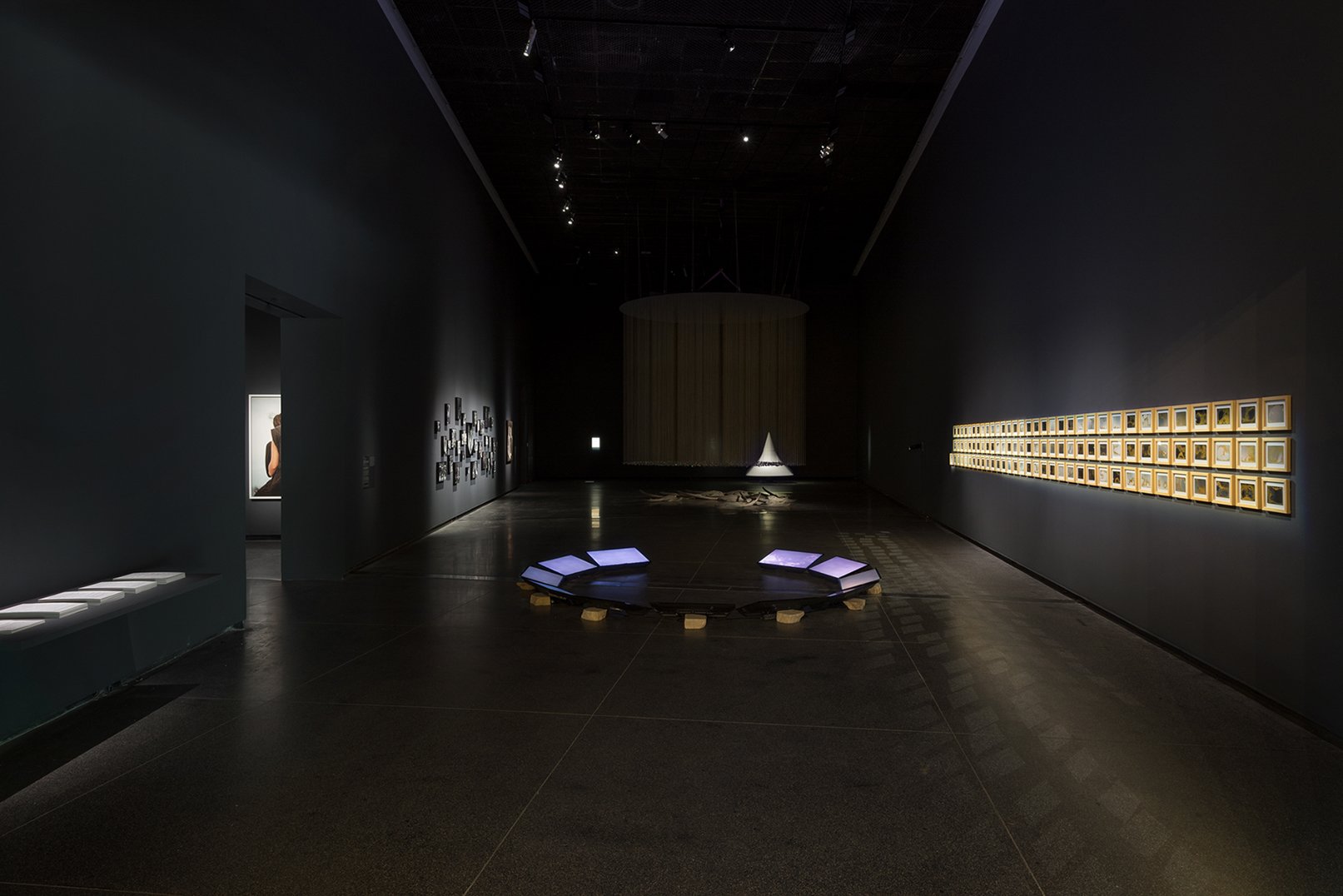
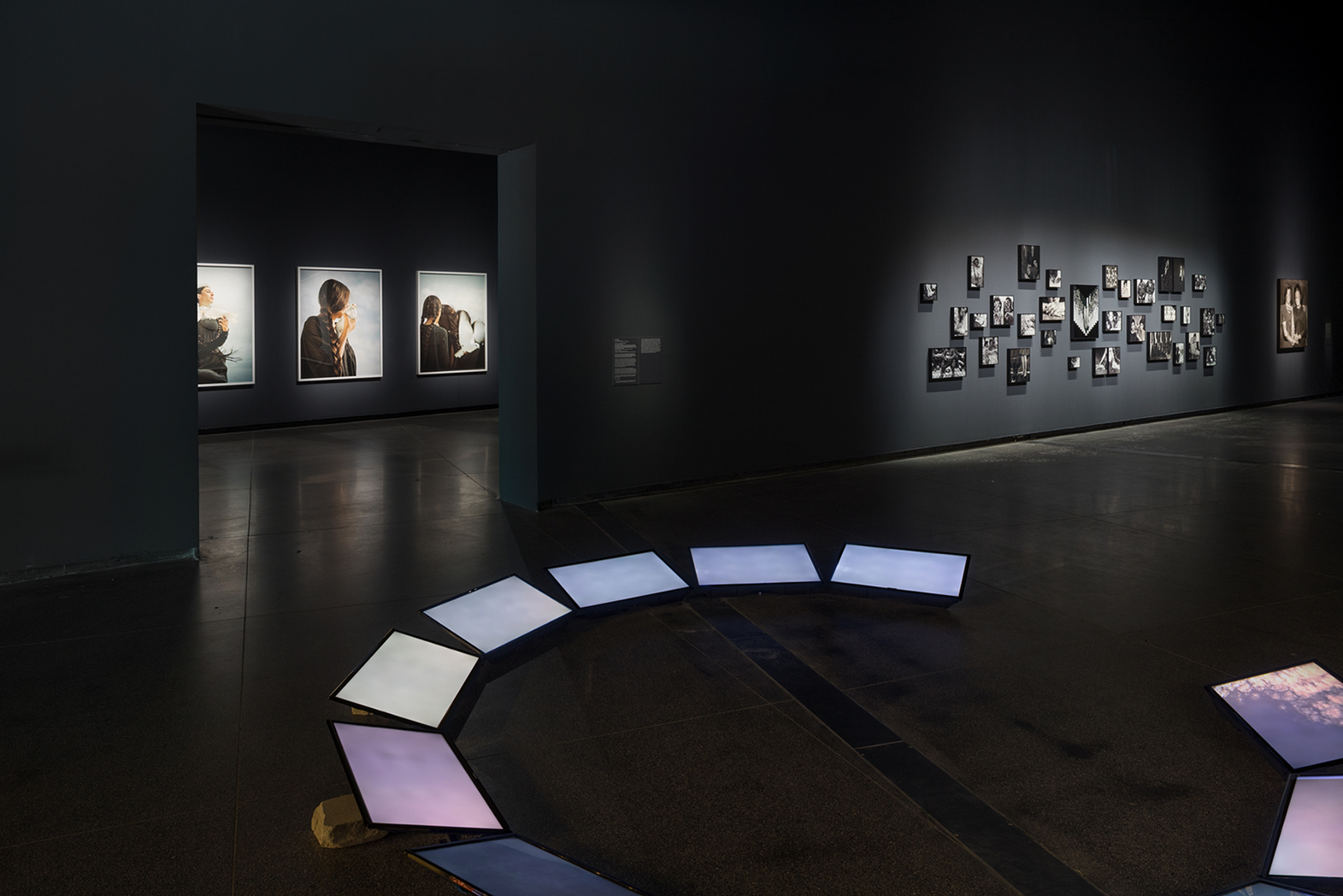
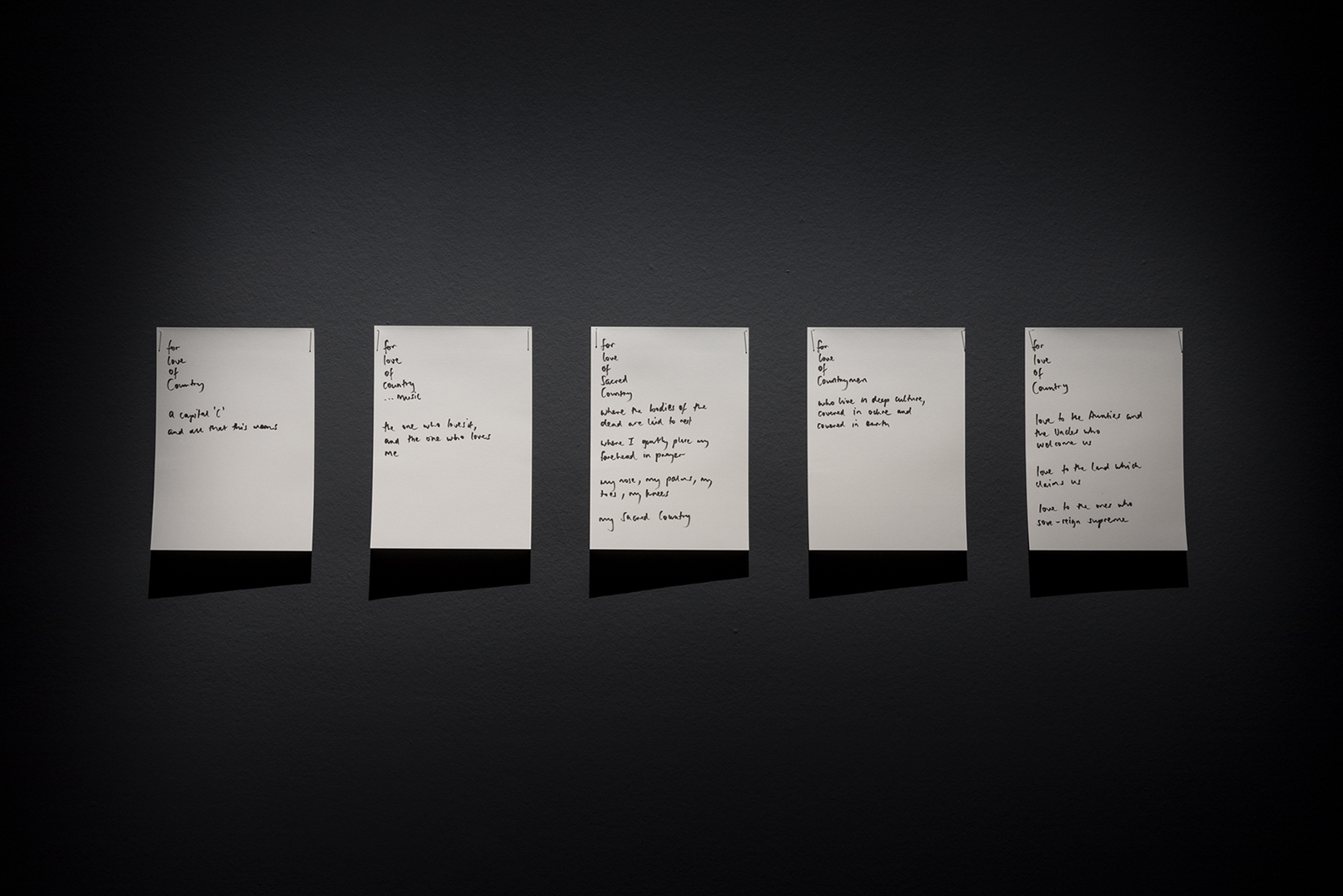
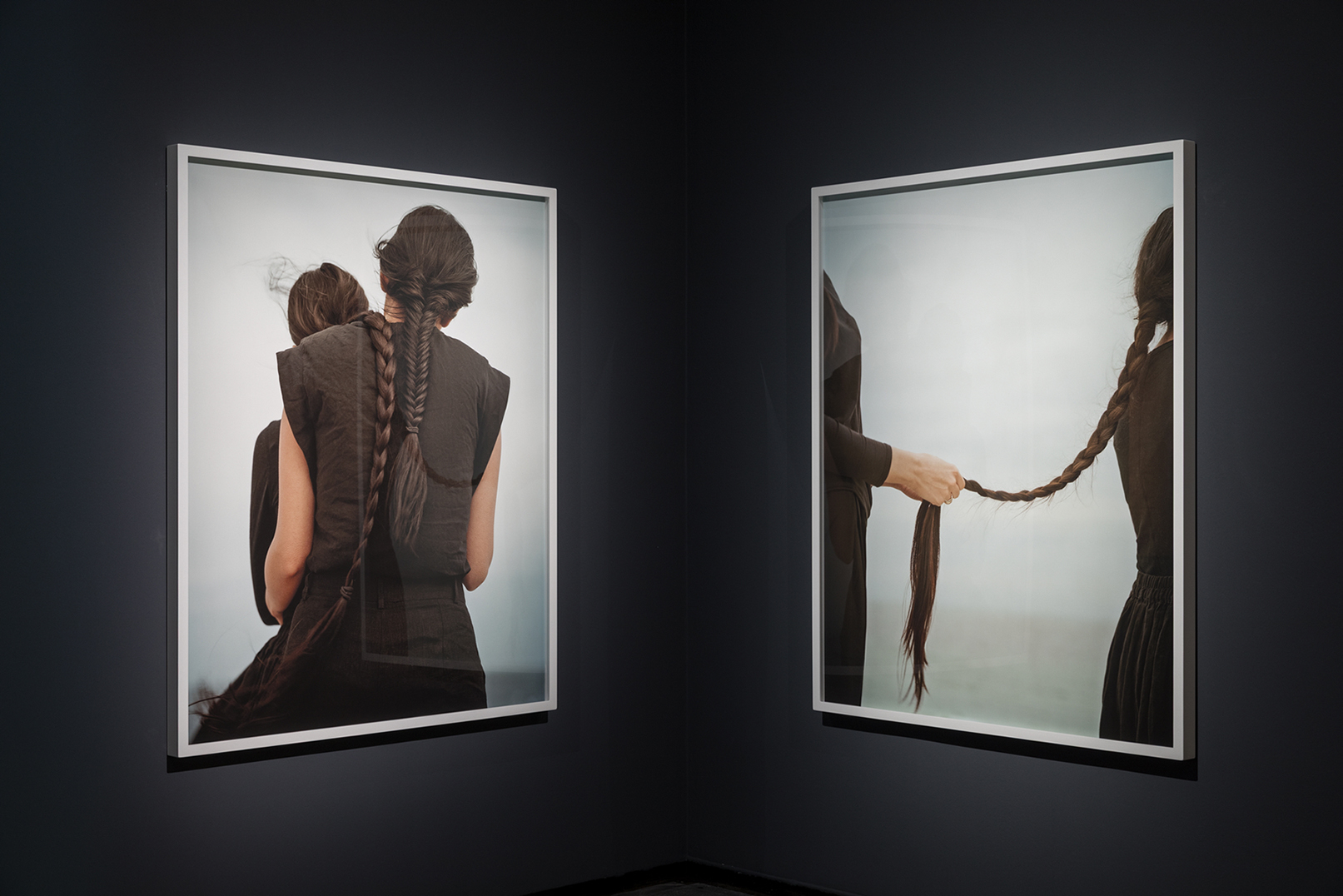
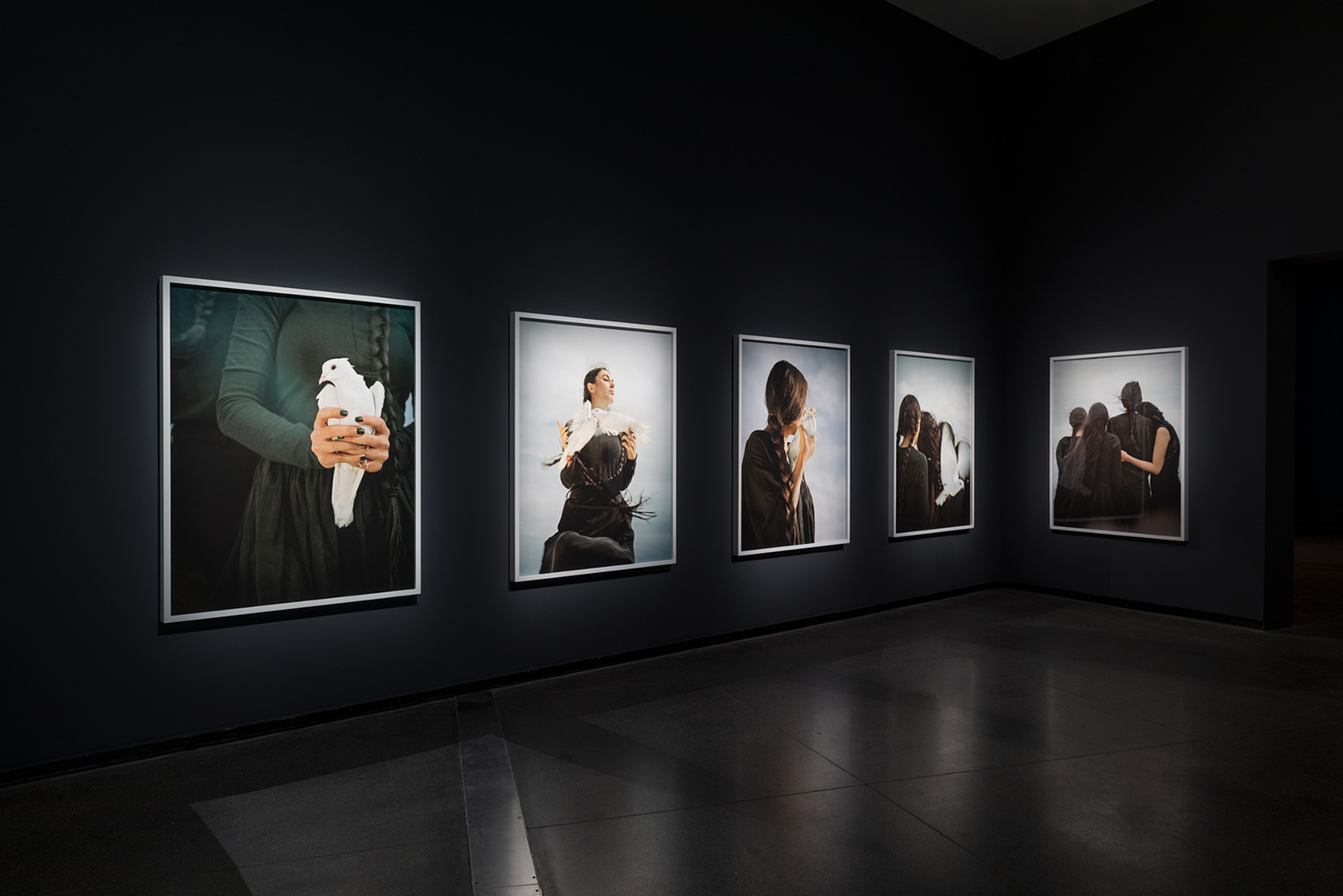
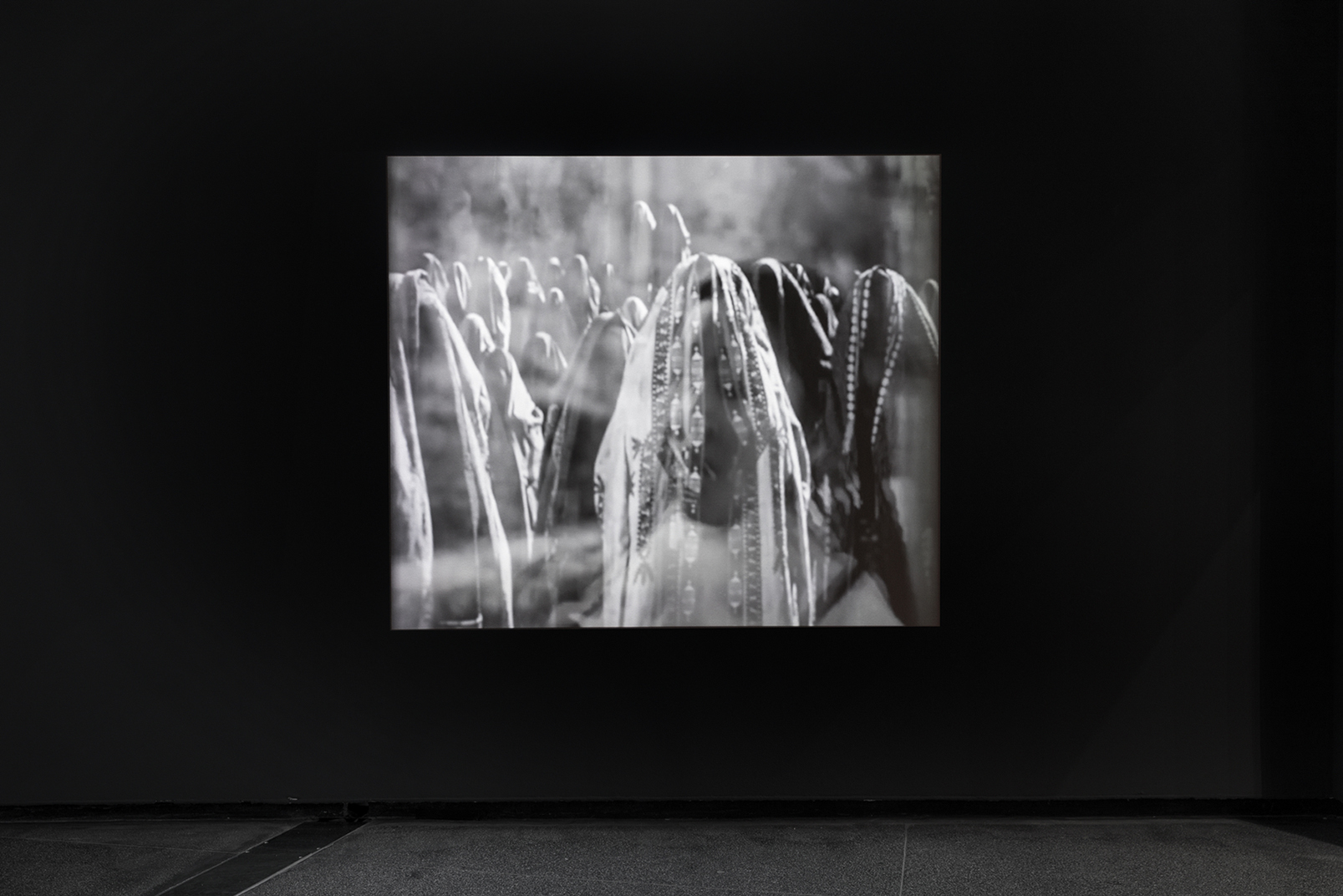
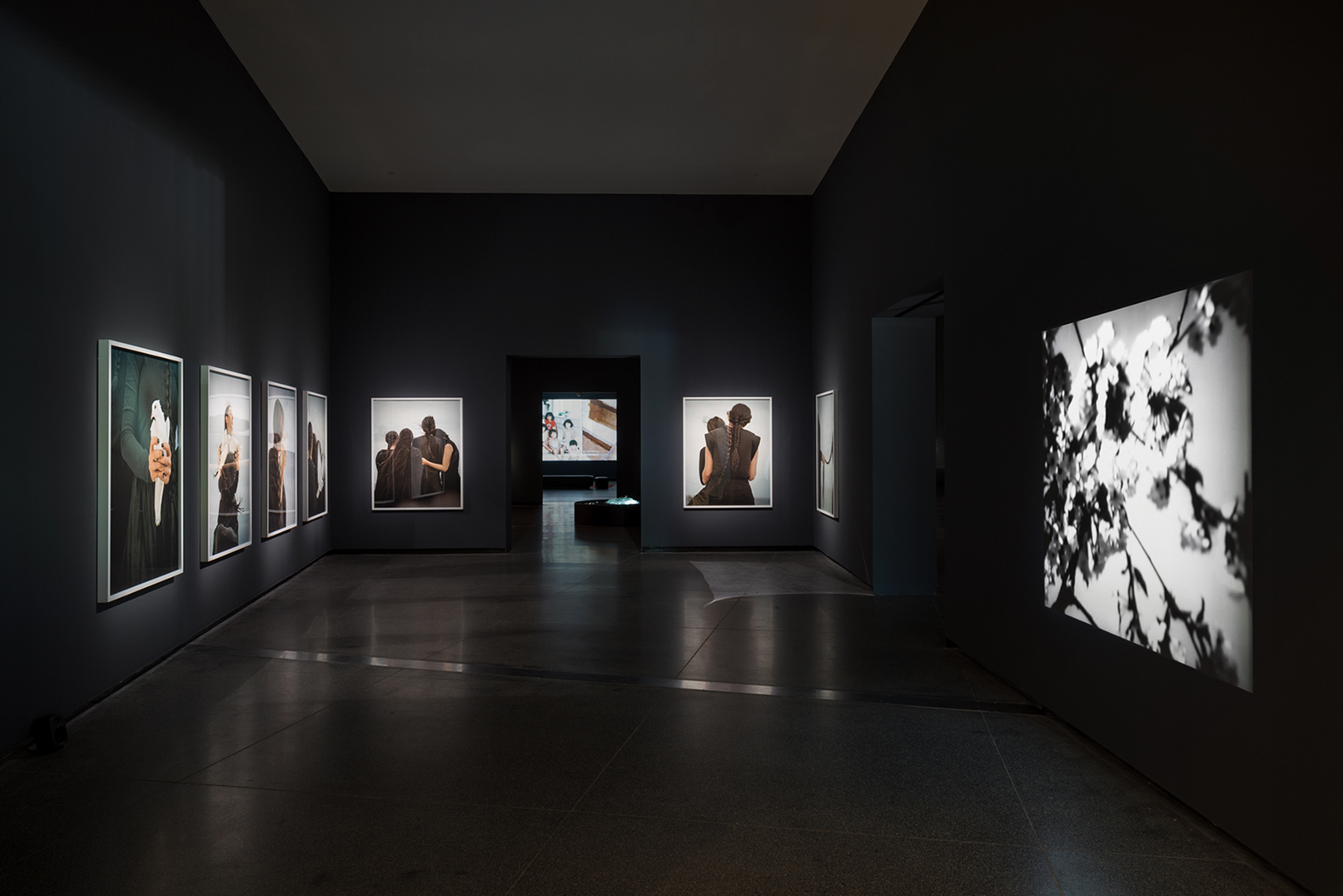
Guest Curator Nur Shkembi presents Five Acts of Love. The exhibition features twelve local and international artists presenting newly commissioned, recent and historic artworks that explore the unexpected and nuanced manifestations of love. Five Acts of Love offers space for reflection and an opportunity to delve into profound internal and external truth telling through the exploration of various acts of love. The exhibition revolves around five acts: resistance, revolution, intimacy, memory and annihilation. Each act of love circles around what we ultimately relinquish when we love and are loved. 

The assembled works offer love as loss, and as conversations about grief and yearning. Love is also presented as memory and memorialisation. Resistance and revolution are reimagined through the earth and continued connection to it, whilst intimacy is presented within the gentleness of familial gatherings, and the company of comrades. Love is also present in the emotional register that tunes into the spiritual, and the complete letting go that encompasses love of the Divine.

Artists: Abdul-Rahman Abdullah, Hoda Afshar, Megan Cope, Eugenia Flynn, D Harding, Saodat Ismailova, Khaled Sabsabi, Larissa Sansour & Søren Lind, Yhonnie Scarce, Ali Tahayori and Hossein Valamanesh 

Curator: Guest curated by Dr Nur Shkembi OAM

How to use this kit

This exhibition kit has been developed by ACCA Education with text provided by the curator to support learning alongside the ACCA exhibition Five Acts of Love. Three key artworks from the exhibition have been highlighted, with discussion questions to prompt students’ thinking. Primary and secondary activities, mapped to the Victorian and Australian Curriculum, can be found in the For Teachers section. Upon request, VCE students and teachers can view Support Material for further reading and teaching notes drawn from ACCA’s VCE Programs.
About the Artists

Abdul-Rahman Abdullah
Born 1977, Dharawal Country, Port Kembla, NSW
Lives and works on Bindjareb Nyoongar Country, WA

Abdul-Rahman Abdullah is an artist living on Bindjareb Nyoongar Country, on a cattle farm in the Peel region of Western Australia. Working primarily in sculpture and installation, he explores the intersections of identity, culture and the natural world. Living and working in an agricultural environment, his practice offers alternative perspectives across diverse, and often disparate communities. Underpinning his approach to art making is the living connectivity of family. A 2012 graduate from Curtin University, Abdul-Rahman’s project highlights include the inaugural WA Focus 2015 (AGWA); Adelaide Biennial 2016 & 2022 (AGSA); Dark Horizons 2017 (Pataka Art Museum NZ); The National 2019 (MCA); Everything is true 2021 (John Curtin Gallery); Land Abounds 2022 (Ngununggula); and Uchiboso Arts Festival, Japan 2024.  He was a board member for PICA (2017-21); Council member for the National Gallery of Australia (2023-24) and set designer for Marrugeku (2019 – ongoing).


Megan Cope
Born 1982, Meanjin/Brisbane, QLD
Lives and works between Minjerribah and Bundjalung Country, QLD

Megan Cope is a Quandamooka artist from Moreton Bay/Minjerribah (North Stradbroke Island). Her site-specific sculptural installations, video works, and paintings investigate issues relating to colonial histories, the environment and mapping practices. Her solo exhibitions include Whispers, Sydney Opera House (2023) and Fractures and Frequencies, UNSW Galleries, Sydney (2021). Her work has been featured in numerous group exhibitions, including Sharjah Biennial 16, Sharjah, United Arab Emirates; Hawai’i Triennial 25: Aloha Nō, Honolulu, Hawai’i (2025); proppaNOW: There Goes The Neighbourhood!, Vera List Centre, New York, United States (2023); Busan Biennale 2022: We, On The Rising Wave, South Korea; Reclaim the Earth, Palais de Tokyo, Paris (2022); and more. She is a member of Aboriginal art collective proppaNOW, and a recipient of the 2022–24 Jane Lombard Prize for Arts and Social Justice. In 2024, she received the Creative Australia Award for Emerging and Experimental Arts and in 2017–19 she was the official Australian War Artist, commissioned by the Australian War Memorial. She is represented by Milani Gallery, Meanjin/Brisbane.


Ali Tahayori
Born 1980, Shiraz, Iran
Lives and works on Gadigal Country, Sydney NSW

Ali Tahayori is an Iranian-born Australian artist living and working on Gadigal and Darug lands (Sydney, Australia). He holds a Doctorate in Medicine and an MFA in Photomedia from National Art School, Sydney. Tahayori works across photography, installation and moving image. His practice sits at the intersection of queer and diasporic subjectivities, exploring notions of home, identity, and belonging from a person of SWANA (Southwest Asia and North Africa) region perspective. Tahayori works with mirrors, glass and photography and incorporates the traditional Iranian craft practice of Āine-kāri آینه کاری (Mirror-works), a craft invented by Iranian artists from imported European material (glass mirror) in the seventeenth-century. His practice combines a discourse about diaspora and displacement with an exploration of queerness – in both cases, poignantly testifying to his experience of being othered. Combining fractured mirrors with text and imagery, Tahayori’s works draw on ancient Iranian philosophies about light and mirrors to create kaleidoscopic experiences, moments of both revelation and concealment that hint at the conflicted nature of his identity.

Key Artworks

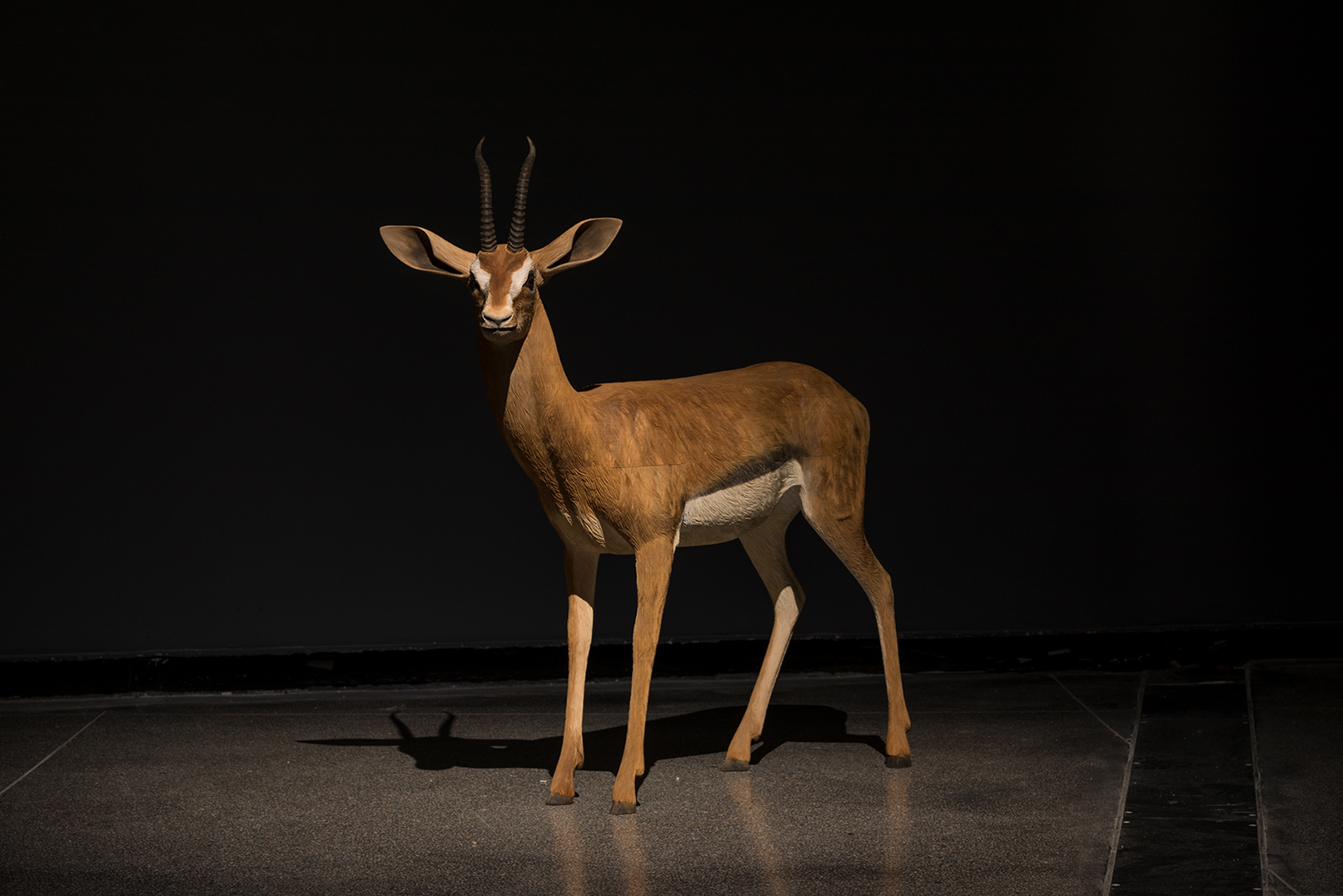
Adbul-Rahman Abdullah, Witness 2025, installation view, Australian Centre for Contemporary Art, Melbourne. Courtesy the artist and MOORE CONTEMPORARY, Boorloo/Perth. Photograph: Andrew Curtis.

ABDUL-RAHMAN ABDULLAH
Born 1977, Dharawal Country, Port Kembla, NSW
Lives and works on Bindjareb Nyoongar Country, WA

Witness 2025

Painted wood, horn, glass eyes
110 x 37 x 107 cm
Created on Bindjareb Nyoongar Country
Acknowledgment: Department of Local Government, Sports & Cultural Industries (WA)
Courtesy the artist and Moore Contemporary

Key ideas/concepts: Love of community, sculpture, innocence, resilience, bearing witness, resistance

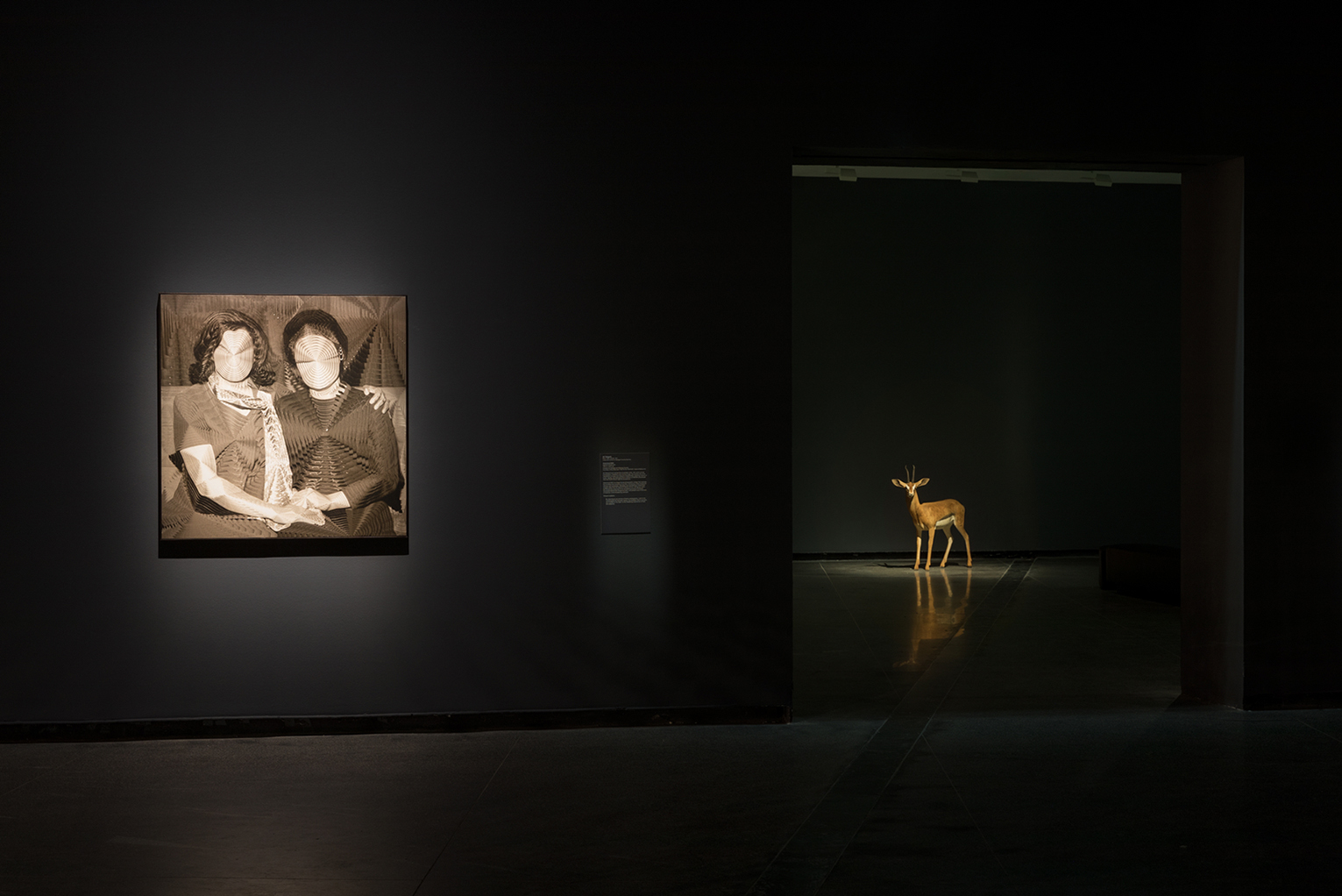
Commissioned for this exhibition, Abdullah’s meticulously handcrafted wooden gazelle, titled Witness 2025, quietly watches over the gallery space. There is a palpable, gentle quality to this sculpture that captures the innocence of this sublime creature, yet there is also a slightly uncomfortable ambiguity to the work. The gazelle’s gaze asks, are we watching or are we the ones being watched?

The Palestine mountain gazelle embodies a sense of resilience, populating poetry with elegance in the face of adversity. Highly endangered and relying on vigilance and speed for survival, they cling to a precarious existence throughout the Levant.

Witness, or Shahid in Arabic, translates as both observer and martyr.

 –   Abdul-Rahman Abdullah

Discussion Questions

  • What words come to mind when you see this artwork? How would you describe this as a feeling?
  • What materials and techniques has the artist used to create this work?
  • What kinds of symbols, animals or objects can you think of that convey something about yourself?

Mini Make
Sculpting – Using clay or plasticine, create an animal form. Focus on trying to make it as realistic as you can. Experiment with carving the animal with tools to mark out details like hair texture and eyes. Are you surprised by how easy or difficult it is to carve?

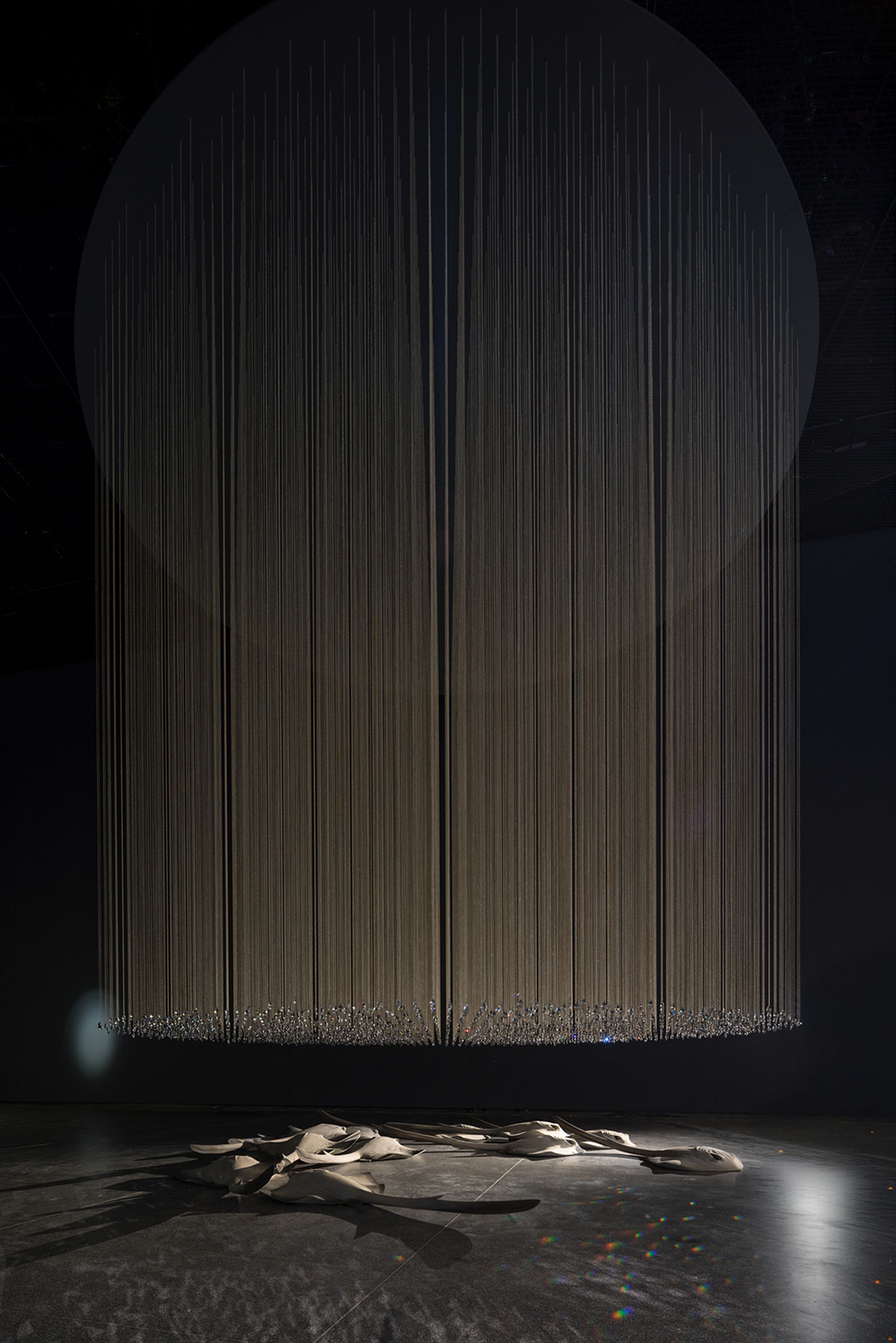
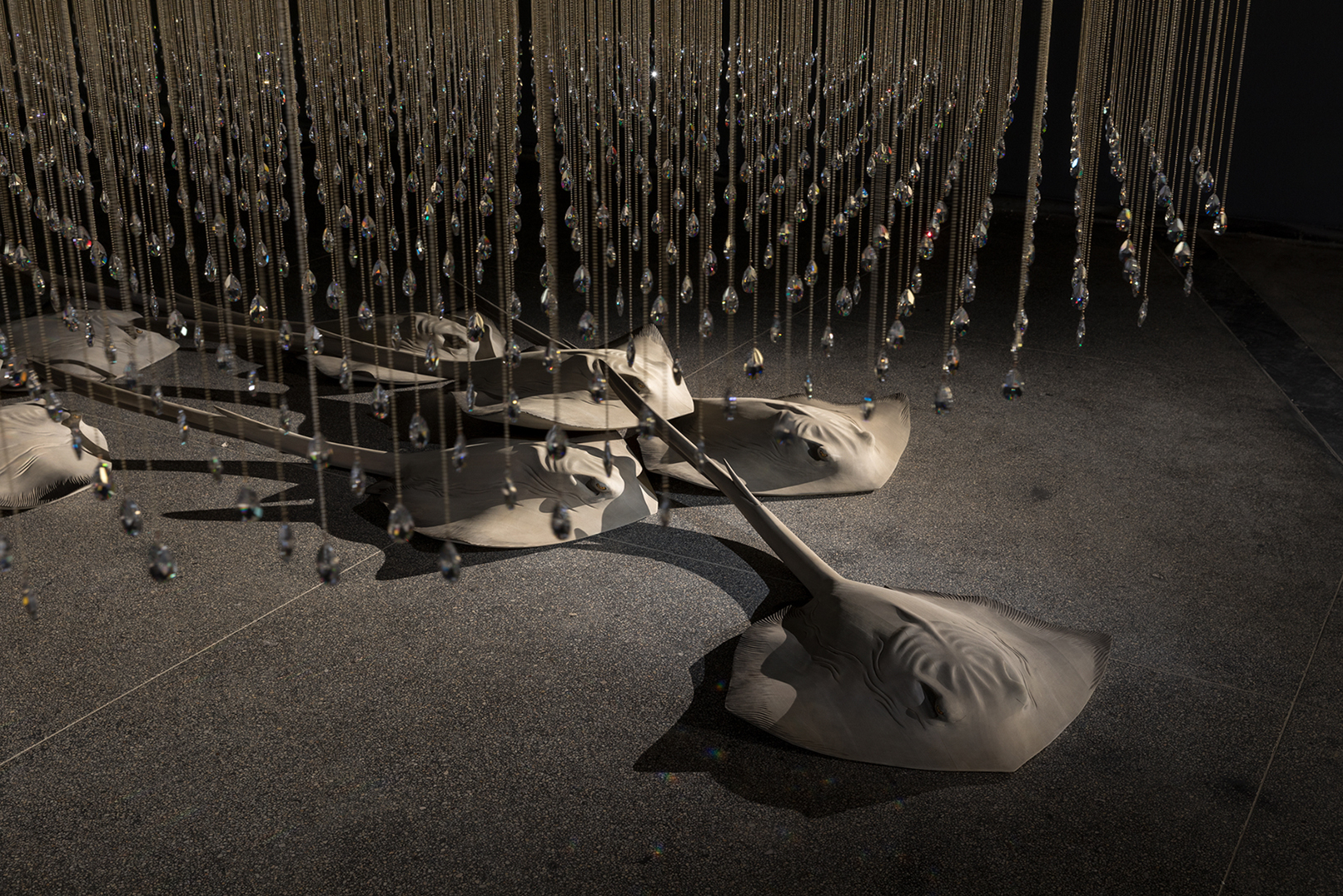
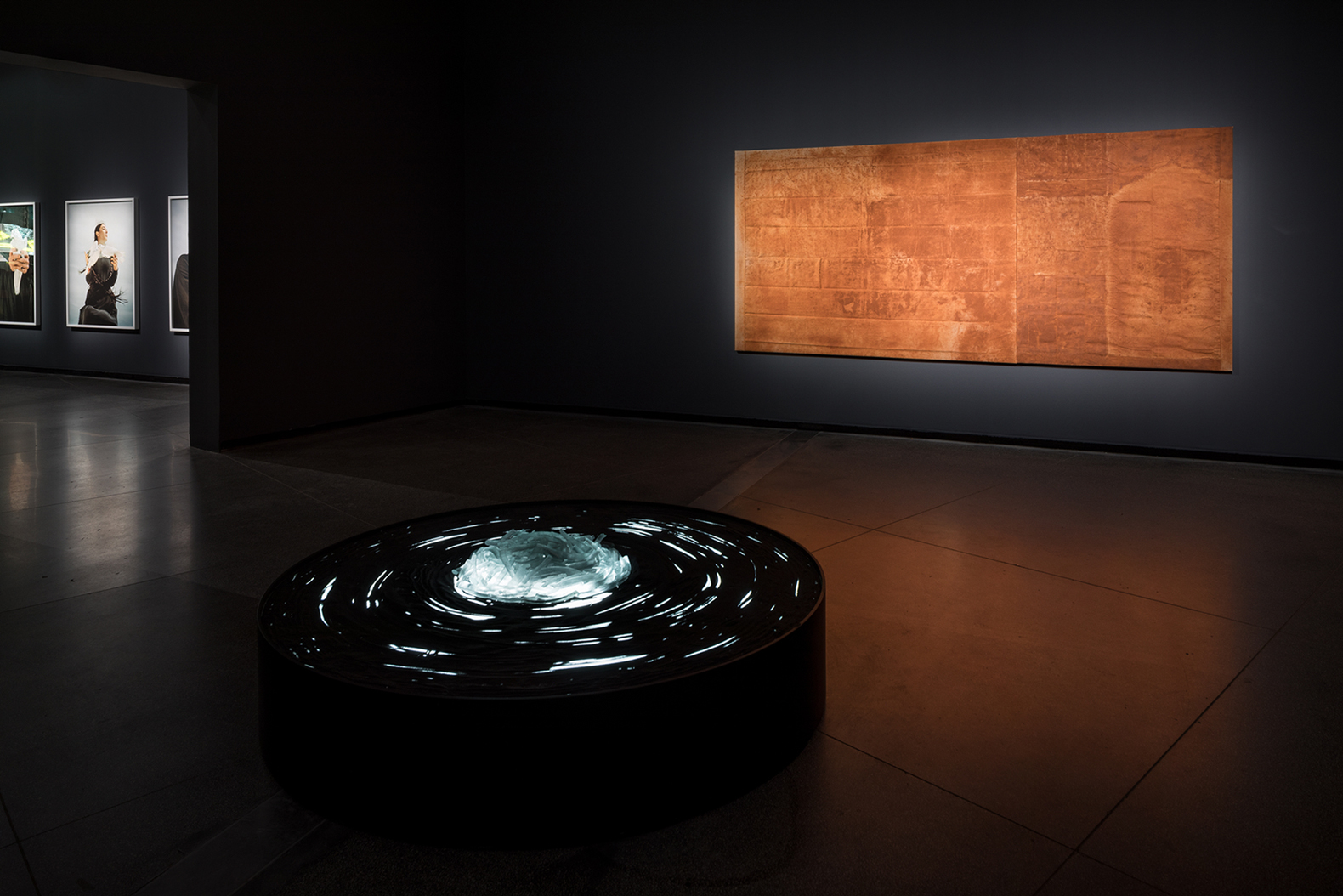
Megan Cope, The tide waits for no-one 2020-21 (detail), installation view, Australian Centre for Contemporary Art, Melbourne. Courtesy the artist and Milani Gallery, Meanjin/Brisbane. Photograph: Andrew Curtis.

MEGAN COPE
Born 1982, Meanjin/Brisbane, QLD
Lives and works between Minjerribah and Bundjalung Country, QLD

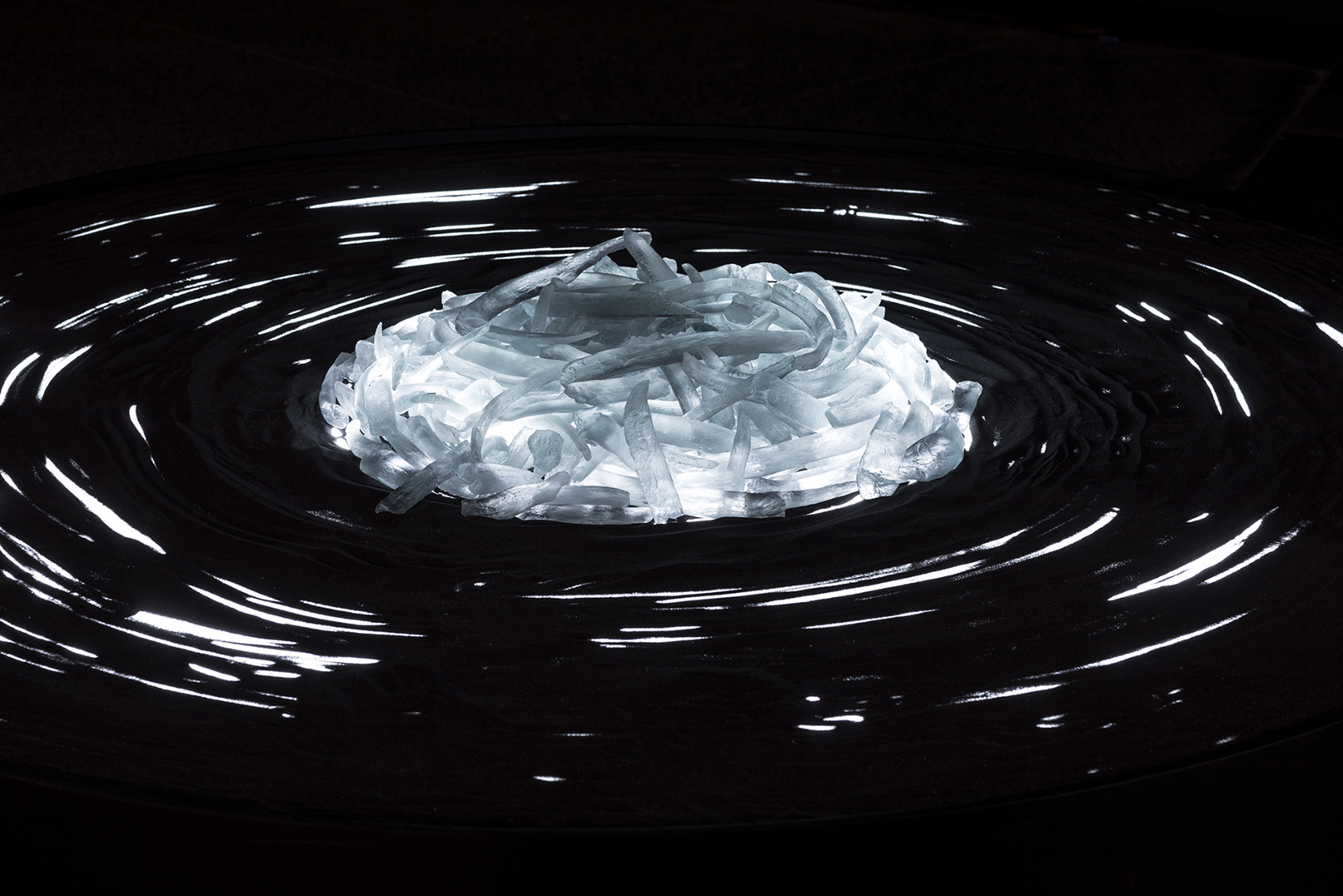
The Tide Waits For No-One 2020-21

250 kiln cast TV Glass yungan/dugong bones and Minjerribah mineral sand, plinth, lightbox
40 x 200(cir) cm (installed)
Courtesy the artist and Milani Gallery, Meanjin/Brisbane

Key Ideas and Concepts: Love of Country, glass, Aboriginal and Torres Strait Islander Histories and Cultures, extinction, colonisation, family, sacrifice, nature, resistance.

Megan Cope invites us to witness the endurance of love through her work, The Tide Waits For No-One 2020–21, which recalls stories of land and sea. The striking circular formation of glass, bone and mineral salt draws on natural elements to speak to the complex colonial history of Minjerribah (North Stradbroke Island), and Cope’s practice of colonial resistance through the maintenance and persistence of First Nations’ knowledge. Cope explains that the installation references “evidence of that now-banned industry—old glassware and brittle bones—can be found across the island’s landscape, particularly in eroding dunes.”  Through this work, Cope reveals the history of “early colonisation of Quandamooka Country, where the hunting of Dugong and industrial-scale processing became a lucrative marketplace.” The artist further contextualises the work by describing the extraction and consumption of natural resources by colonisers. Cope’s work subverts the colonial mark by reminding us of the continued resistance of nature as a regenerative force. Through her practice, Cope not only fiercely critiques the past but also nourishes the future.

Between 1847 and 1969 the commercial processing of oil, bones, hides and meat occurred with very little regard of sustainability, rather Europeans arrived with the perception of ‘Bounteous Seas’ and very little recognition of the sophisticated land and sea management systems upheld by the Quandamooka People. Megan Cope

Discussion questions

  • Why has the artist created replicas of the Dugong bones in glass as opposed to another material like wood or plastic?
  • In what way does the title of this artwork impact how you interpret what you see?
  • The artist has created this artwork using a combination of materials arranged together. What word would you use to describe this kind of artwork? Installation


Mini Make
Exploring materials and installation – Source materials from your school environment, such as sand, leaves, stones, etc. Consider what kind of installation you could make using what is in your immediate environment, and what themes you can explore through these materials.

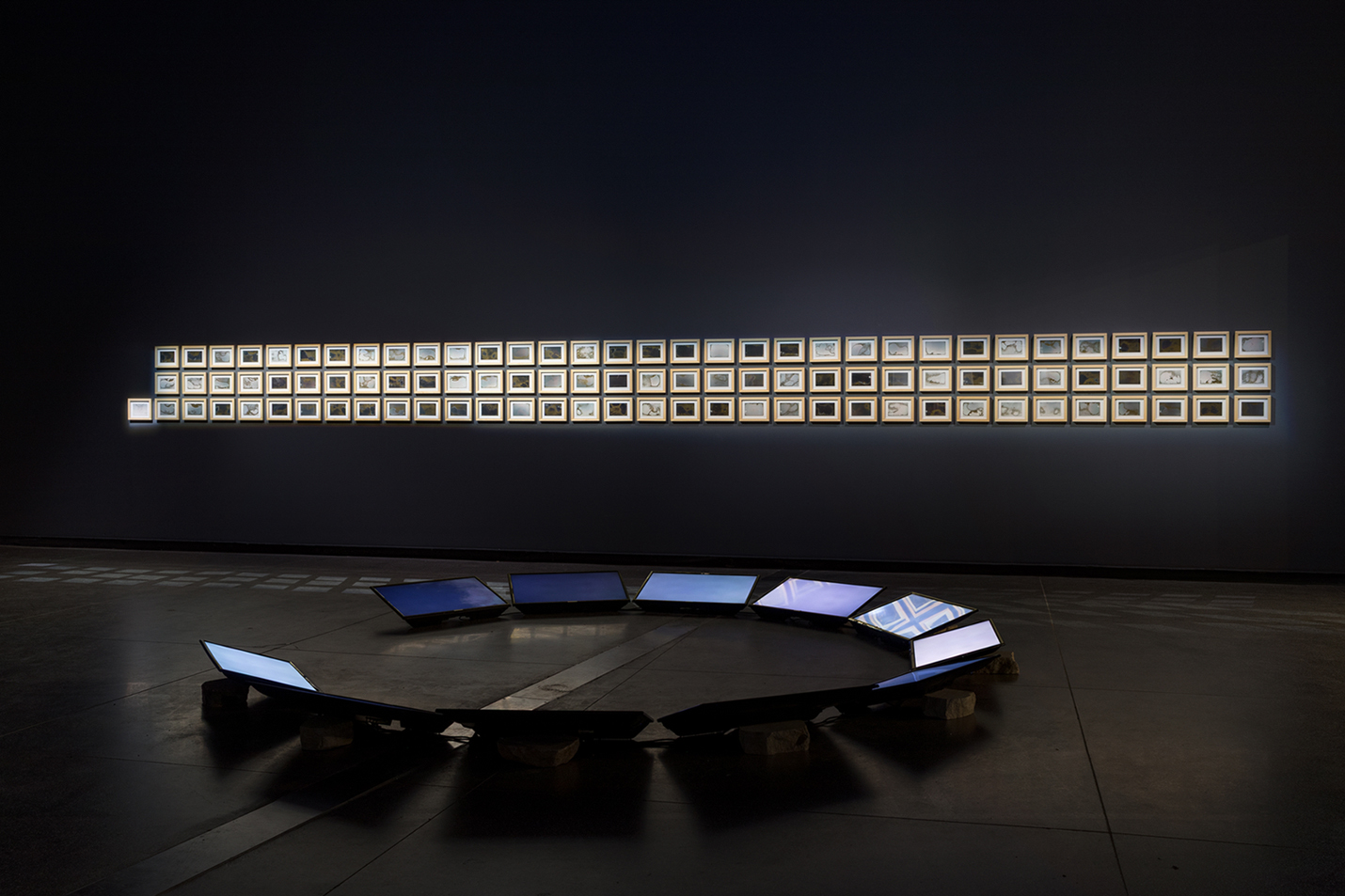
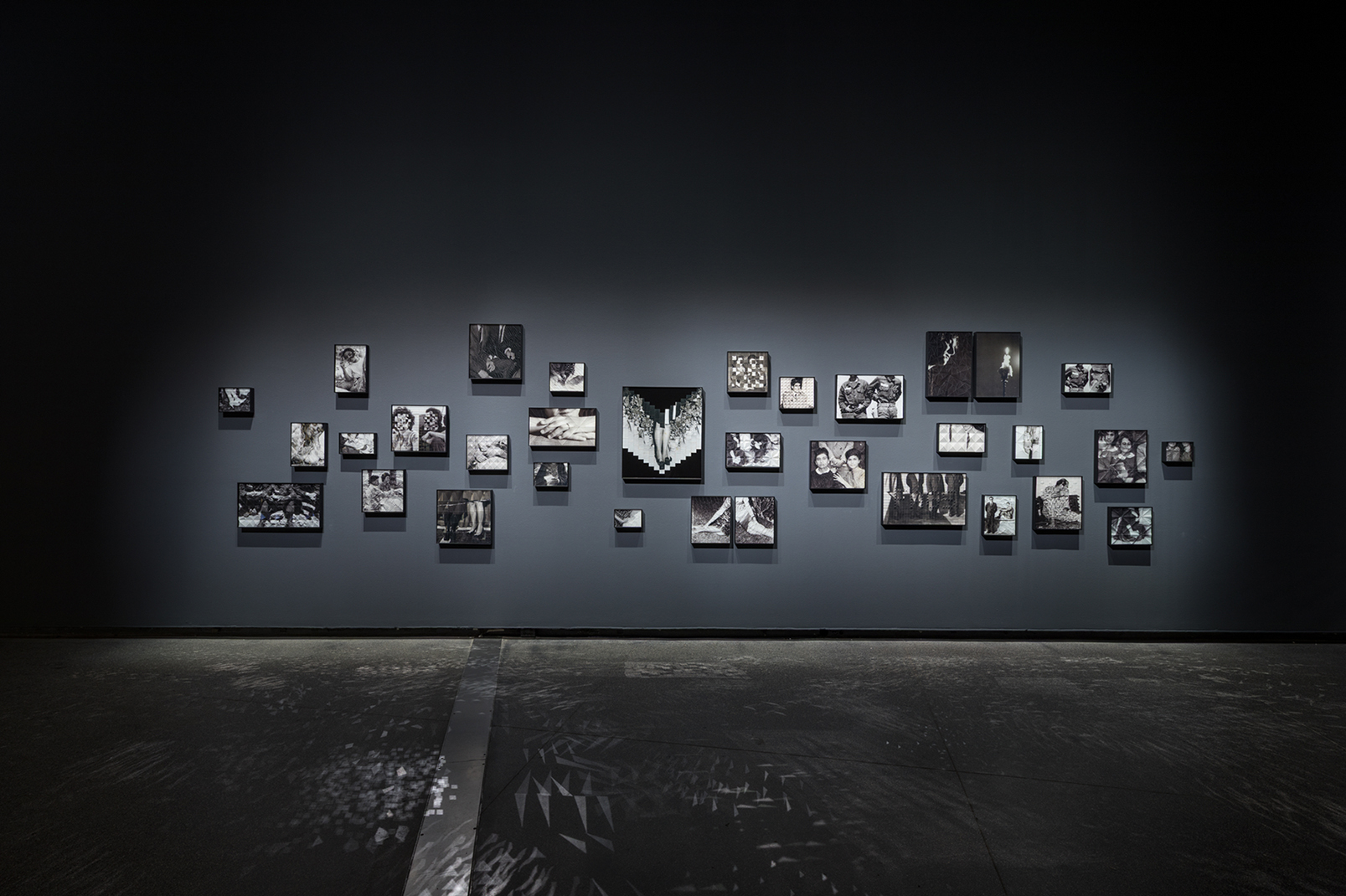
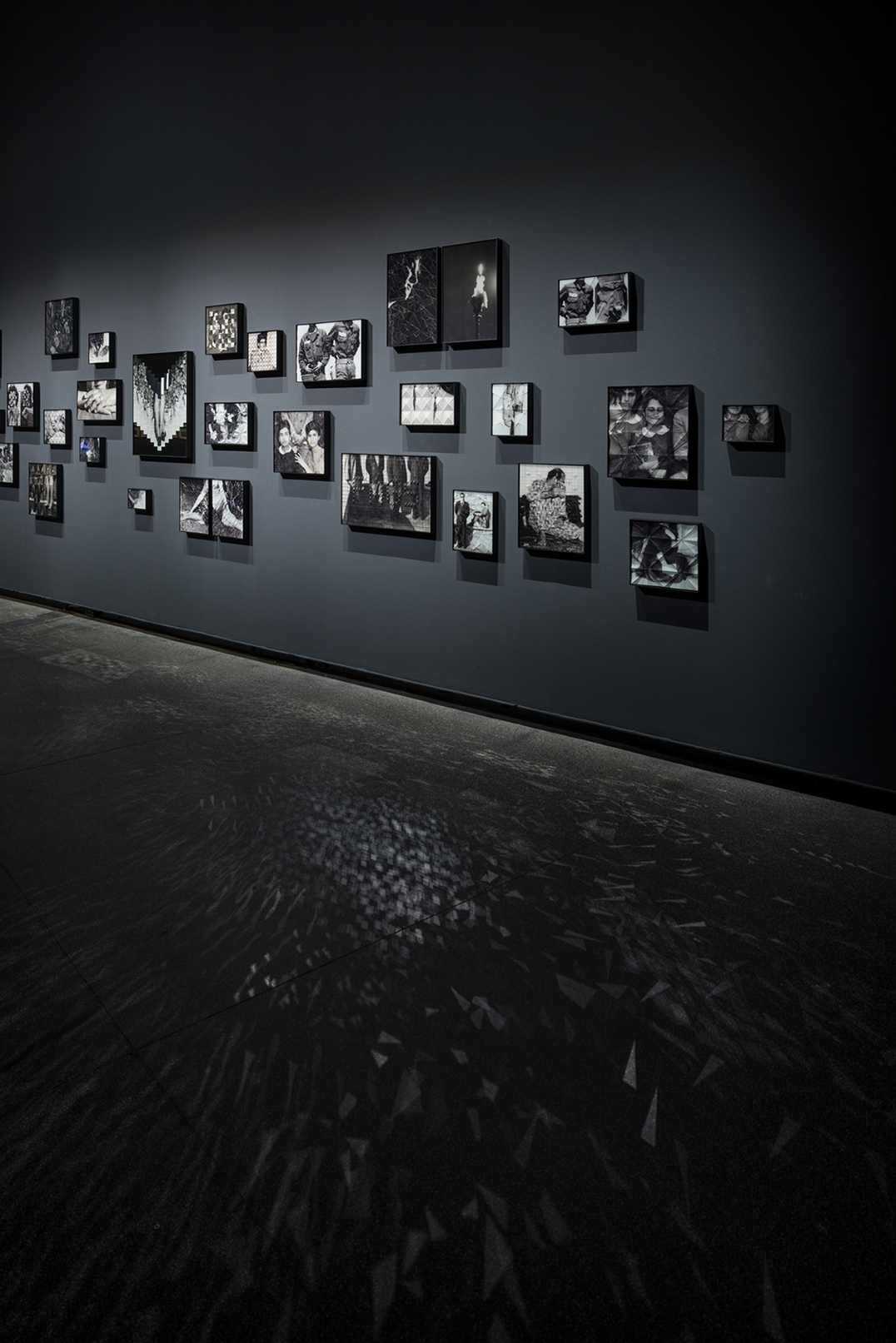
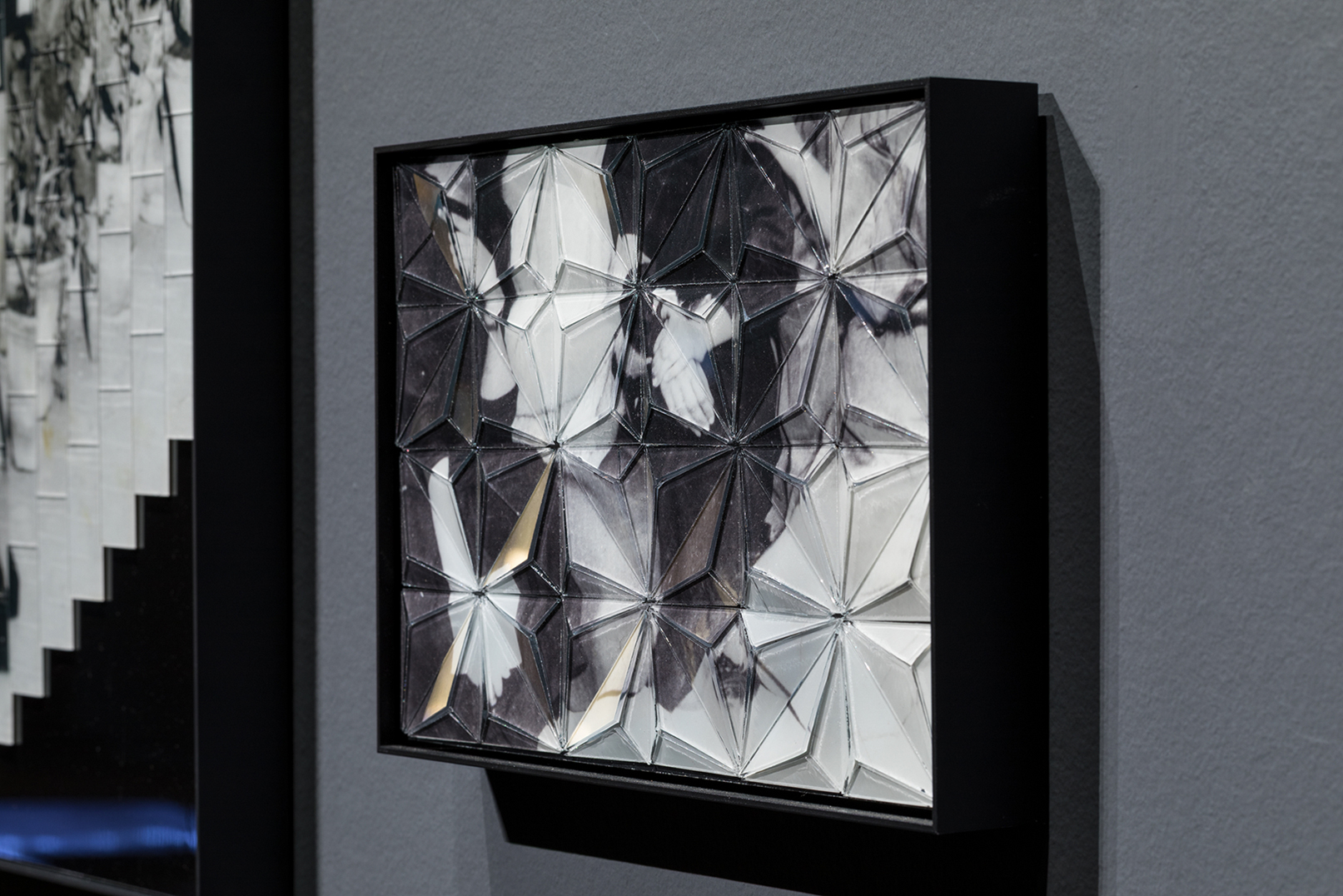
Ali Tahayori, Archive of Longing 2024 – 25 series (detail), installation view, Australian Centre for Contemporary Art, Melbourne. Courtesy the artist and THIS IS NO FANTASY, Naarm/Melbourne. Photograph: Andrew Curtis.

ALI TAHAYORI
Born 1980, Shiraz, Iran
Lives and works on Gadigal Country, Sydney NSW

Archive of Longing 2024 -25

UV print on glass, hand-cut glass, silicone on aluminium
Dimensions variable
Created on Gadigal and Darug Country
Courtesy of the artist and THIS IS NO FANTASY, Naarm/Melbourne

Key ideas/concepts: Love of family, photography, tradition, nostalgia, identity, memory, archives, diaspora

Ali Tahayori shares his yearning for intimacy in his series, Archive of Longing 2024–25, which delicately portrays “glimpses of love and longing reflected” within a familial history entangled in the political milieu of both pre-and post-revolutionary Iran. Using traditional Persian glass cutting techniques and geometric patterns known as Āine-Kāri, Tahayori reclaims family photographs once filtered through his mother’s narrative, to now recast them through a queer diasporic lens. Tahayori states, “revisiting these images after thirty years, I started seeing numerous possibilities, affiliations, and connections not included in my mother’s original narrative. I began to tell my story with them.” In the work, we see printed glass that has been broken and reassembled, creating mirrored relief-like sculptural forms which Tahayori describes as a search for “glimpses of intimacy and desire within a violent socio-political context.” By approaching the archive from his lived experience, Tahayori layers together personal histories, intimacy and memory in his highly skilled and contemporary rendering of traditional techniques. 

In the process, the family photographs are enlarged, cropped, and printed on glass. The printed glass is then broken and reassembled to create sculptural reliefs, searching for glimpses of intimacy and desire within a violent socio-political context. –  Ali Tahayori

Discussion questions

  • How do you think the artist made these artworks?
  • Ali Tahayori has used family photographs from his childhood to create these artworks. While he did not take the photos, would you still consider him to be the artist or creator of these works? Why or why not?
  • In what ways does an artwork like this change your perception of photography?


For Teachers

Primary activities

Mosaic Collage

In this activity, students respond to the series of works, Archive of Longing, by Ali Tahayori. Students will take inspiration from Tahayori’s works, which explore a traditional Iranian art technique called Āine-Kāri (phonetic ‘I- Nay- Curri’), which translates to ‘mirror work’.

Āine-Kāri or Ayeneh-kari (Persian: آینه‌کاری) is an Iranian artmaking technique where artists assemble finely cut mirrors together in geometric, calligraphic or foliage forms.

Step one: Love as a theme

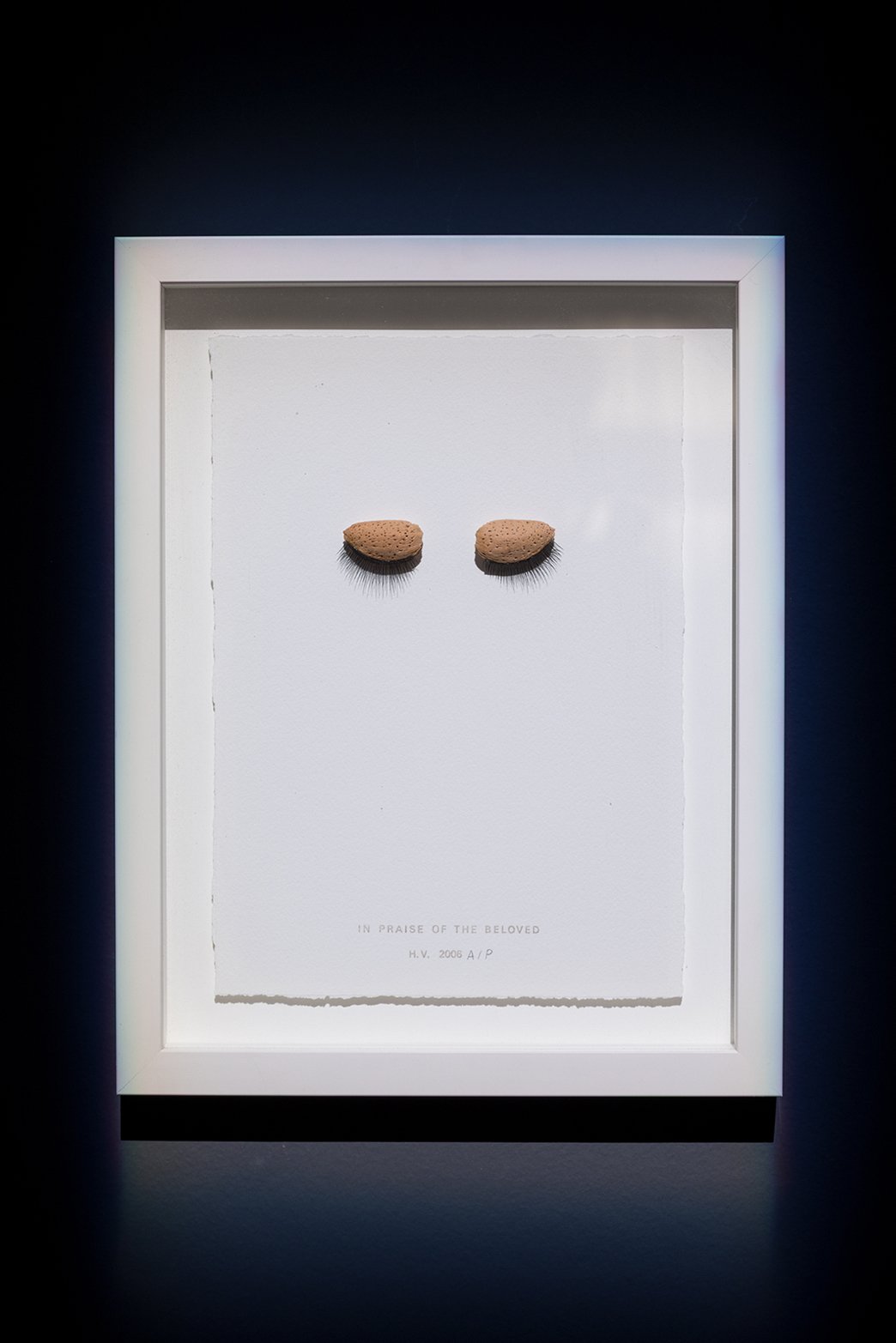
  • Consider your life story through the lens of love. What does love mean to you? You may like to use the prompts inspired by Hossein Valamenesh’s work, In Praise of the Beloved, also in the exhibition: What is my beloved? Who is my beloved? And to whom am I beloved? 
  • The curator Nur Shkembi asks us to consider the many forms of love beyond romantic love. Such as familial love, love of one’s siblings, friends or animals. Love of community, place or country. The exhibition also touches on devotional or spiritual love and “love beyond love”. What does this mean to you?

Step two: Selecting images

  • Select images from magazines which can be collaged together. 
  • Consider how you can reimagine and recast these images as symbols to tell your own story.

Step three: Considering composition

    • Consider cropping – what do you choose to make visible and invisible? This will determine your overall composition.
    • Consider spacing and the relationship between images to tell your story.
    • Which shapes (geometric or curved) compliment your images?
    • What is an overlooked detail that expresses love, intimacy and vulnerability? 
    • The artist feels that so much is expressed through the face, what happens when you obscure this? The tension between the seen and the unseen.
    • Consider the positioning of the subject or figure in the work.

Step four: Reassembling your image

    • Once you have chosen shapes you like and that compliment your images, reassemble your images in the style Āine-Kāri.
    • You may choose to reimagine your image on a dark background like Ali or choose another colour which compliments the other shades in your collage. 


Extension:
Take your own photos which explore what love means to you and then apply the Āine-Kāri technique to reimagine your photographs. 

Australian Curriculum / Visual Arts / Years F-6

  • Use and experiment with different materials, techniques, technologies and processes to make artworks (ACAVAM107)
  • Plan the display of artworks to enhance their meaning for an audience (ACAVAM116)
  • Use play, imagination, arts knowledge, processes and/or skills to discover possibilities and develop ideas (AC9AVAFD01)
  • Use visual conventions, visual arts processes and materials to plan and create artworks that communicate ideas, perspectives and/or meaning (AC9AVA6C01)
  • Share and/or display artworks and/or visual arts practice in informal settings (AC9AVA4P01

Victorian Curriculum / Visual Arts / Levels F-6

  • Respond to visual artworks and consider where and why people make visual artworks (VCAVAR020)
  • Explore visual conventions and use materials, techniques, technologies and processes specific to particular art forms, and to make artworks (VCAVAV026)
  • Create and display artworks to express ideas to an audience (VCAVAP023)
  • Explore ideas for artworks through play and visual arts processes (VC2AVAFE02)
  • Use visual conventions, visual arts processes and materials to create artworks that communicate ideas, experiences and observations (VC2AVA2C01)
  • Present and/or display artworks in formal and informal settings (VC2AVA4P01)

Curriculum Interpretation

This activity is devised in response to artworks in the exhibition Five Acts of Love, specifically Archive of Longing by Ali Tahayori.

By undertaking these activities, students:

  • Experiment with collage and assemblage techniques.
  • Select and experiment with new approaches to process, composition and technical execution.
  • Explore how a theme can be used to create an artwork.
  • Consider how selection of subject matter influences ideas and meanings in artworks.
  • Consider another artist’s process as inspiration for their own.
  • Engage in playful approaches to art making.

Secondary activities

Photography and Mosaic Collage

In this activity students respond to the series of works, Archive of Longing, by Ali Tahayori. Students will take inspiration from Tahayori’s works, which explore a traditional Iranian art technique called Āine-Kāri (phonetic ‘I- Nay- Curri’), which translates to ‘mirror work’.

Āine-Kāri or Ayeneh-kari (Persian: آینه‌کاری) is an Iranian artmaking technique where artists assemble finely cut mirrors together in geometric, calligraphic or foliage forms.

Step one: Love as a theme

  • Consider your life story through the lens of love. What does love mean to you? You may like to use the prompts inspired by Hossein Valamenesh’s work, In Praise of the Beloved:What is my beloved? Who is my beloved? And to whom am I beloved? 
  • The curator Nur Shkembi asks us to consider the many forms of love beyond romantic love. Such as familial love, love of one’s siblings, friends or animals. Love of community, place or country. The exhibition also touches on devotional or spiritual love and “love beyond love”. What does this mean to you?

Step two: Photography

  • Select your chosen camera. This could be a phone camera or stills camera. The type of camera you use will influence the way your images look.
  • Take a range of photos of objects or people which explore the theme of what love means to you. This could be up to 10 – 20 images. 

Step three: Considering elements of composition

  • Consider the mood – are your photos candid shots or staged?
  • Consider the environment – are your photos best taken indoors or outdoors? 
  • Consider the focal point – what is in or out of focus and what is in the foreground or background.
  • Consider lighting – how much light does your shot need to communicate the right mood.
  • Consider cropping – what do you choose to make visible and invisible? This will determine your overall composition.
  • Consider the positioning of the subject or figure in the work.
  • The artist, Ali Tahayori feels that so much is expressed through the face, what happens when you obscure this? The tension between the seen and the unseen.

Step four: Printing your photographs

  • From your shortlist of images, choose the most intriguing or successful 1-3 images and use them as the focus for your collage.
  • Consider the colour (or whether you would prefer to work in black and white as Ali Tahayori does) and the scale you would like to print your photographs. This could be from A5 up to A3, or larger if you have access to a larger printer.
  • For this activity we recommend making a couple of copies of your selected images with a photocopier as this will be helpful with the next step (when it comes to cutting and reassembling your image).

Step five: Reassembling your image

    • Consider what types of shapes (geometric or curved) compliment your images and what you are trying to communicate.
    • Once you have chosen shapes you like and that compliment your images, reassemble your images in the style Āine-Kāri.
    • You may choose to reimagine your image on a dark background like Ali Tahayori or choose another colour which compliments the shades in your photograph. 
    • Consider spacing and the relationship between images to tell your story.
    • What is an overlooked detail that expresses love, intimacy and vulnerability? 

Extension: Poetry

  • Create a short poem which encapsulates another aspect of ‘What love means to you’. 
  • Start with a stream of consciousness writing technique to get you going.
  • You may like to overlay the poetry onto one of your artworks or use it to title your works.
  • Consider the font and how that changes the images. Do you want to use a hand written text, typewriter font or all capitals, etc.
  • Experiment and explore the way poetry extends the meaning in your work and/or obscures your image.
  • Make a series of images in the above style which tells more of your story. How can you display your images in a way which continues to express what love means to you. How are they framed, how close are the images positioned to each other, etc.

Australian Curriculum / Visual Arts / Years 7-10

  • Experiment with visual conventions, visual arts processes and materials to develop skills (AC9AVA8D01)
  • Generate, document and develop ideas for artworks (AC9AVA8C01)
  • Select and manipulate visual conventions, visual arts processes and/or materials to create artworks that represent ideas, perspectives and/or meaning (AC9AVA8C02)

Victorian Curriculum / Visual Arts / Levels 7-10

  • Explore visual arts practices as inspiration to explore and develop themes, concepts or ideas in artworks (VCAVAE033)
  • Explore how artists use materials, techniques, technologies and processes to realise their intentions in artworks (VCAVAE034)
  • Select and manipulate materials, techniques, and technologies and processes in a range of art forms to express ideas, concepts and themes (VCAVAV042)

Curriculum Interpretation

This activity is devised in response to artworks in the exhibition Five Acts of Love, specifically Archive of Longing by Ali Tahayori. 

By undertaking this activity, students:

      • Experiment with expanded photographic techniques.
      • Consider another artist’s process as inspiration for their own.
      • Explore how a theme can be used to create an artwork.
      • Learn about the advantages and challenges of producing an image through a photography and collage technique.
      • Analyse how an artwork develops during the process of its making in ways that were not necessarily foreseen.
      • Consider how to display an artwork to communicate themes and ideas.
      • Explore how text can be used in place of imagery to express identity and personal experience.
      • Consider text as an alternative representative technique to images.
      • Practice the ability to take creative risks and let go of expectations.


Terms of Use

This education resource has been produced by ACCA Education to provide information and classroom support material for education visits to the exhibition Five Acts of Love. The reproduction and communication of this resource is permitted for educational purposes only.

Supported by