Julius von Bismarck: This is not the storm | Exhibition Kit

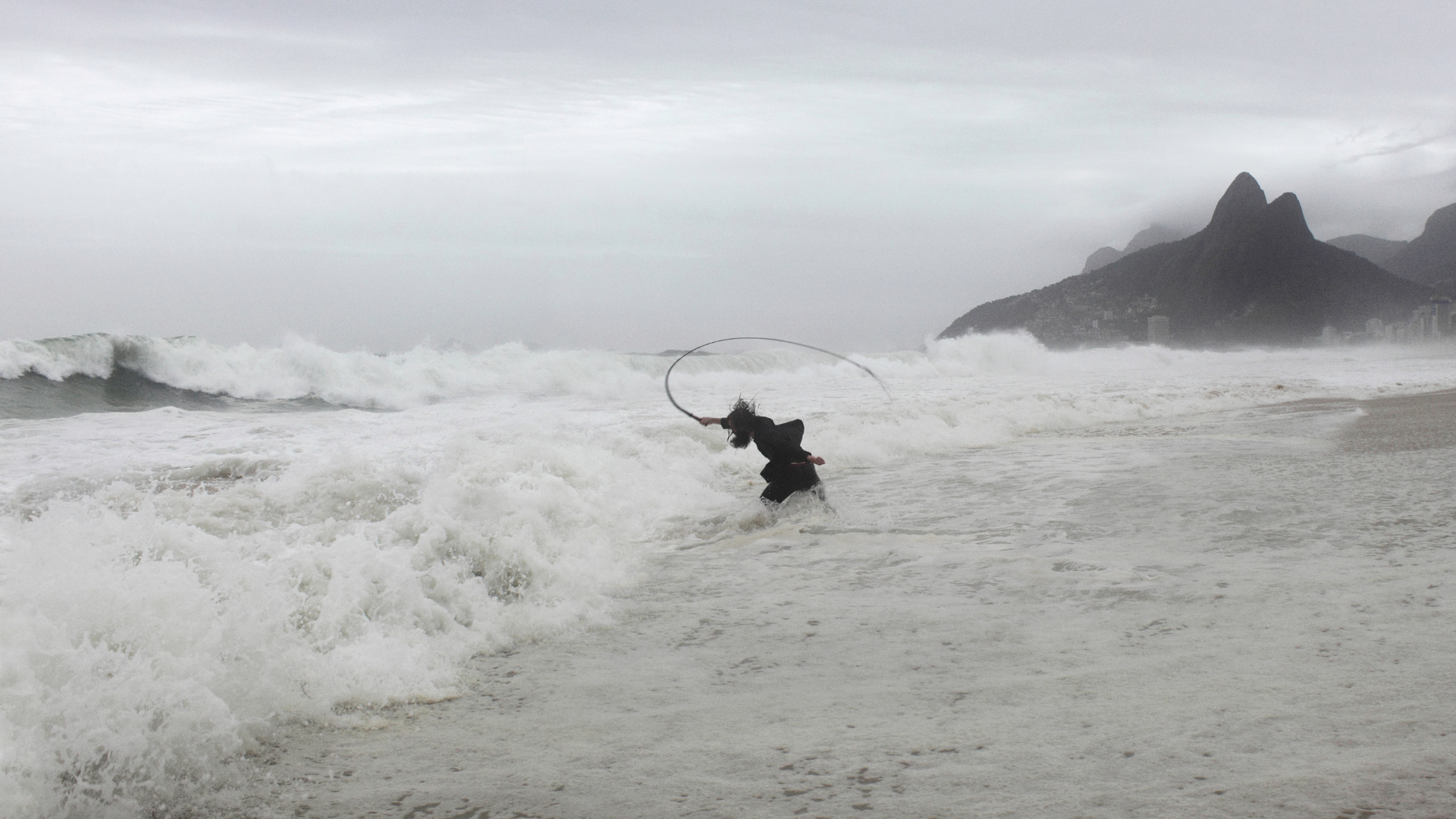
This is not the storm, is the first Australian solo exhibition by renowned German artist Julius von Bismarck. Encompassing a major new sculptural commission, alongside a selection of existing works from the past two decades, the exhibition introduces Australian audiences to a practice characterised by a sense of continual experimentation, scientific curiosity and technical virtuosity.

Julius von Bismarck challenges our understanding of the natural world, teasing apart the idea of “nature” as a social construct – a romanticised arcadia, an economic resource, a benevolent or vengeful power. His artworks emerge from direct, physical encounters with elemental forces. Playing with the awe, wonder and terror that natural phenomena can provoke, Bismarck constructs poetic, unsettling, and oftentimes absurd encounters that unsettle our conception of reality and our relationship with the environment. 

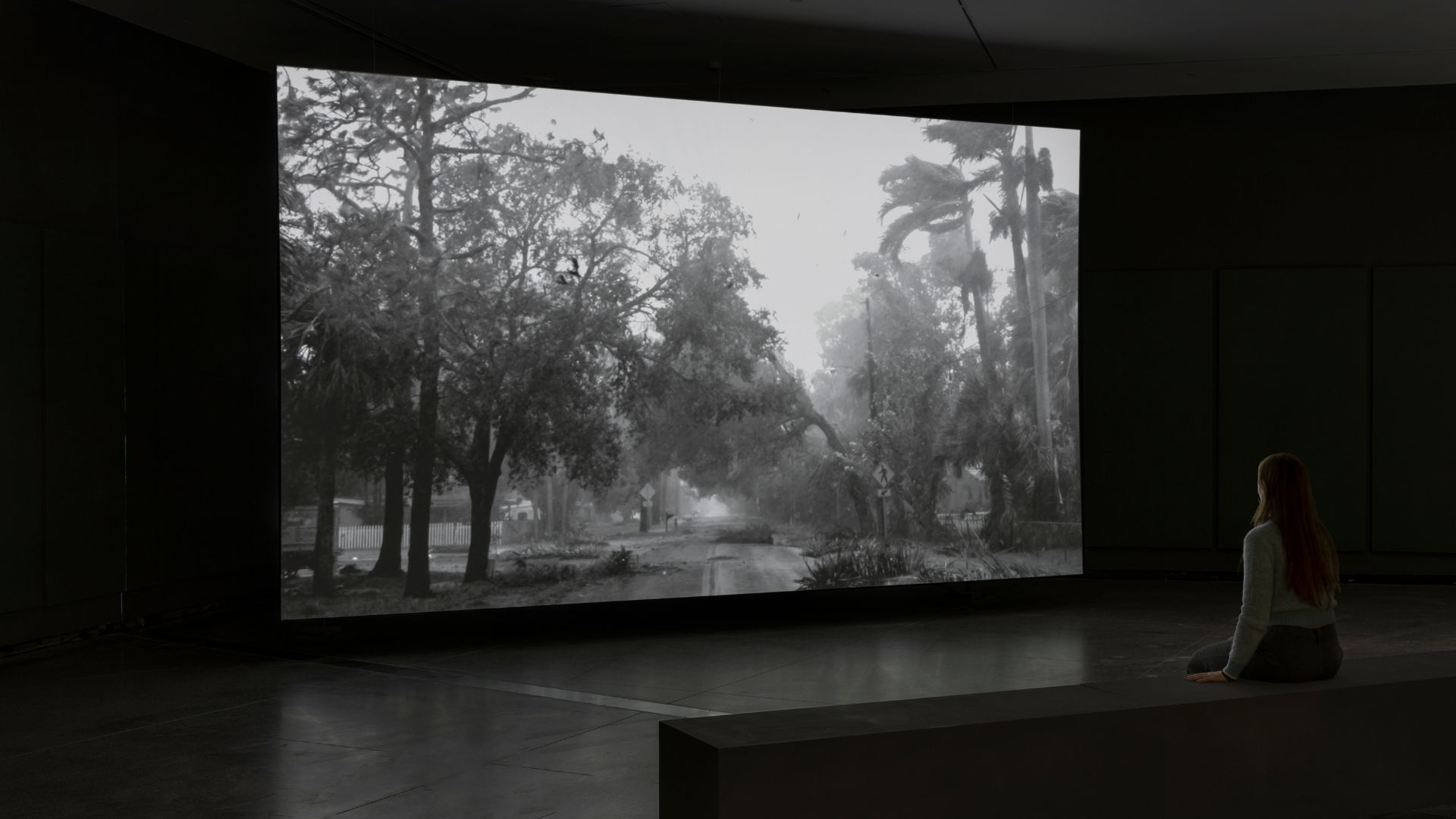
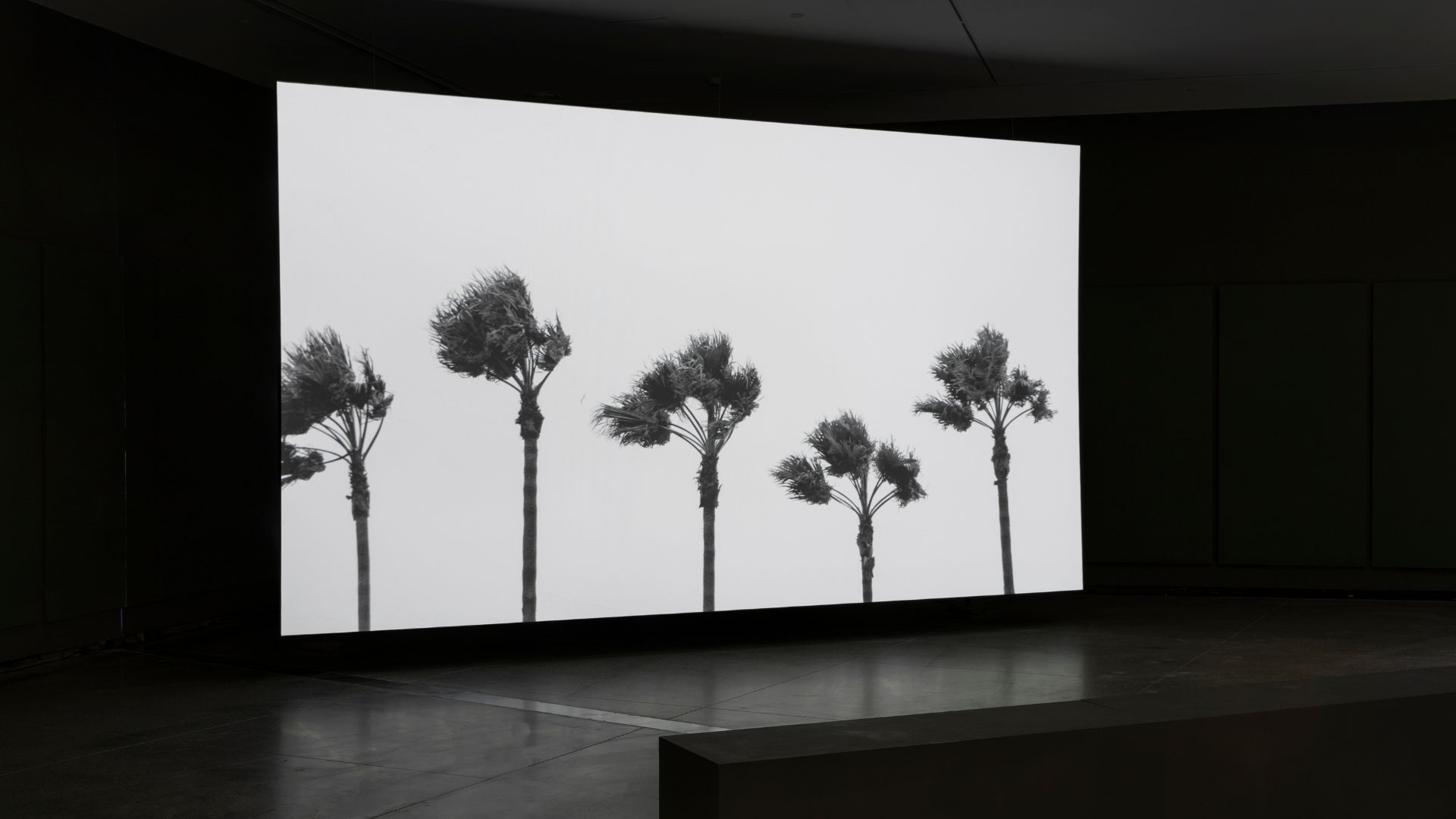
This is not the storm spans four distinct bodies of work, each portraying a world in motion. Currents and airflows course through the exhibition, with works that move from the gentle rustling of treetops and grassy dales to the powerful energy of fans, hurricanes, collisions and explosions. Bismarck places us in the centre of the action, where we register the physical effect of these dynamic forces but can also glimpse how we have been culturally conditioned to make sense of them. 

Shifting fluidly from the sublime to the farcical, This is not the storm, illustrates humanity and the natural world in lively correspondence. Challenging the hubris and fallacy of the human-centric logic and systems that have brought us into the age of the Anthropocene, Bismarck offers new visions of our vital relationship with the world around us. 

Artist: Julius von Bismarck

Curated by: Dr Shelley McSpedden & Myles Russell-Cook

ACCA warmly thanks the Goethe-Institut, Australia, for their support of this exhibition.

How to use this kit

This exhibition kit has been developed by ACCA Education to support learning in conjunction with the ACCA exhibition, Julius von Bismarck: This is not the storm. Three key artworks from the exhibition have been highlighted, with discussion questions to prompt students’ thinking. Primary and secondary activities, mapped to the Victorian and Australian Curriculum, can be found in the For Teachers section. Upon request, VCE students and teachers can view Support Material for further reading and teaching notes drawn from ACCA’s VCE Programs.

About the Artist

JULIUS VON BISMARCK
born 1983, Breisach am Rhein, Germany
lives and works in Berlin, Germany and in Switzerland

The artist studied at the Berlin University of the Arts (2005-2013) and the Hunter College, New York (2007). The artists’ practice is rooted in extensive research and experimentation. Spanning a wide range of forms, from kinetic sculptures and photographs to video installations and landscapes. Recent solo and group exhibitions include: When Platitudes Become Form, Berlinische Galerie, Museum für Moderne Kunst, Berlin (2023); The Bright Side of the Desert Moon, Noor Riyadh Festival, Riyadh (2023); Mexichrome: Fotografía y color en México, Museo del Palacio de Bellas Artes, Mexico City (2023); La Pista 500, Pinacoteca Agnelli, Turin (2023); The Adventure of Abstraction, Sprengel Museum, Hanover (2023); Forest Through the Trees, Adam Aronson Fine Arts Center, St. Louis (2022); among many others.

“I was surprised that my name, a name that I didn’t care much about back then, was known so widely. For me, the name is more of a fun fact, a trivial coincidence with this historically important figure. Plus, it took me some time to figure out what Otto von Bismarck actually stood for, because in German schools you learn a lot about his role as the first Reichskanzler and his relevance for German nation building, but not so much about this entanglement in German colonial politics. I’m not so interested in categories of good for bad, but I know this name is still used by people in power, to justify their ideologies and actions.” Julius von Bismarck, When Platitudes Become Form. Berlinische Galerie, Museum fur Moderne Kunst, Pg 52

Exhibition Wall Labels
ACCA Artist Interview | Julius von Bismarck (coming soon)

Image: Photograph of Julius von Bismarck by Katja Strempel.

Key Artworks

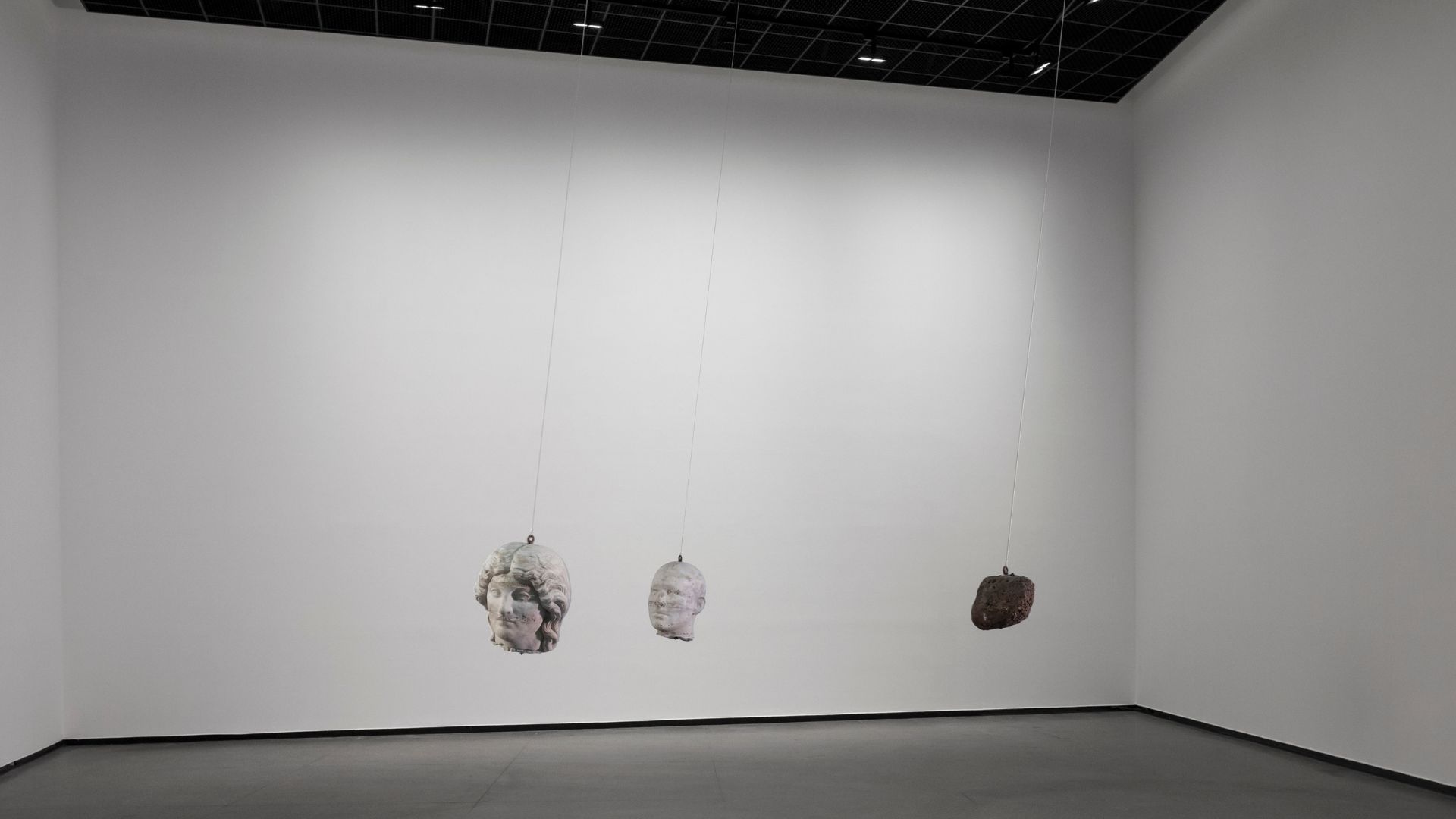
Julius von Bismarck, Two heads with one stone 2026, installation view. Commissioned by Australian Centre for Contemporary Art, Melbourne, 2026. Courtesy the artist; alexander levy, Berlin; Sies + Hoke, Dusseldorf; Esther Schipper, Berlin, Paris, Seoul. Photograph: Andrew Curtis.

Julius von Bismarck, Two heads with one stone 2026

Jesmonite sculptures, motorised sensors, rock
dimensions variable
Courtesy the artist; alexander levy, Berlin; Sies + Höke, Düsseldorf; Esther Schipper, Berlin, Paris, Seoul

Key ideas/concepts: Kinetic installation, human and non human organic forms, collaboration, history

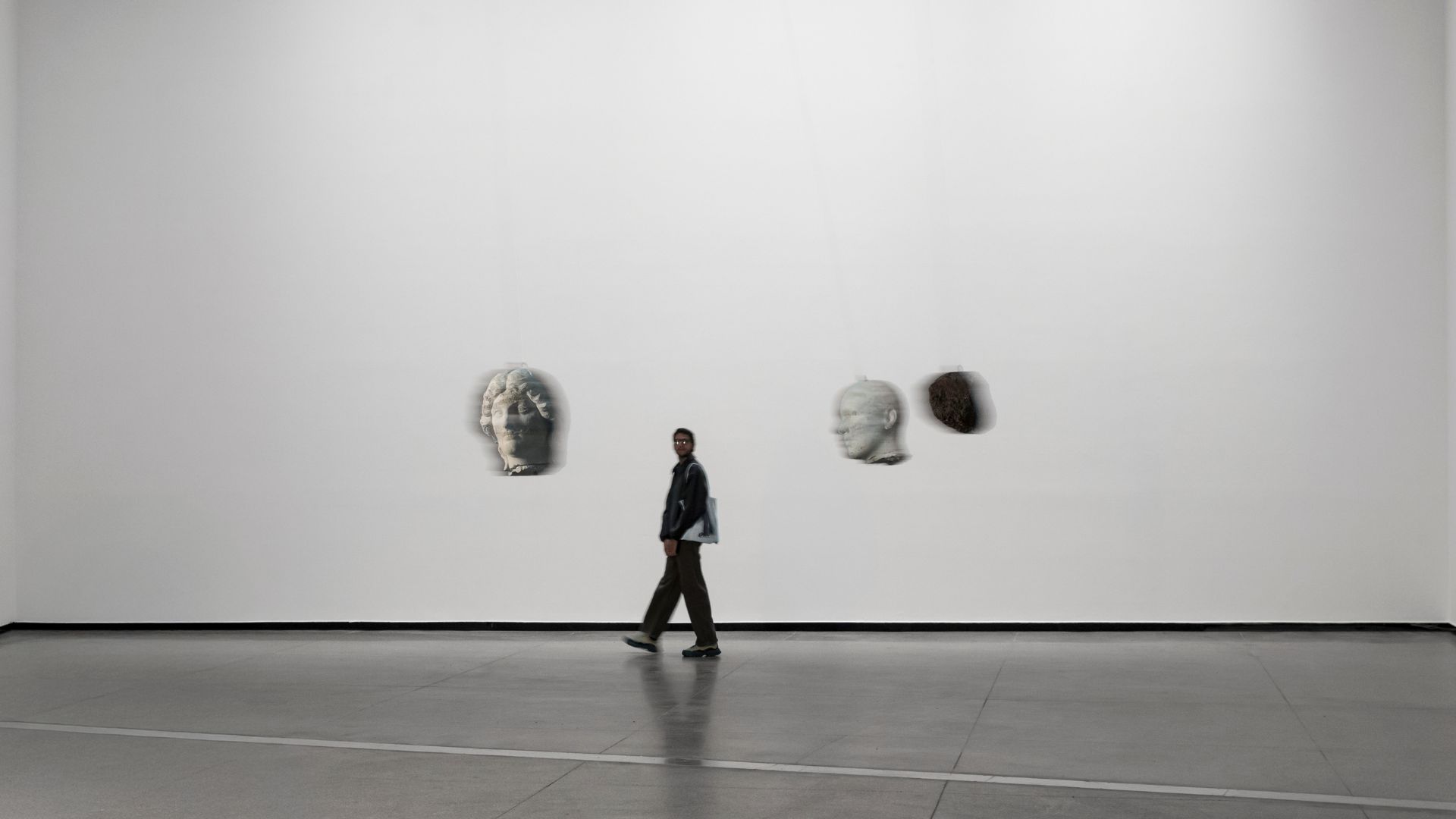
Two heads with one stone 2026 is a newly commissioned kinetic spatial installation in which three objects, locally sourced rock alongside two sculptural heads, swing in synchronised movements from long pendulums suspended from ACCA’s ceiling. Weathered and aged, seemingly carved from stone, the heads appear like ruins from ancient monuments. While one references a sculpture of Mother Earth that the artist saw in Italy, the other is derived from a generic digital head, the kind of blank starting point for a video game avatar before it has been customised.

Each object moves in a particular choreography, their mathematically computed motions setting them in varying relationships with the other objects in the work. The triangulation of the three elements creates a palpable sense of tension and anticipation – sequences where they all move in synchronicity are offset by others in which one is inevitably privileged or excluded. Their mesmerising movement evokes an expanding catalogue of relations, shifting from moments of gentle intimacy to episodes of violent separation, from flashes of lively collaboration to periods of forlorn isolation.

Two heads with one stone is the first time that figurative elements have been introduced in the series of suspended kinetic sculptures that Bismarck has been developing since 2012. Set in motion like this, all things – human and non-human, organic and inorganic forms – are seen to possess equal agency. The work invites us to contemplate the various ways that these elements inform and affect each other.

Discussion Questions

  • What mechanism is controlling this work? Is it just weight or is there something more complex driving their motion.
  • What might the pairing of a Mother Earth sculpture, a rock and a generic digital avatar head suggest about the work’s themes?
  • How does the triangulation of three objects create tension (does it), and what effect does this have on the viewer?
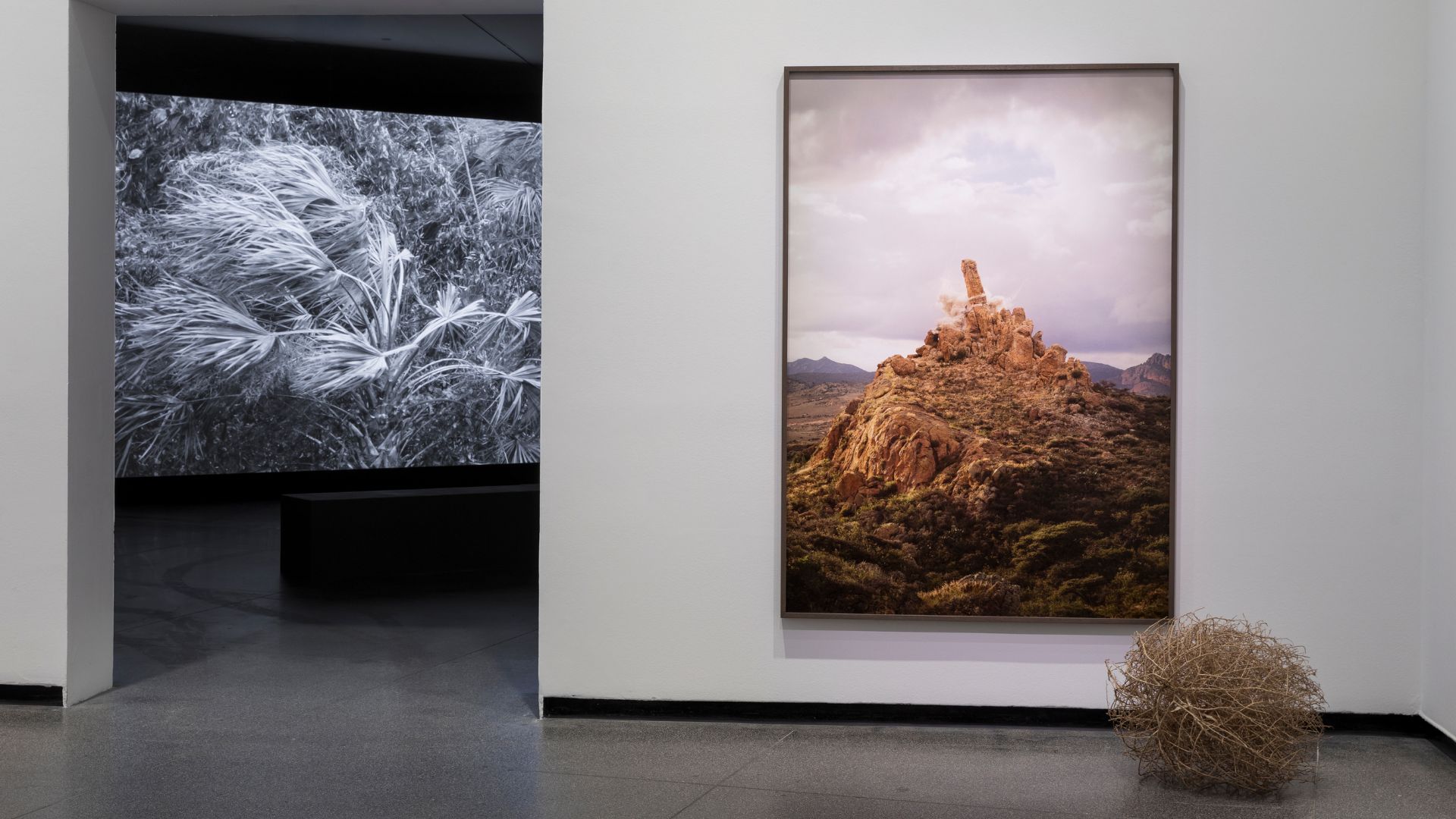
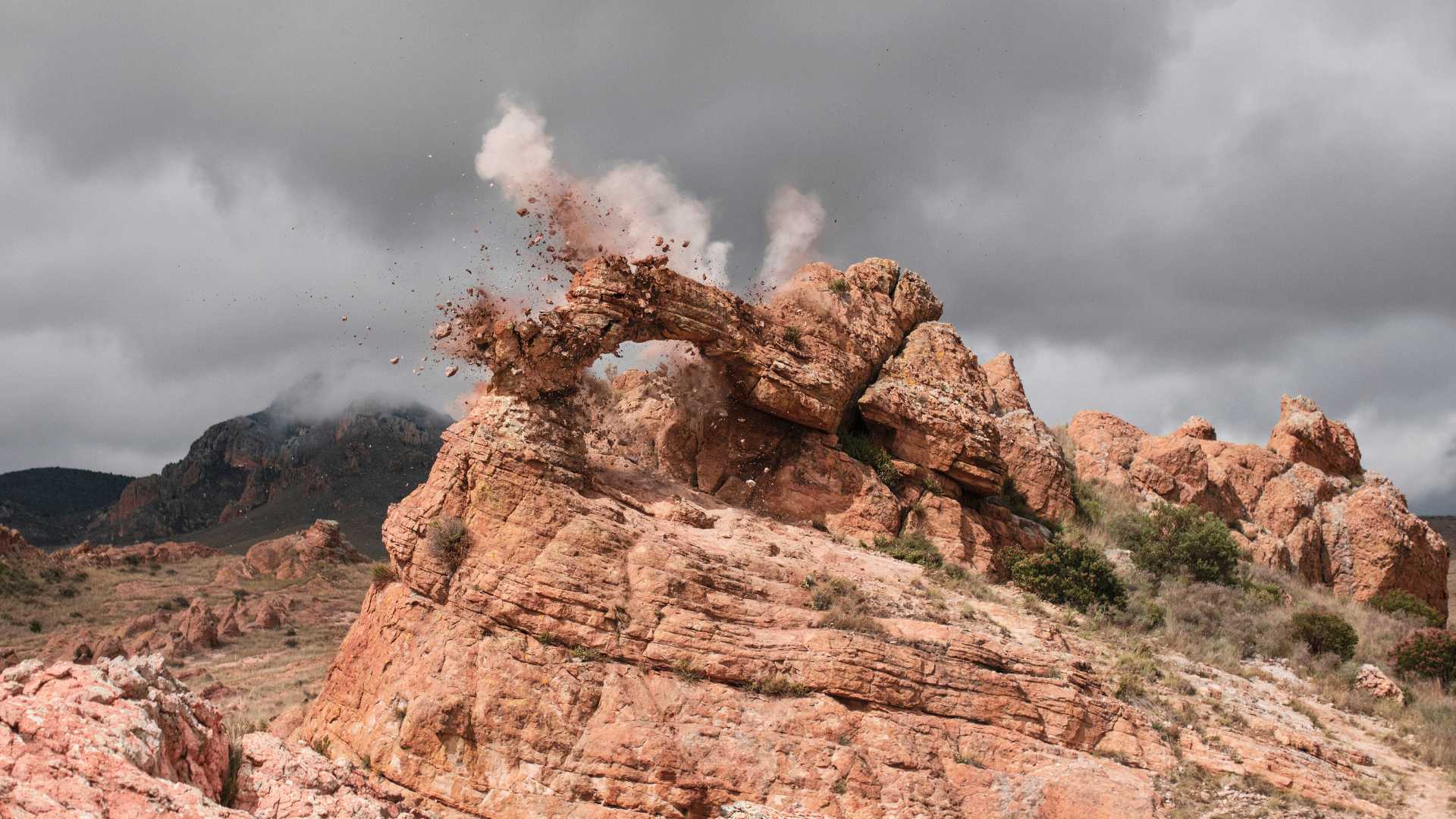
Julius von Bismarck, and Julian Charrière, Grand Staircase Escalante, We Must Ask You to Leave (mountain view drive), 2018, Courtesy the artists © The artists; VG Bild-Kunst, Bonn 2023

Julius von Bismarck & Julian Charrière, Grand staircase escalante, we must ask you to leave (mountain view drive), 2018

archival pigment print on Hahnemühle Photo Rag Baryta
155 x 236 cm (framed)
Courtesy the artist; alexander levy, Berlin; Sies + Höke, Düsseldorf; Esther Schipper, Berlin, Paris, Seoul

JULIUS VON BISMARCK
born 1983, Breisach am Rhein, Germany
lives and works in Berlin, Germany and in Switzerland

JULIAN CHARRIÈRE
born in 1987 in Morges, Switzerland
lives and works in Berlin, Germany

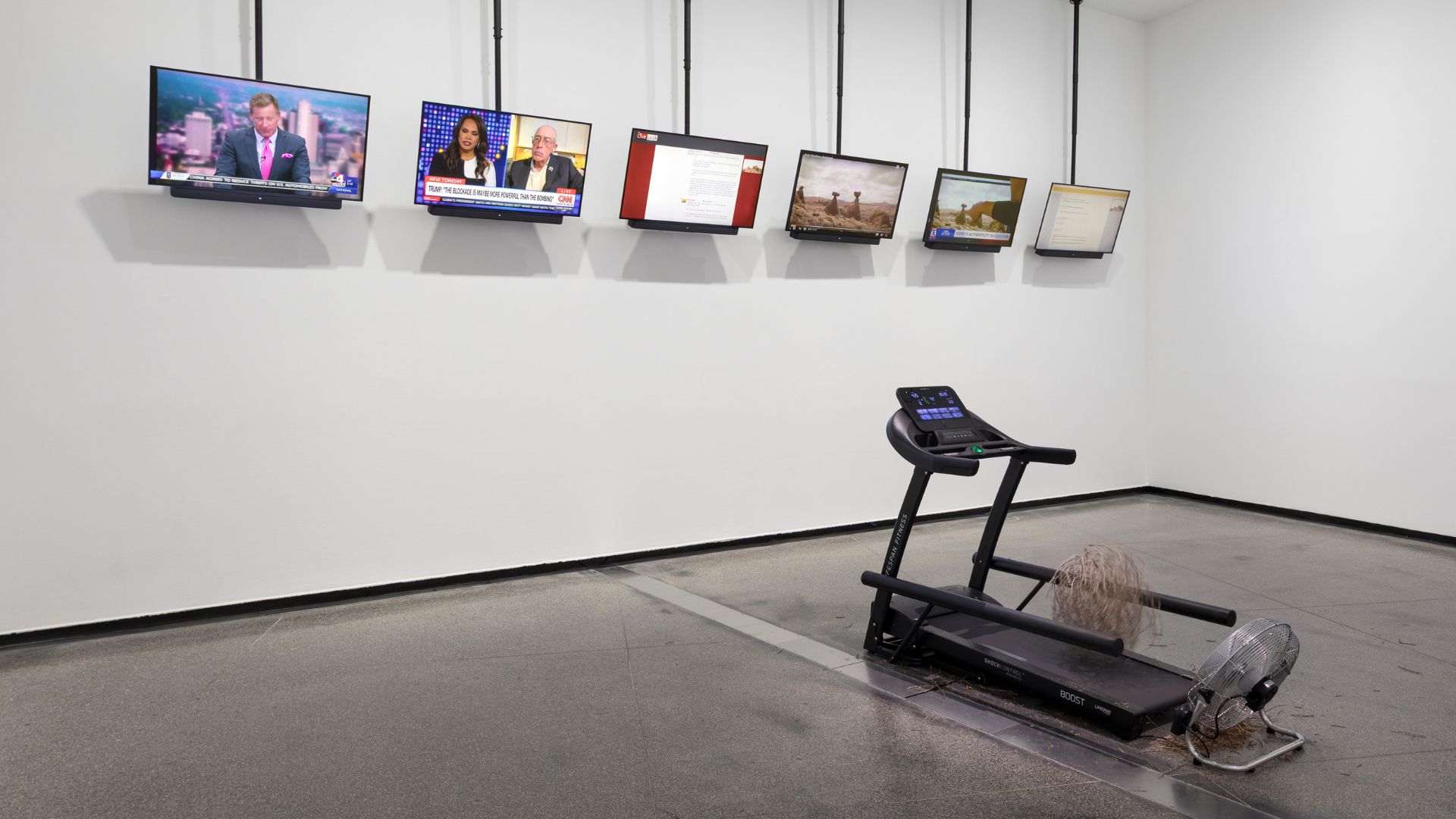
In the real world it doesn’t happen that perfectly 2019
6 screen video installation: 5 part channel video loop plus one live news channel, stereo sound 17mins:32sec (looped)
Courtesy the artist; alexander levy, Berlin; Sies + Höke, Düsseldorf; Esther Schipper, Berlin, Paris, Seoul

Island in the sky, we must ask you to leave (vertical viewpoint) 2018
archival pigment print on Hahnemühle Photo Rag Baryta
221 x 155 cm (framed)
Courtesy the artist; alexander levy, Berlin; Sies + Höke, Düsseldorf; Esther Schipper, Berlin, Paris, Seoul

Grand staircase escalante, we must ask you to leave (mountain view drive) 2018
archival pigment print on Hahnemühle Photo Rag Baryta
155 x 236 cm (framed)
Courtesy the artist; alexander levy, Berlin; Sies + Höke, Düsseldorf; Esther Schipper, Berlin, Paris, Seoul

Canyonlands, we must ask you to leave (scenic viewpoint) 2018
archival pigment print on Hahnemühle Photo Rag Baryta
155 x 281 cm (framed)
Courtesy the artist; alexander levy, Berlin; Sies + Höke, Düsseldorf; Esther Schipper, Berlin, Paris, Seoul

Key ideas/concepts: Truth/reality versus fiction, news and media coverage, ‘fake news’, value, ethics

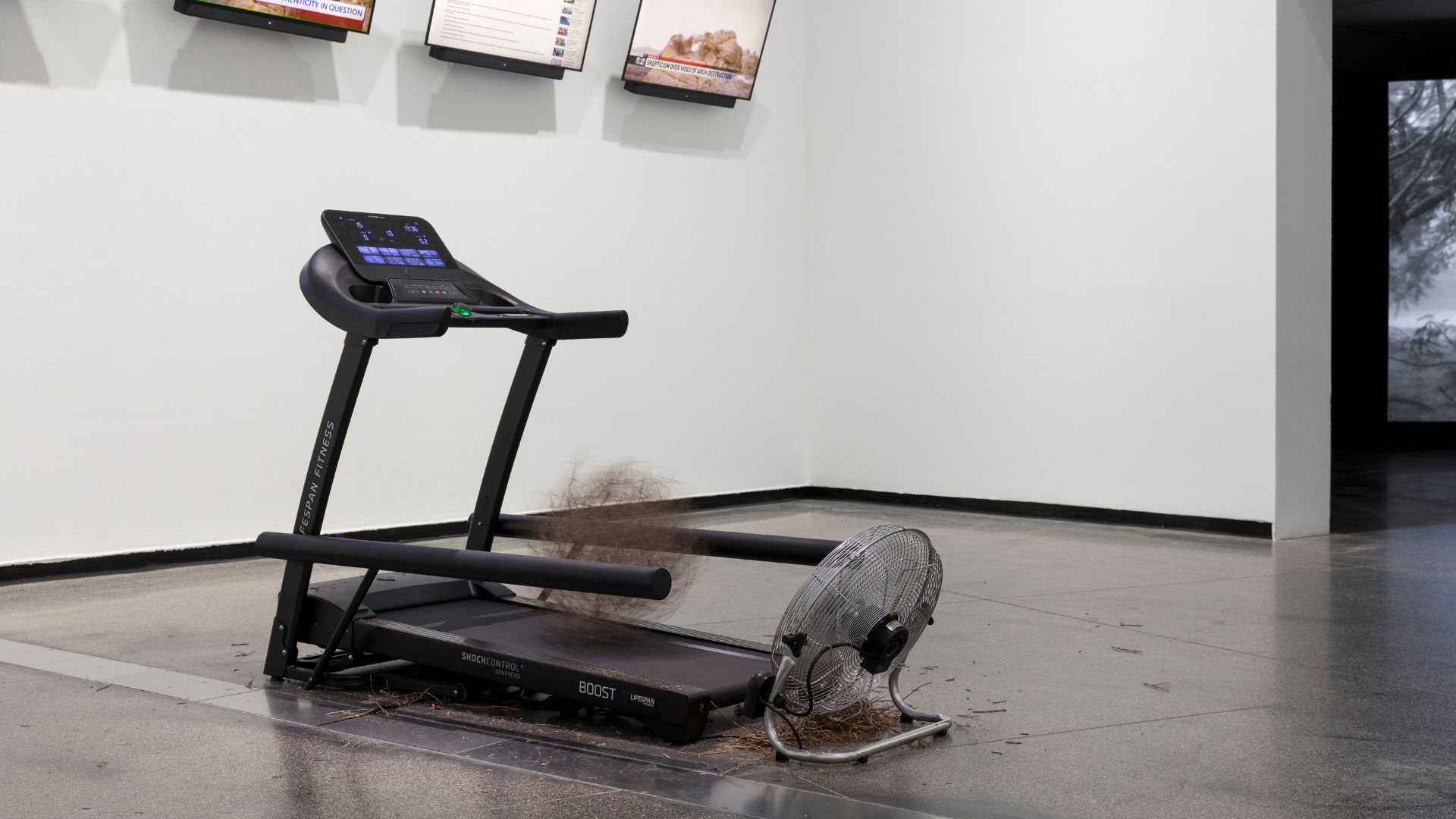
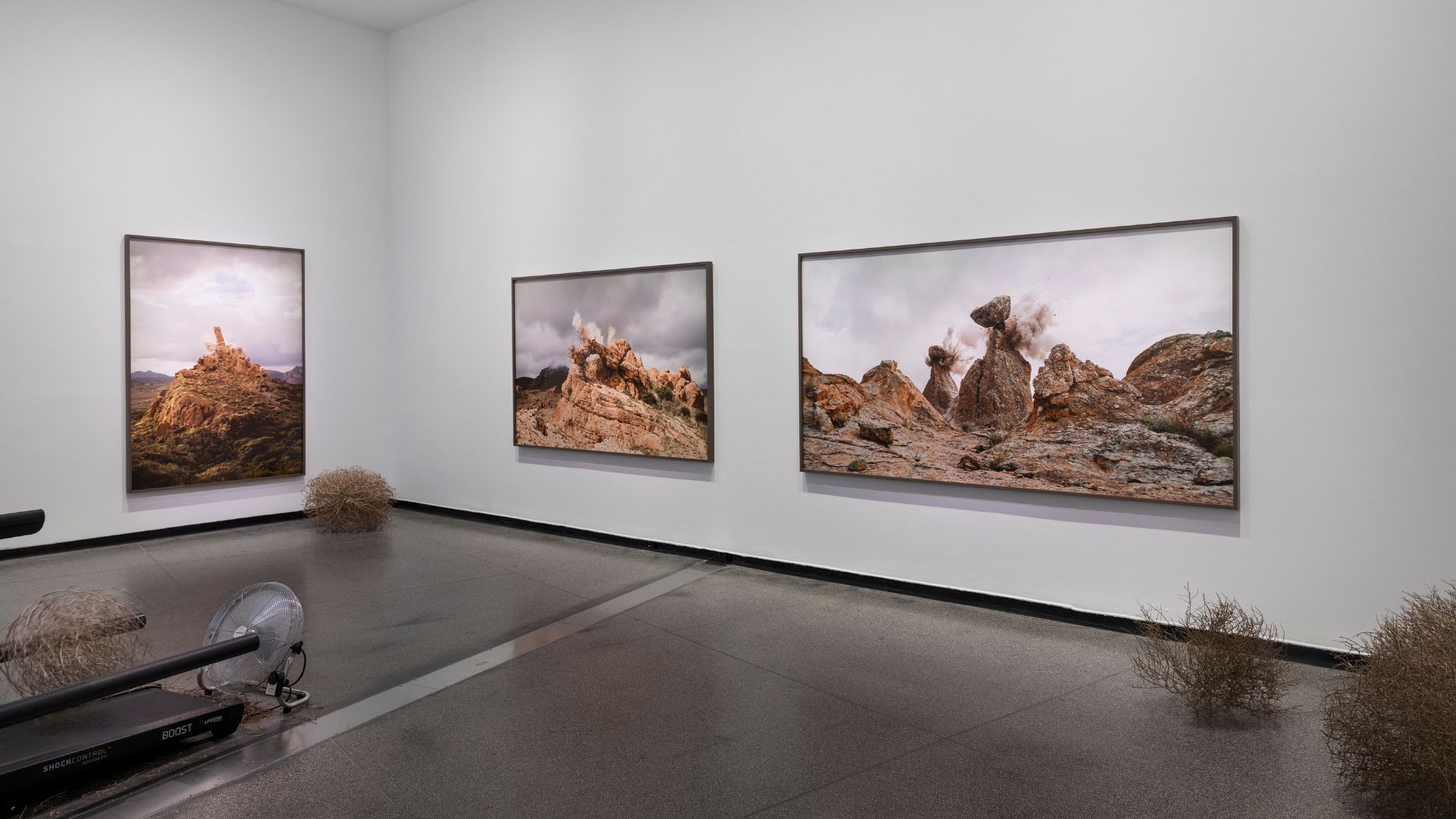
Three large-format photographs from the I am afraid I must ask you to leave series document the simulated explosion of natural monuments* in US national parks. Bismarck and Charrière had replicas of several striking rock formations built to original scale, then blew them up and leaked the videos, causing a media storm. Monitors on the opposite wall, show real-life TV news coverage and social media comments sensationally debating the veracity of the orchestrated events. 

This series explores how some aspects of nature are considered to be more valuable and worthy of protection than others, and are co-opted into broader nationalist and political narratives. In playfully inserting the work into the delirium of the 24-hour new cycle, Bismarck and Charrière demonstrate how mediated our relationship to world around us is and just how easy that is to distort.

“I am deeply interested in the constructed notion of landscape, where this idea comes from, what it’s political and historical implications are. I’m also intrigued by what makes something a monument or not, and the contract between something living and an monumental statute, a construct meant to be everlasting. A monument, on the other hand is expected to remain unchanged, eternally reflecting a specify concept of power or history – a static object.” Julius von Bismarck, When Platitudes Become Form. Berlinische Galerie, Museum fur Moderne Kunst, Pg 51


Discussion Questions

  • What are the elements that make up this artwork?
  • Who decides the value of a monument? Is its value located in its physical form, the community who erected it or its historical significance?
  • Does it matter that the destruction was real rather than digitally simulated? Why would this be important to the artist? 

*Monument – A monument is a structure, building, or site—such as a statue, obelisk, or historic location—erected or preserved to commemorate a notable person, event, or era. They often hold cultural, historical, or architectural significance and serve as lasting reminders of history. Merriam Webster dictionary

Mini Make

Monuments – choose an existing monument or site. Design an intervention with either the existing monument or site to alter the meaning. Consider how history is told in part through these types of monuments and significant sites. What aspect of history would you like to emphasise, challenge or rewrite?

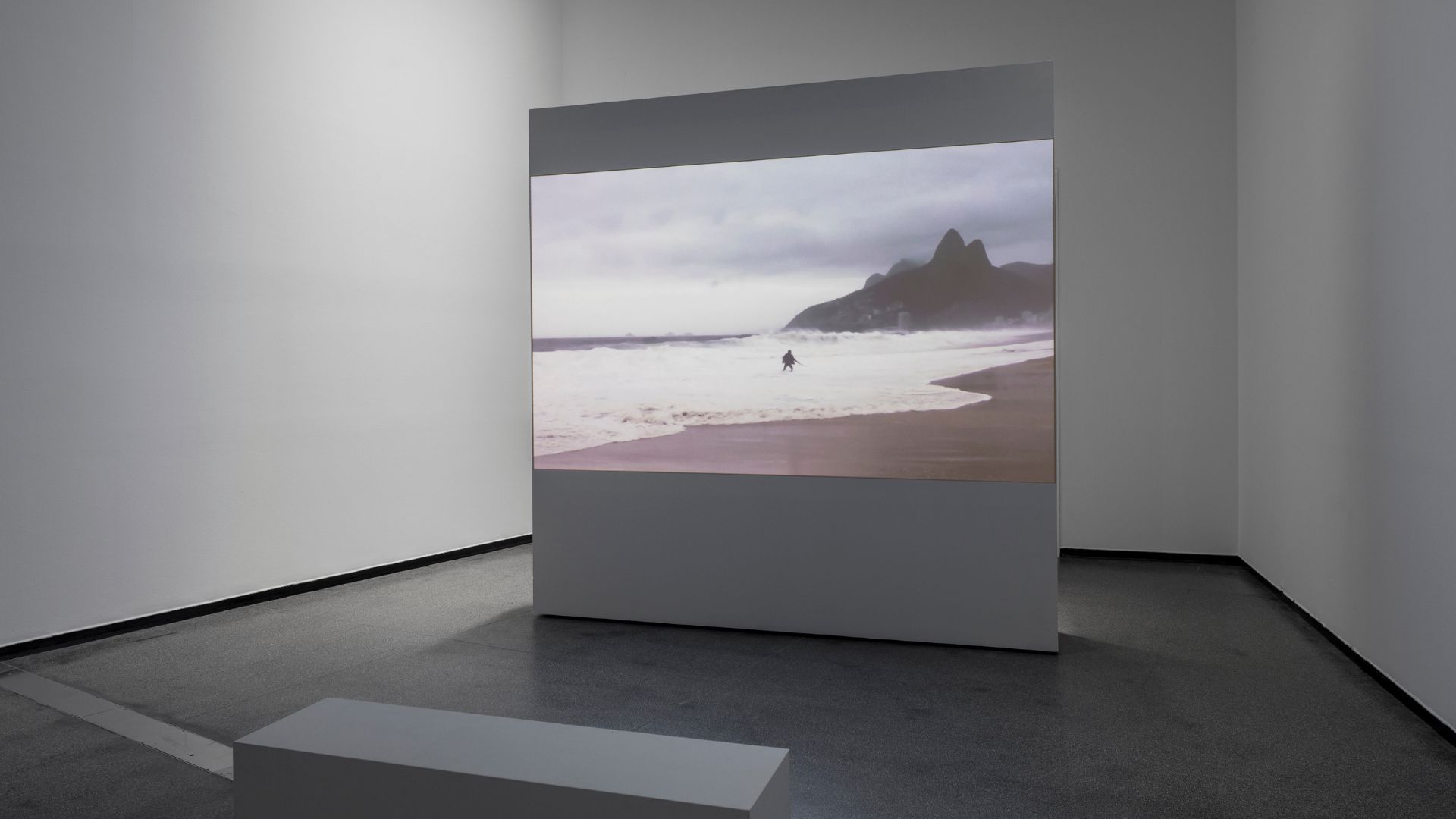
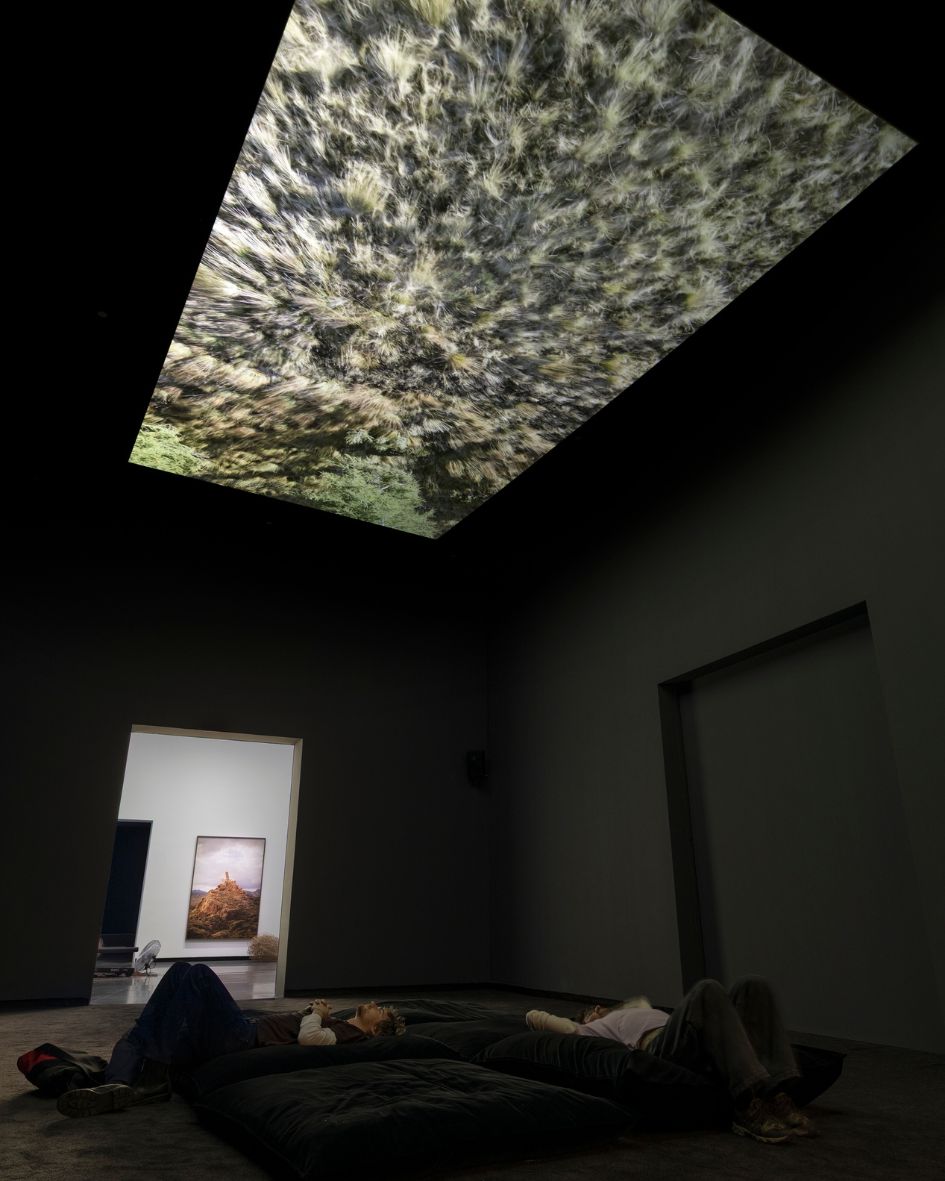
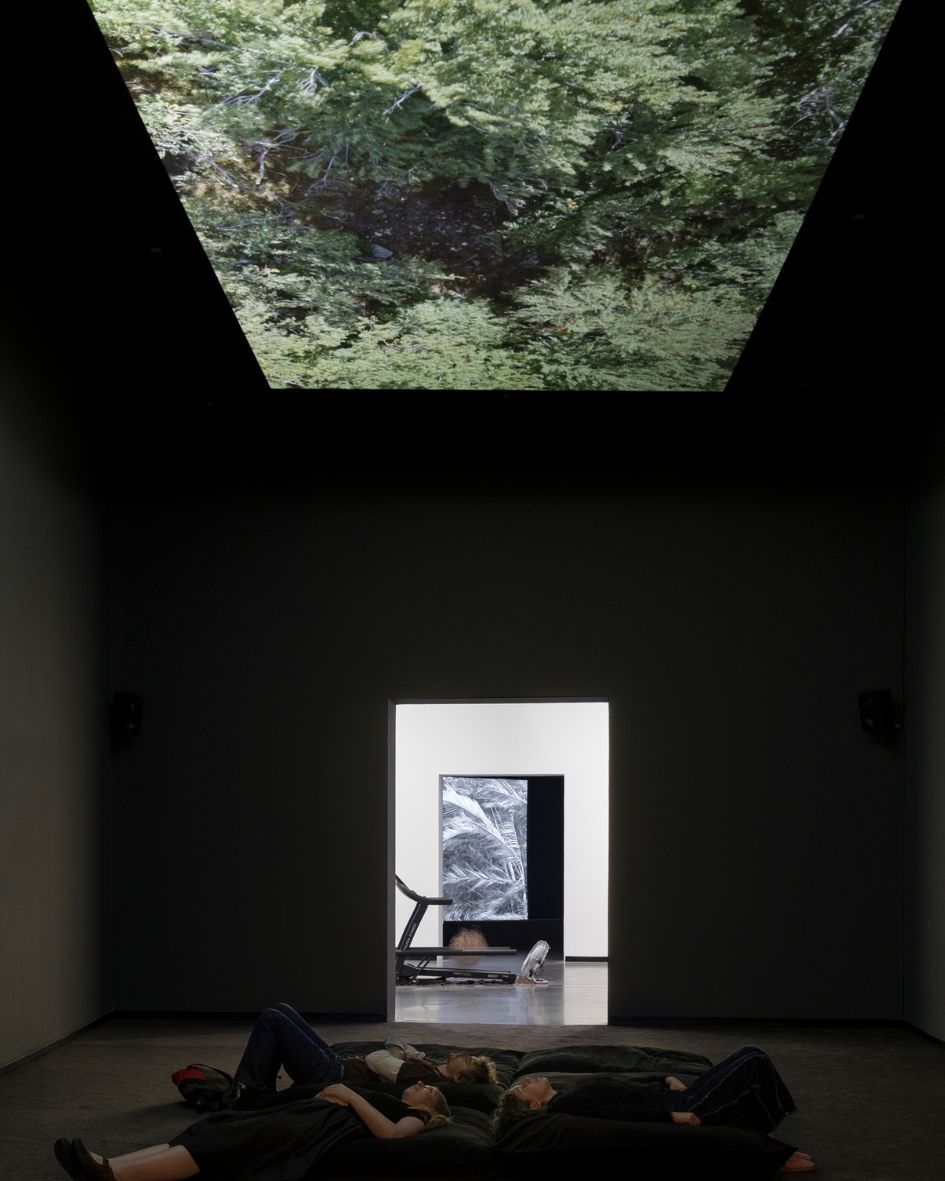
Julius von Bismarck, Geh aus mein Herz! (Go forth, my heart!) Swiss Alps 2023, installation view, Australian Centre for Contemporary Art, Melbourne, 2026. Courtesy the artist; alexander levy, Berlin; Sies + Hoke, Dusseldorf; Esther Schipper, Berlin, Paris, Seoul. Photograph: Andrew Curtis.

Julius von Bismarck, Geh aus mein Herz! (Go forth, my heart!) Swiss Alps, 2023

single-channel video, stereo sound
55min:37sec (looped)
Courtesy the artist; alexander levy, Berlin; Sies + Höke, Düsseldorf; Esther Schipper, Berlin, Paris, Seoul

Key ideas/concepts: video installation, wind, perspective, movement, staging (natural versus humanmade/constructed), reality/truth versus fiction

The video installation Geh aus mein Herz! (Go forth, my heart!) 2023 presents us with a bird’s eye view of stretches of lush Alpine scenery swirling with air currents as the camera gently glides above the landscape. Based on the nature film genre, the work continues Julius von Bismarck’s inquiry into the construction and staging of nature. The calming imagery of rustling grasses and undulating treetops is accompanied by a choir singing the hymn Go forth, my heart, and seek delight, sung by the artist’s relatives. A family favourite, the hymn celebrates the beauty of the natural environment and the joy in contemplating it, revealing a socially constructed understanding of nature as a gift from a benevolent God, to be enjoyed by humanity.  

The singing family alternates with a German choir and an organ concert. The beatific soundscape shifts in tenor from a sacred atmosphere to eerie quiet and then to forceful gusts of wind. The source of the air currents twirling through the landscape remains concealed, yet it directs our attention. It is as if the breath of the choralists is animating the scenes below. The movement of the trees and plants is actually caused by the downdraft of the helicopter from which the artist captured the video footage. The beauty and reverie of the imagery is undermined by the fact that it is the helicopter’s toxic emissions that animate the countryside. The mere act of looking at the landscape has inevitably brought about a change to it.

“For me, the perspective in the film is violent, it’s about the brutality of our gaze. It’s the centre theme of the entire exhibition, if you will. The forest, when viewed from above, is beautiful, but to attain that perspective, you need a helicopter – a rather brute machine. In order to stay airborne, it blows down so much wind that it’s almost like a storm below, it disturbs everything beneath it. Historically, when a storm approaches, it was believed that the gods, or the God in monotheistic Christianity, sent it, and now it’s a man made machine.” Julius von Bismarck, When Platitudes Become Form. Berlinische Galerie, Museum fur Moderne Kunst, Pg 54

Discussion Questions

  • Describe the artwork. What does the artwork make you feel?
  • In what ways does this work challenge or complicate our understanding of what is “natural”?
  • How does the presence of the helicopter create a tension or contradiction within the work?

For Teachers

Primary activities

Drawing Experiments

This activity is devised in response to artworks in the exhibition Julius von Bismarck: This is not the storm, including Two heads with one stone 2026. In this activity, students will undertake a series of artistic experiments that challenge their assumptions of what drawing is and create inventions that reveal something new.

Step One: Collect your materials. You will need a large piece of paper, some drawing tools (e.g. charcoal, pencils, textas, etc.) and a roll of strong tape (e.g. masking tape or duct tape rather than sticky tape). You will also need a collection of objects (for example you might like to use sticks, rocks, leaves, a small ball e.g. a tennis ball or similar, a spinning top toy, etc.).

Step Two: Using the prompts below, consider how you can combine at least one drawing tool with at least one object to create a new drawing ‘invention’. Test your drawing invention on your paper. Note the kind of marks that are possible with your invention. Notice also what movement is needed from you to ‘activate’ the drawing invention (e.g. rolling, dropping, etc.). 

Drawing prompts

  • Use at least one drawing tool and one object to invent a new way of drawing (i.e. try something you’ve never done before while ‘drawing’).
  • How can you extend your drawing arm? For example, you could attach a pencil to a stick using tape.
  • What kind of drawing invention can you make using a ball? What happens if you roll it slowly, and what about when you bounce it on the paper?
  • How can you use the movement of your whole body (not just your hand and wrist) to create a drawing?
  • How can you make a collaborative drawing (with a partner)? What happens if you use two or multiple hands at once?
  • Can you use a different part of your body (not your hand) to make a drawing?
  • Try drawing with your non-dominant hand.

Extension: Undertake a ‘gallery walk’ – take time to walk around your classroom and look at everybody’s drawings (and drawing inventions). Consider how the artworks (and in particular the quality of lines created) vary. If you were to display the drawings, how would you install them? How would they all look together? What would they teach a viewer about how to think about drawing and what is possible with artmaking? Would you include the drawing inventions in your display?

Australian Curriculum / Visual Arts / Years F-6

  • Experiment and play with visual conventions, visual arts processes and materials AC9AVA2D01
  • Explore ways that visual conventions, visual arts processes and materials are combined to communicate ideas, perspectives and/or meaning in visual arts across cultures, times, places and/or other contexts AC9AVA6E01
  • Share and/or display artworks and/or visual arts practice in informal settings AC9AVA4P01


Victorian Curriculum / Visual Arts / Levels F-6

  • Explore ideas for artworks through play and visual arts processes VC2AVAFE02
  • Explore ways of using visual conventions, visual arts processes and materials VC2AVA2D01
  • Present and/or display artworks in formal and informal settings VC2AVA4P01

Curriculum Interpretation

This activity is devised in response to artworks in the exhibition Julius von Bismarck: This is not the Storm.

By undertaking these activities, students:

  • Respond to artist inspiration
  • Experiment with expanded forms of drawing
  • Adopt the approach of an inventor as part of the artmaking process

Secondary activities

Rethinking Monuments

This activity is devised in response to artworks in the exhibition Julius von Bismarck: This is not the storm, including works from the I am afraid I must ask you to leave series.

Julius von Bismarck is interested in what makes something a monument or not. In this activity, you will explore the idea of monuments, either by altering an existing monument or creating a new one.

Step One: Either choose an existing monument or an existing site. If you are choosing an existing monument, you will be designing an intervention with the statue to alter its meaning. If you are choosing a location for a new monument, you will need to consider what you would like to memorialise, how, and where.

Step Two: Conduct a site visit to the existing monument or site. If you can visit in person, take photographs. If it’s not possible to visit, you may like to take screenshots on Google Maps or use existing imagery of the location. Ensure you credit the source of any existing material in your work.

Step Three: Consider how history is told in part through these types of monuments and significant sites. What aspect of history would you like to emphasise, challenge or rewrite?

Step Four: Use either digital media, analogue materials or a combination of both to visually express your intervention. If working with an existing monument, you may like to use collage to edit your photos taken at the location. Consider what can be added and/or subtracted to alter the meaning. You may like to experiment by also adding drawing, painting or printmaking on top. 

If you’re creating a new monument, consider what material is best for expressing your planned design. Again, you may like to use a combination of mixed media, for example drawing your monument on top of the photos you took at the site.

In Julius von Bismarck’s I am afraid I must ask you to leave series, the artist constructed replicas of natural monuments then destroyed them. In videos of the destruction, he digitally manipulated the footage to include images of the real location (in the US) – to make his artistic hoax more believable. Do you want your monument to look believable? Why or why not? Consider what materials (e.g. digital software like Photoshop) may allow you to create a more or less realistic image.

Extension: Julius von Bismarck’s work questions how the process of ascribing value to natural landscapes takes place. As an extension, you might like to find an existing natural formation (somewhere near where you live, go to school or regularly visit), which you would like to designate a monument. Perhaps this formation has some personal significance to you, or you feel it has a beauty that is worth memorialising. Use a camera (or other means if you prefer) to document this new monument. Consider how you can document it with care and precision, to convey a sense of its (newfound) monumentality.

Australian Curriculum / Visual Arts / Years 7-10

  • Investigate ways that visual conventions, visual arts processes and materials are manipulated to represent ideas, perspectives and/or meaning in artworks created across cultures, times, places and/or other contexts AC9AVA8E01
  • Experiment with visual conventions, visual arts processes and materials to develop skills AC9AVA8D01
  • Select and manipulate visual conventions, visual arts processes and/or materials to create artworks that reflect personal expression, and represent and/or challenge, ideas, perspectives and/or meaning AC9AVA10C02

Victorian Curriculum / Visual Arts / Levels 7-10

  • Investigate the ways that artists across cultures, times, places and other contexts develop personal expression in their visual arts practice to communicate and/or challenge ideas, perspectives and meaning VC2AVA10E01
  • Select and manipulate visual conventions, visual arts processes and materials to create artworks VC2AVA8C01
  • Select and apply visual conventions, visual arts processes and materials to create artworks that reflect personal expression, and communicate and/or challenge ideas, perspectives and meaning VC2AVA10C02

Curriculum Interpretation

This activity is devised in response to artworks in the exhibition Julius von Bismarck: This is not the Storm

By undertaking these activities, students:

  • Engage with history including how it can be manipulated
  • Consider the importance of ‘truth’ in artmaking
  • Experiment with a range of digital and analogue materials

Terms of Use

This education resource has been produced by ACCA Education to provide information and classroom support material for education visits to the exhibition Julius von Bismarck: This is not the storm. The reproduction and communication of this resource is permitted for educational purposes only.

Supported by