NEW26 | Exhibition Kit

NEW26 is the first iteration of ACCA’s relaunched NEW series, which originally ran at ACCA from 2003 to 2016. The series celebrates the most exciting emerging artists from our region through bold new commissions, giving the next generation of Australian artists a platform to experiment, take risks, and show major new work in a public institution. 

NEW26 features seven artists from across the country, all at the forefront of contemporary practice. Their work captures the pulse of creative practice today, bringing together distinct bodies of work that reflect and reshape the artistic and social questions of our time.

The exhibition spans painting, moving image, ceramics, sound, installation, writing, and architectural intervention. It engages with some of today’s biggest questions: the growing influence of technology and AI, identity and subjectivity, the lasting legacies of colonialism, the ongoing power of traditional art mediums, and the role and critique of cultural institutions.

Artists: Amanda Bell, Amanda Bennetts, Nicholas Currie, Naveed Farro, Caesar Florence-Howard, Diego Ramírez and EJ Son

Curated by: Dr Shelley McSpedden & Sophie Prince

Download Exhibition Wall Labels

How to use this kit

This exhibition kit has been developed by ACCA Education to support learning in conjunction with the ACCA exhibition, NEW26. Three key artworks from the exhibition have been highlighted, with discussion questions included to prompt students’ thinking. Primary and secondary activities, mapped to the Victorian and Australian Curriculum, can be found in the For Teachers section. Upon request, VCE students and teachers can view Support Material for further reading and teaching notes drawn from ACCA’s VCE Programs.

About the Artists

AMANDA BENNETTS
born 1986, Walyalup/Fremantle
lives and works on Kabi Kabi Country/Sunshine Coast

Amanda Bennetts is a Sunshine Coast-based (Kabi Kabi Country) artist whose practice is grounded in the lived experience of a body in flux, shaped by chronic illness and disability. Her immersive installations, using video, sound, and everyday objects, explore how illness, health, and wellness are influenced by culture, technology, and infrastructure.

A Queensland College of Art graduate, Bennetts received the Best in Show prize for her graduating exhibition and has held solo exhibitions in Queensland at Uni SC Gallery, Metro Arts and Outer Space Brisbane, as well as Firstdraft in Sydney.

In 2024, she received a Sydney Opera House and Accessible Arts commission for the film Carve Crevice from Grace, which went on to win the 2025 Girra Prize. Internationally, Bennetts’ work has been shown at Ars Electronica Festival, Linz, CTM Festival, Berlin and in Thessaloniki, London, and New York.

NICHOLAS CURRIE
born 2001, Naarm/Melbourne
lives and works on Wurundjeri Woi Wurrung Country, Naarm/Melbourne

Nicholas Currie is an artist and curator. As an artist, his practice spans painting, sculpture and performance. Currently based in Narrm/Melbourne, he is from the Mununjali clan of the Yugambeh language group, with connection to Kuku Yalanji. Humour and kindness are undercurrents to the major themes addressed in his works: contemporary Indigenous perspectives, hauntology and exploration of identity within current Australia.

Currie has exhibited widely in Naarm/Melbourne, including at Daine Singer, Connors Connors, Sullivan + Strumpf, Futures, Kings Artist Run Space, Blak Dot Gallery, Koorie Heritage Trust, Craft, Incinerator Gallery, Ordinance Gallery, and the Fiona and Sidney Myer Gallery (formerly the Margaret Lawrence Gallery), as well as at Outer Space in Meanjin/Brisbane. In 2025 he presented Stars, Scars, Sagas together with Amelia Griffin-Toovey through the Public Art Melbourne Test Site program.

His work is held in collections including Monash University, Nillumbik Council, and ANZ. Currie has published two artist books with Stray Pages: I can laugh with you (2025) and OBSERVATION NOITAVRESBO (2025). He holds a Bachelor of Fine Arts (Honours) from the Victorian College of the Arts.

Nicholas Currie is represented by Daine Singer.

NAVEED FARRO
born 1993, Gimuy/Cairns
lives and works on Wurundjeri Woi Wurrung Country, Naarm/Melbourne

Naveed Farro’s practice spans sculpture, filmmaking, and photography. Drawing on his Iranian heritage, Farro combines digital technologies with traditional craftsmanship to navigate the challenges of accessing cultural knowledge across geopolitical borders. He works across a range of mediums to reframe histories that have been absent or obscured while examining the politics of reproduction.

Farro has held solo exhibitions at MADA Gallery, 2025; Bus Projects, 2024; Kings Artist Run, 2024; the Immigration Museum, 2023; and A1 Bakery, 2020. He is part of the 2026 Expand Lab Moving Image Commission, with the resulting work to be presented at the Samstag Museum of Art. In 2025, Farro completed a Master of Fine Art at Monash University, where he currently teaches Film and Art.

Key Artworks

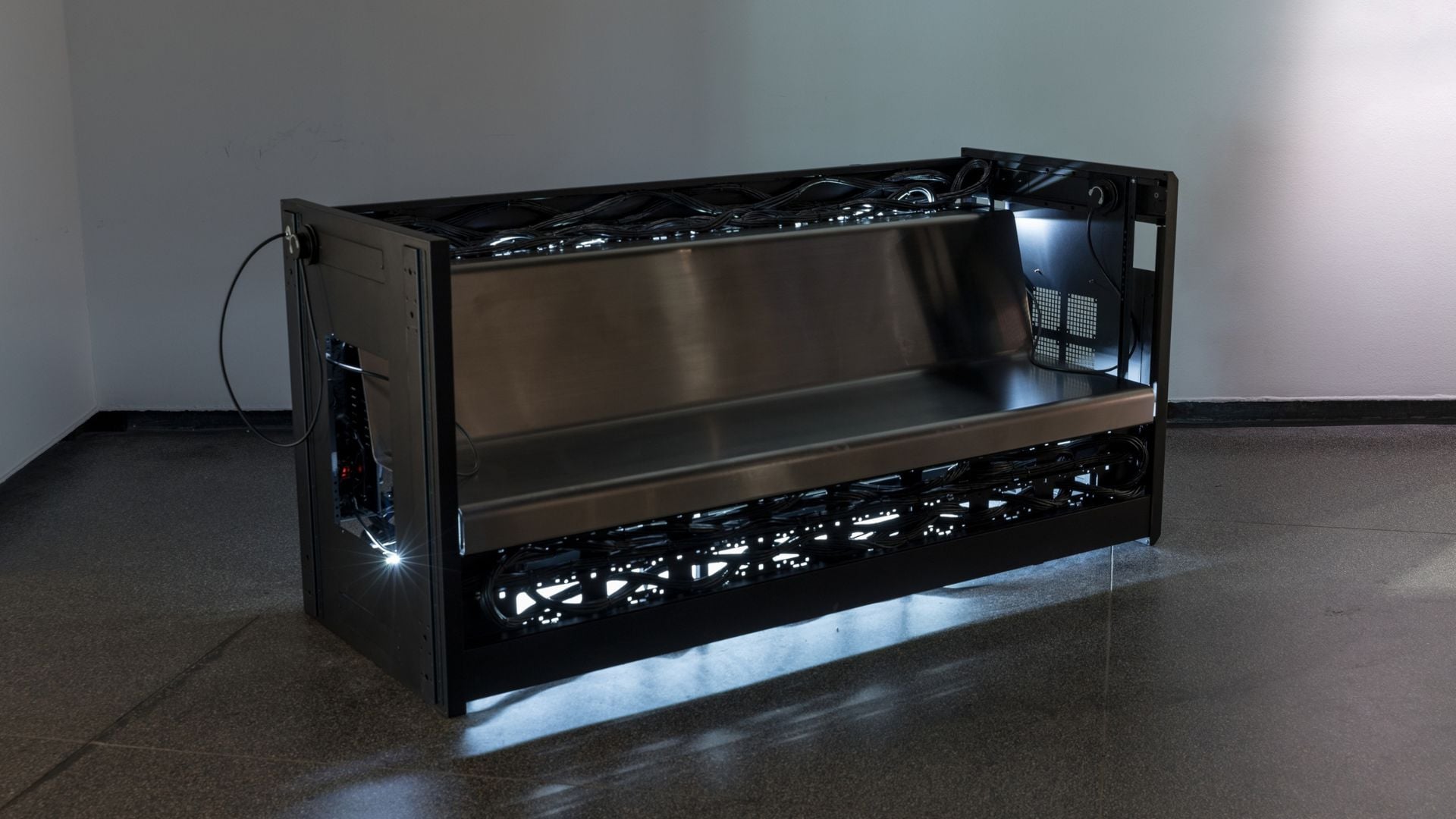
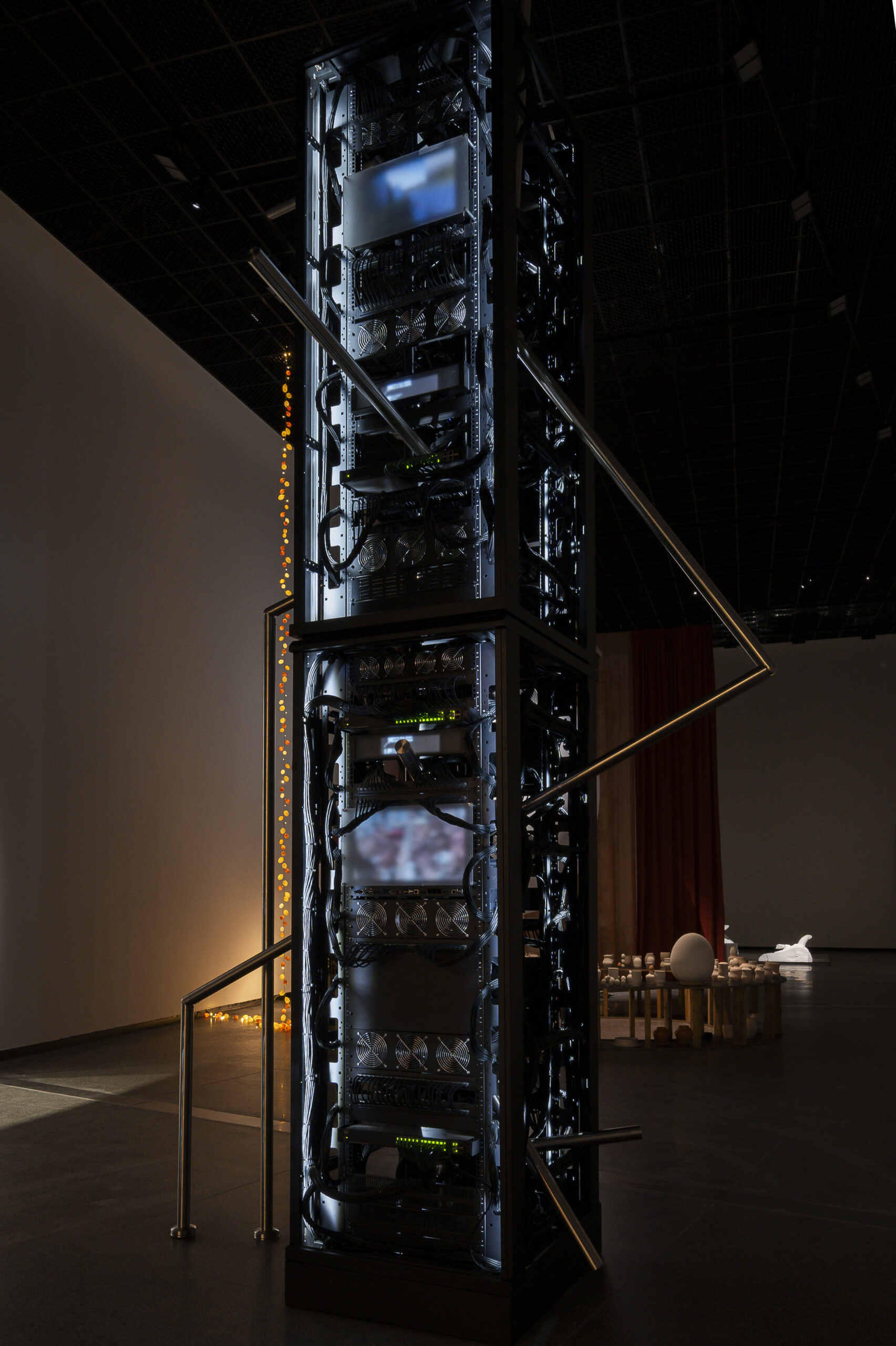
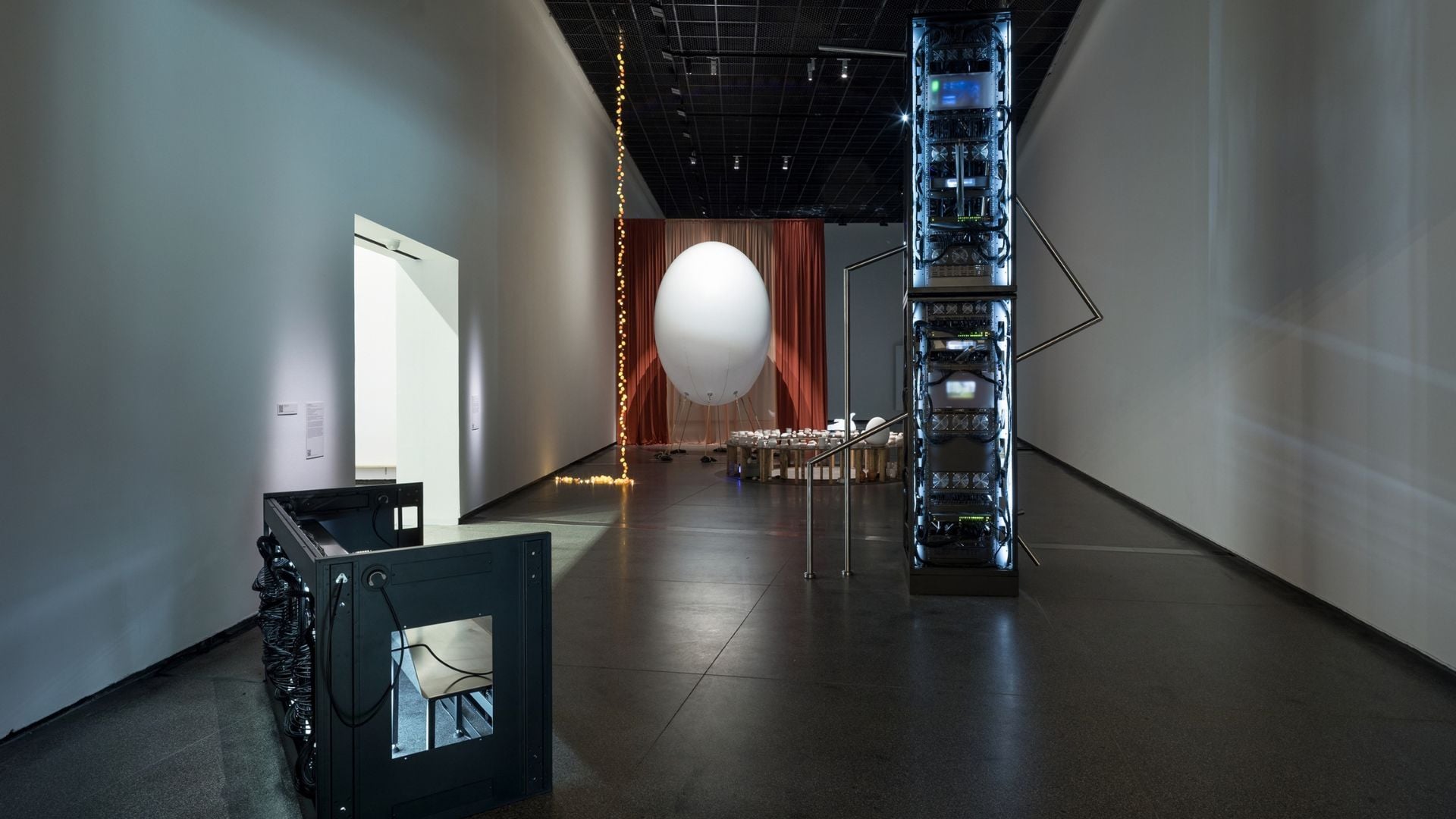
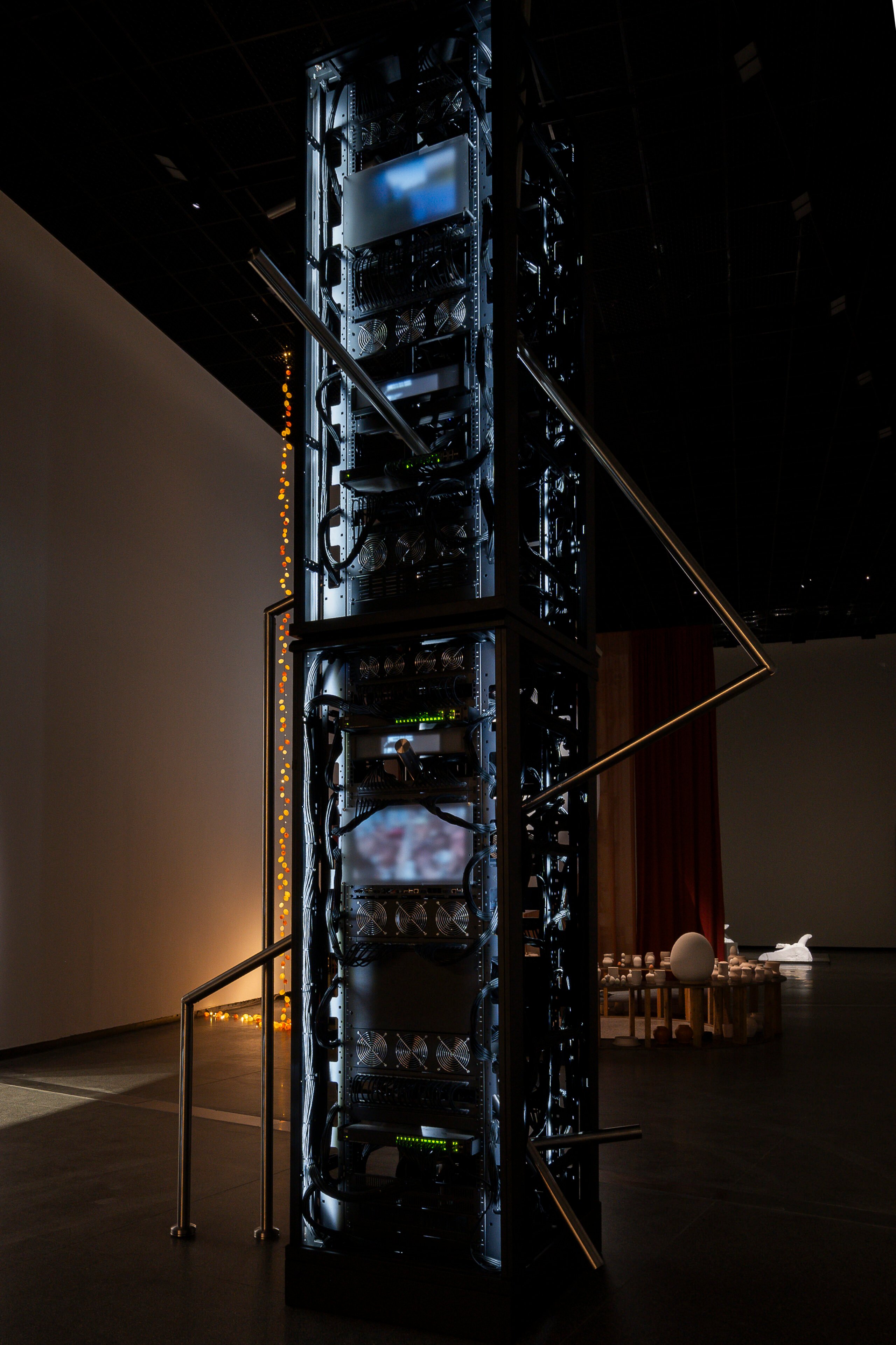
Amanda Bennetts, Axis Mundi 2026 (detail), installation view. Australian Centre for Contemporary Art, 2026. Supported by Sunshine Coast Council, through MadeSC and the Regional Arts Development Fund (RADF), and Noosa Council, through RADF—a partnership between the Queensland Government and local councils. Commissioned by the Australian Centre for Contemporary Art, ACCA, Naarm/Melbourne. Courtesy the artist. Photograph: Carmen Zammit

Amanda Bennetts Axis Mundi 2026

45RU data racks, steel, aluminium, data cable, stainless steel handrails and bench,
network switches, cooling fans, raspberry Pi’s, 8 screens with frosted acrylic, found
footage, video and sound, single-cup headphones
Data rack tower: 550.0 x 80.0 x 100.0 cm
Data rack seat: 100.0 x 210.0 x 80.0 cm
Overall dimensions variable
Sound: Joseph Burgess (Unregistered Master Builder)
Supported by Sunshine Coast Council, through MadeSC and the Regional Arts
Development Fund (RADF), and Noosa Council, through RADF—a partnership between
the Queensland Government and local councils
Commissioned by the Australian Centre for Contemporary Art, ACCA, Naarm/Melbourne
Courtesy the artist

AMANDA BENNETTS
born 1986, Walyalup/Fremantle
lives and works on Kabi Kabi Country/Sunshine Coast

Key ideas/concepts: Found object, installation, readymade, technology, AI, algorithms, data, techno-mysticism, divination, the body, health, critique of wellness culture, medical freedom and privacy

Amanda Bennett’s looming sculptural installation Axis Mundi 2026 takes its title from a Latin term, which the Romanian historian and philosopher Mircea Eliade co-opted in the late-1950s for his mythological concept of a sacred centre – a channel linking heaven and earth. Wrought from data racks and cabling, Bennetts’ tower stands as a contemporary altar to the pervasive powers of data centres, where we may reckon with the capacity for algorithms and AI to guide us through processes akin to divination.

Bennetts’ practice is grounded in her lived experience of a body in flux, shaped by chronic illness and disability. She often incorporates video, sound, and everyday objects to explore how illness, health, and wellness are influenced by culture, technology, and infrastructure. Axis Mundi draws our attention to our growing faith in the algorithm’s ability to foretell our bodily futures. The data rack tower is embedded with found footage showing images of descent at the top of the stack and ascent at its base. A single-cup headphone fastened to the data rack chair plays Bennett’s digital double, an

AI voice offering a sermon-like benediction. Through the collision of sacred cosmology, technological power and fascist monumentalism, Axis Mundi exposes the hidden systems behind our faith in data, questioning whether the algorithm can ever truly know the body it claims to read.

Discussion Questions

  • What emotions does this work evoke? How do you feel looking at it?
  • In what way has the artist Amanda Bennetts evoked references to the human body in this work?
  • What do you think about AI and algorithms? How do (or don’t) they influence your sense of identity?
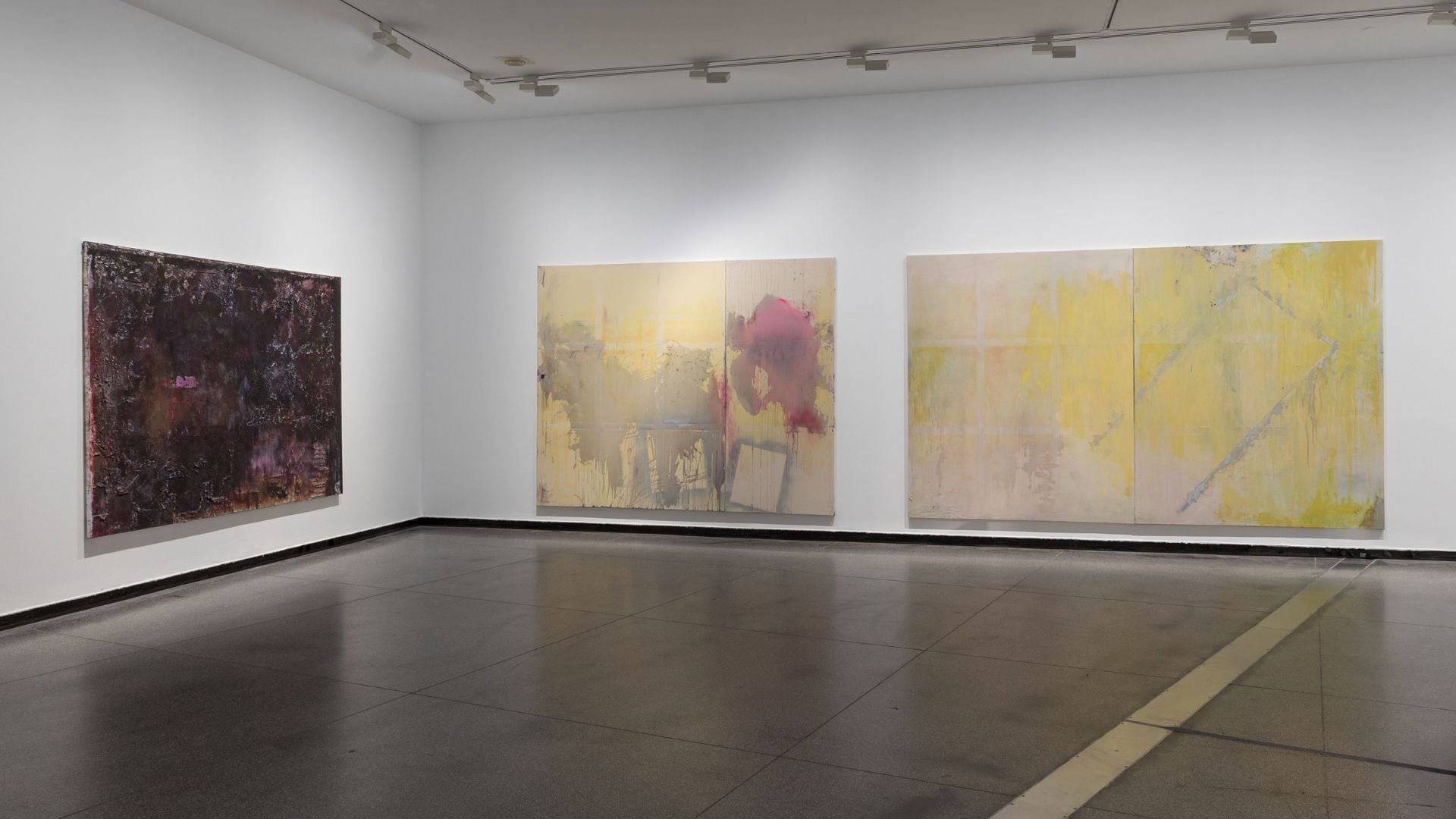
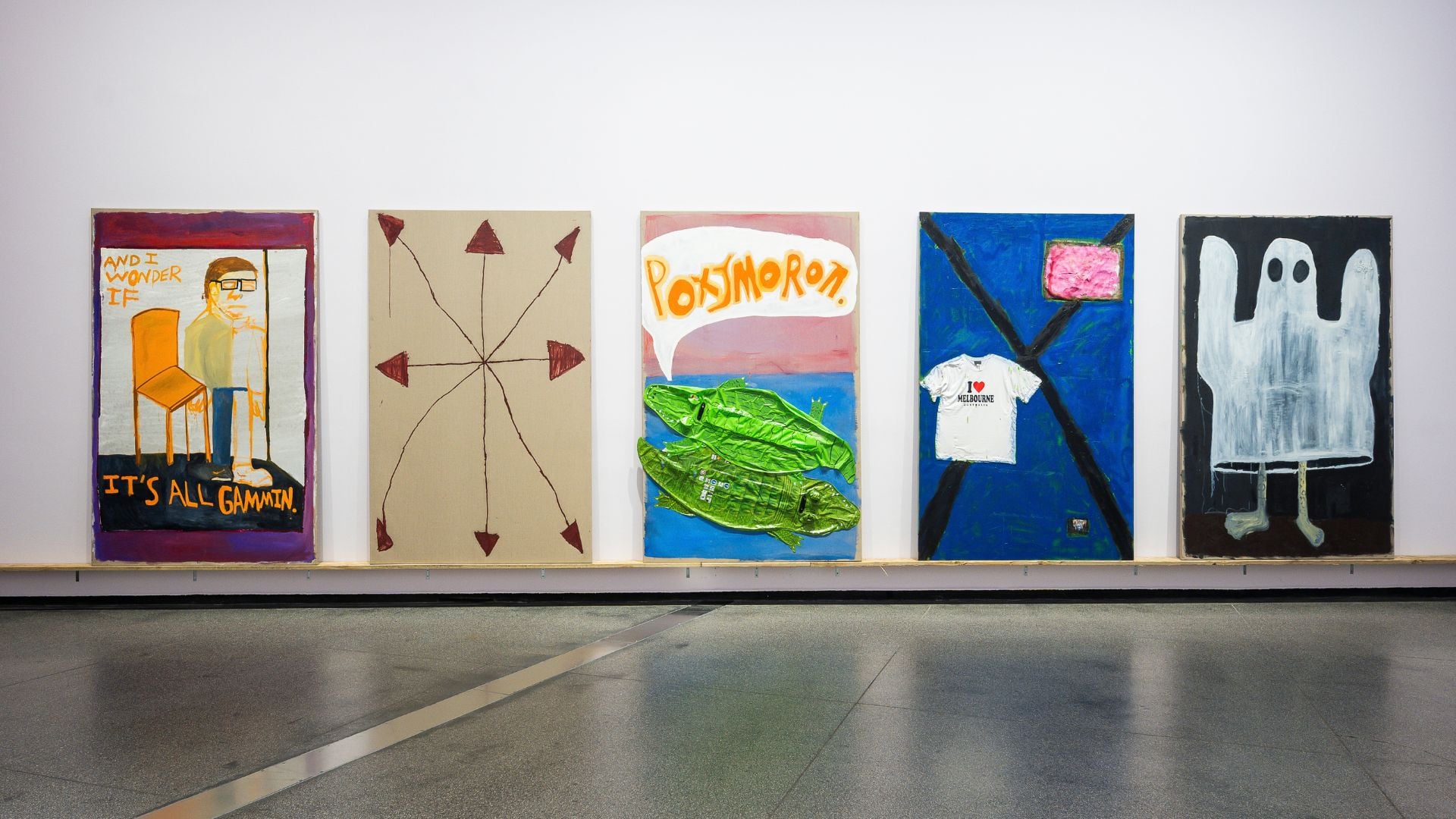
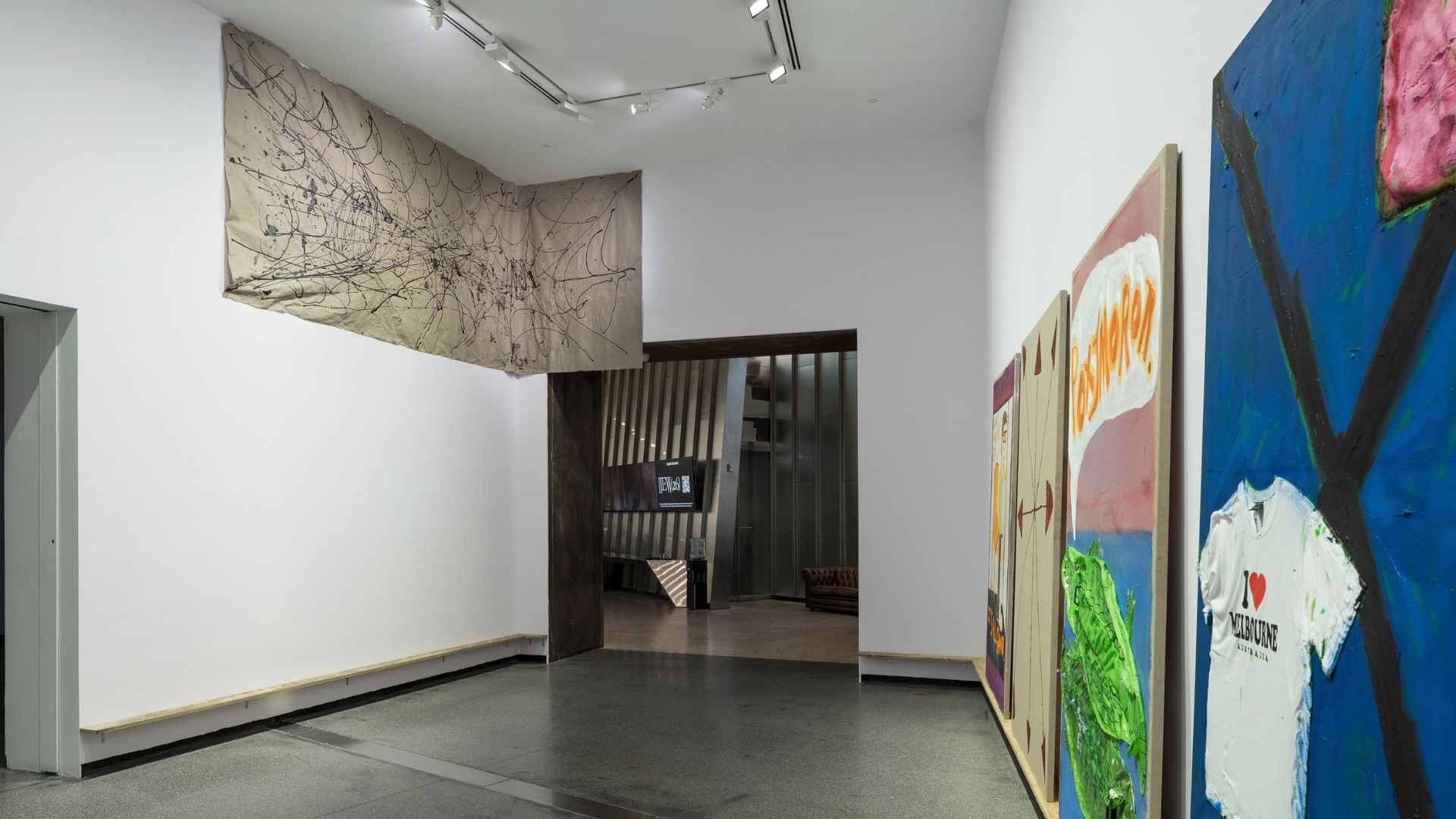
L-R: Nicholas Currie, I wonder if it’s all gammin. 2026, witchway 2026, (P)oxymoron 2026, big X 2026, self again 2026, installation view. Australian Centre for Contemporary Art, 2026. All works commissioned by the Australian Centre for Contemporary Art, ACCA, Naarm/Melbourne. All works courtesy the artist and Daine Singer Gallery, Naarm/Melbourne. Photograph: Carmen Zammit

Nicholas Currie (L to R) I wonder if its all gammin, witchway, (P)oxymoron, big X, self again 2026

oil on canvas
250.0 x 150.0 cm
All works commissioned by the Australian Centre for Contemporary Art, ACCA,
Naarm/Melbourne
All works courtesy the artist and Daine Singer Gallery, Naarm/Melbourne

NICHOLAS CURRIE
born 2001, Naarm/Melbourne
lives and works on Wurundjeri Woi Wurrung Country, Naarm/Melbourne

Key ideas/concepts: Painting, collage, readymade, culture, family, art history, symbols and iconography

A member of the Mununjali clan of the Yugambeh language group, with connections to Kuku Yalanji, Nicholas Currie’s new series of large-scale paintings bring together Blak humour, personal anecdotes and art historical references in his distinctive loose and intuitive style. His works draw on a recurring vocabulary of personal motifs: intersecting arrows lifted from his father’s doodles, as well as suggestive of Indigenous understandings of time as non-linear; inflatable crocodiles referencing his family totem; and a cartoon ghost evoking a nation haunted by colonial violence.

Within this apparent casualness is a sophisticated engagement with the histories of painting. Currie deftly reworks conventions associated with canonised Western painters Phillip Guston’s treatment of feet appears in self again 2026, and Mark Rothko’s luminous colour fields can be seen in (P)oxymoron 2026. Perhaps the most profound citations are from formative Aboriginal artistic predecessors, notably Gordon Bennett, Gordon Hookey and Destiny Deacon. In big X 2026, for example, a linear perspective diagram emerges beneath the gestural surface. A signature motif of Bennett’s practice, it becomes a reminder of how Western systems of knowledge have historically confined Indigenous experience. Currie takes cues from these formidable progenitors—conflating high and low cultural materials, co-opting borrowed motifs from a wide field and recasting them to create a new language that can speak of contemporary Aboriginal subjectivity.

Discussion Questions

  • This artist has worked on very large-scale canvases – why do you think this decision was made?
  • The artist also uses found materials in his work; what do you think he is trying to achieve by incorporating these? How does it affect the aesthetic qualities of the works?
  • How are the artist’s material choices linked to the concepts in his work?
NEW26, installation view, Australian Centre for Contemporary Art, Naarm/Melbourne 2026. Photograph: Andrew Curtis

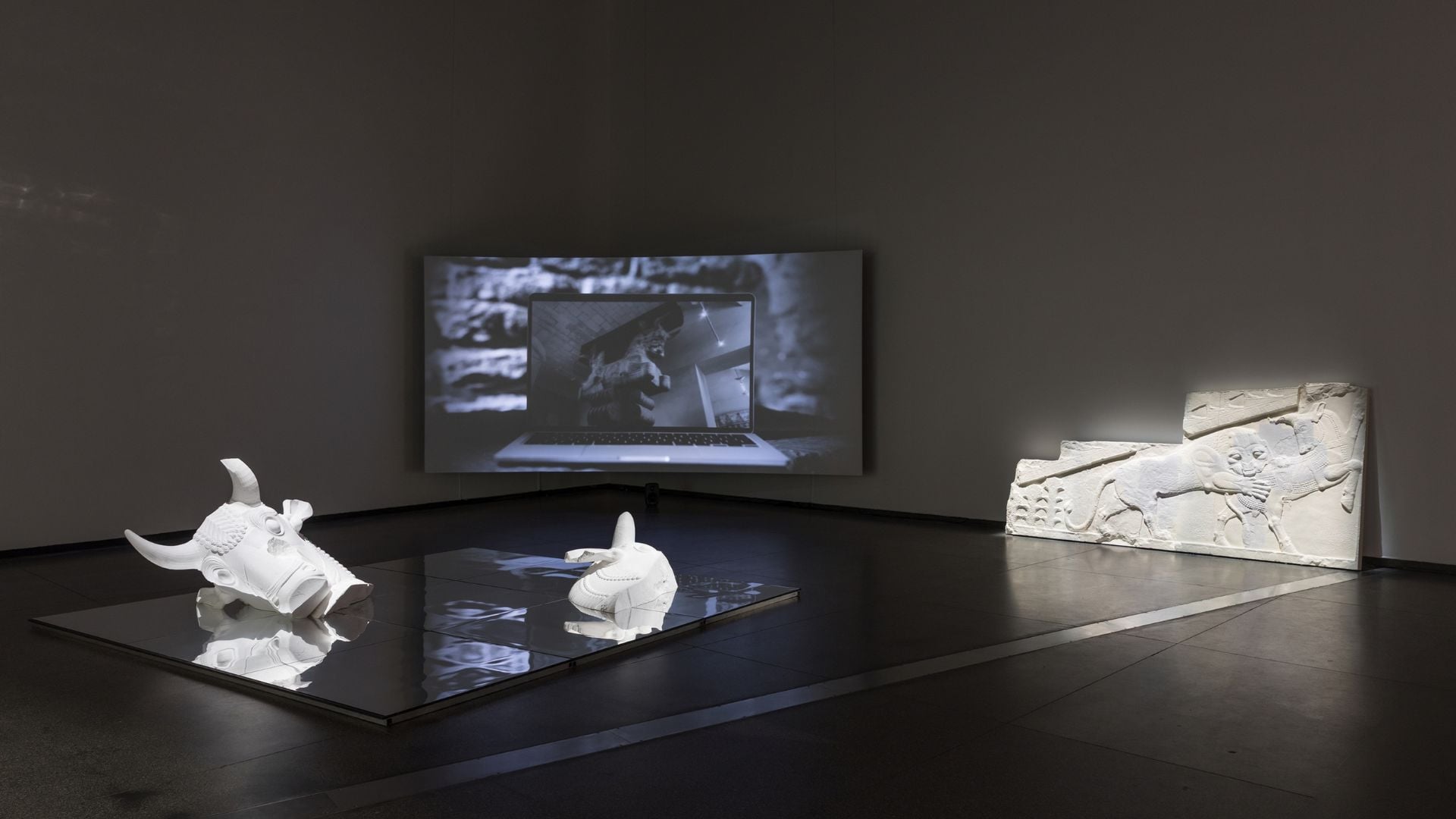
Naveed Farro The Palace series (installation view) 2025-2026

based on 3D model by Roozbeh Saadati
plaster, plastic, acrylic paint, XPS foam, mirror, MDF
330.0 x 330.0 cm
Special thanks from the artist to Sam Rowe as the design assistant, Mitchell Ransome and Mitchell Pollard for fabrication support, and Ed Turner and Vito from the MADA
DFAB team.
The Palace 2025–2026 is supported by Creative Victoria and Creative Australia
All works courtesy the artist

NAVEED FARRO
born 1993, Gimuy/Cairns
lives and works on Wurundjeri Woi Wurrung Country, Naarm/Melbourne

Key ideas/concepts: Installation, video, photography, sculpture, culture, heritage, ancestry, memory, loss, diaspora, artifacts, ruins, history, collections, immersive environments. 

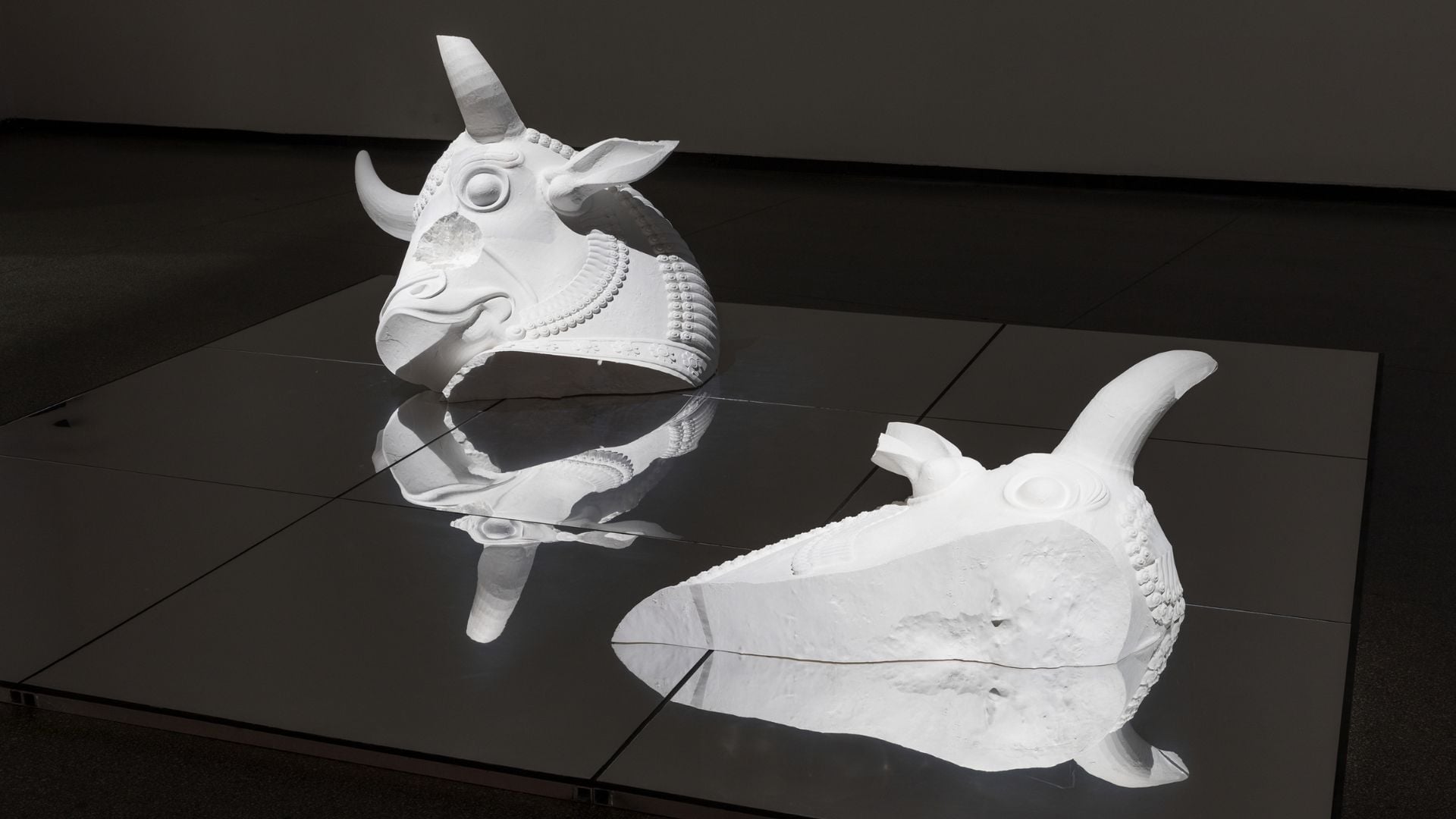
Naveed Farro’s iterative work The Palace series 2025–2026 is made up of Apadana Palace Rubble and Persepolis Wall – Buffed and incorporates film, photography, 3D-printed facsimiles and reconstructed friezes based on Iranian artefacts. Farro is a second generation Iranian-Australian who has not yet been able to return to his ancestral homeland. His practice is driven by an interest in how heritage, memory and cultural belonging can be mediated through immersive sculptural installations. 

The 1:1 bull-like fragments in his sculptural installation Apadana Palace Rubble 2025 are based on 3D models of the ancient palace of Persepolis in Iran. Farro has partly covered the 3D-printed plastic with plaster to give the objects a more realistic texture (similar to the ruins from the archaeological dig site in Iran). The mirrors that the bull heads are placed on are slightly warped to show that the artist is working with primarily virtual material processes to create the sculptures.

Persepolis Wall – Buffed 2025 is a 1:1 frieze recreation also based on Persepolis. It depicts a lion attacking a gazelle – a famous image that has been copied around Persepolis. The image is a kind of propaganda, meant to represent the power of the old kings, but it also symbolises Nowruz, the Persian New Year, which marks the spring equinox and the life cycle of nature.  In reference to protests that were also happening in Iran during the time he was making the work, Farro also graffitied the frieze and then covered it with grey blocks of paint – a kind of political censorship that you would see in cities and built public environments.

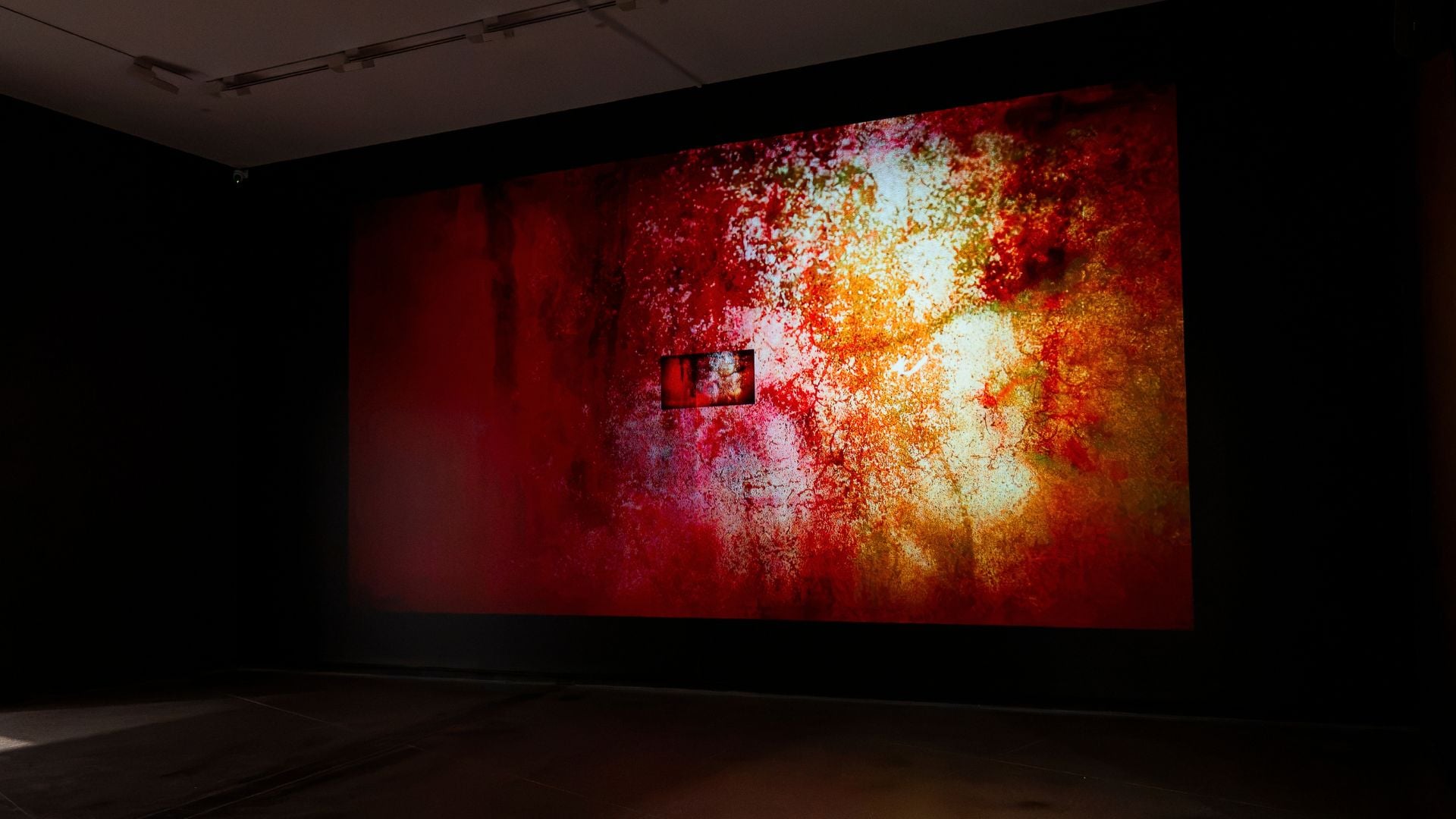
Accompanying the sculptural elements are a series of photographs and the most recent development in the series, a new film, No More Kings 2026. The film, commissioned for NEW26, was made to immerse the audience in the archaeological dig sites of Persepolis and Susa in Iran. The video shows the origins of the displaced white sculptural objects, connecting them back to their ancestral homeland and origin – a world Farro would love to visit himself.


Discussion Questions

  • Why has the artist used so many different art forms in this installation?
  • Do you think everything that’s being presented here is entirely true or accurate?
  • How does memory shape history? What about power?
  • How does this work explore pressing issues of our time?

For Teachers

Primary activities

Painting lab

In this activity, students respond to Nicholas Curries’s paintings and experiment with different painting techniques. The idea is that your painting is a record of everything that has happened to it. Every scrape, drip and bump is a clue to a creative decision you have made.

STEP 1 – Painting surface: Choose the surface for your painting. This can be thick paper, cardboard or canvas. You can paint on something unusual such as sandpaper or any found material such as old pillowcases, bedsheets, etc.

STEP 2 – Ground layer: You can use any paints available, e.g acrylic paints, watercolour.

Cover the surface with one colour or use a couple of colour blocks. Use big, fast brushstrokes and a big brush.

STEP 3 – Build: Build your work up by using additives. Additive means putting stuff on. Here the painting grows thicker, bumpier and more touchable. Nicholas is using materials like bitumen to create thick textured marks. You can create a gritty mix by adding sand or coffee grounds into your paint. You can also experiment with making marks with PVA glue, paint mix and then sprinkle sand, coffee grounds or salt on top. 

Experiment: does grit look different under paint or on top of it?

If you want to create shiny, rubbery textures in your work, you can pour a puddle of glue mixed with a little paint or add a pre-made dried glue blob onto your work.

STEP 4 – Mark and take away: The same paint looks completely different depending on how it lands on the surface. Continue your work by experimenting with different techniques. These techniques can add layers or uncover what’s underneath. You can try some of the following:

Dry brushing: Use a very small amount of paint so it catches only the top of the bumps and texture pops out.                                                                                            
Scumbling: Lightly scrub and drag pigment over an existing colour, creating a hazy, cloudy veil where the colour underneath peeks through.                                   
Splattering: Delicately speckle your surface with paint or pigment, like stars or rain; try two colours.                                                                                                               
Dabbing: Soft, dotty patches that build up like moss by using a brush or sponge.
Sgraffito: Paint a bright layer and let it dry. Paint a dark layer on top. While the top is wet, scratch lines, spirals and patterns with a skewer, fork or the end of a brush. The bright colour should appear.                                                                                      
Lifting: Brush on a wet wash of colour. Press a folded paper towel or tissue onto it and peel away. Try scrunched paper for crinkly shapes, or a clean damp brush to lift thin lines.                                                                                                                                                                      
Wax resist: Draw firmly with a candle, white crayon or oil pastel. Brush watery paint over the top. The wax pushes the paint away and your hidden drawing appears.
Experiment: Do sgraffito over a layer with glue and grit underneath. What does the scratch uncover?

Extension: Nicholas sometimes uses found materials in his painting such as pool toys and T-shirts. You can glue found materials onto your painting to add an extra layer of texture, include symbols and create meaning. You can use materials like textiles, photographs, pages from a book or magazine, old tickets, serviettes, food packaging, etc. You can continue to add layers of paint to partly cover the found materials you have used.

Australian Curriculum / Visual Arts / Years F-6

  • Explore examples of visual arts created by First Nations Australians AC9AVA2E02
  • Experiment with a range of ways to use visual conventions, visual arts processes and materials AC9AVA4D01
  • Use visual conventions, visual arts processes and materials to plan and create artworks that communicate ideas, perspectives and/or meaning AC9AVA6C01

Victorian Curriculum / Visual Arts / Levels F-6

  • Explore where, when, why and how people across cultures, communities, times, places and/or other contexts experience visual arts, including artworks created by Aboriginal and Torres Strait Islander Peoples (VC2AVA2E01)
  • Develop visual arts practices by exploring and experimenting with visual conventions, visual arts processes and materials to create artworks (VC2AVA4D01)
  • Plan and create artworks using visual conventions, visual arts processes and materials to communicate ideas, perspectives and meaning (VC2AVA6C01)

Curriculum Interpretation

This activity is devised in response to Nicholas Currie and Caesar Florence-Howards artworks in the exhibition NEW26.

By undertaking these activities, students:

  • Use contemporary artwork as an inspiration for their own artmaking.
  • Explore different painting techniques
  • Explore unusual materials

Secondary activities

Painting diary

In this activity, students respond to Nicholas Curries’s paintings and experiment with different painting techniques. The concept students are exploring is that of painting as a record of everything that has happened to it. Every scrape, drip and bump is a clue to a creative decision that’s been made. While creating their paintings, students will record their processes in a separate Visual Arts Journal, documenting and annotating the different stages and material explorations. 

STEP 1 – Painting surface: Choose a surface for your painting. Choose something that is not typically used as a surface for painting, such as sandpaper, pillowcases, bedsheets, etc. Document your surface (take a photo or include a small material sample) in your journal and explain what made you choose this particular material.

STEP 2 – Ground layer: You can use any paints available, e.g acrylic paints, watercolours.Cover the surface with one colour or use a couple of colour blocks. Use big, fast brushstrokes and a big brush. Record this stage in your journal either by taking a photo or by creating a small sample.

STEP 3 – Build: Build your work up by using additive techniques. Additive means putting stuff on. Here, the painting grows thicker, bumpier and more touchable. Nicholas is using materials like bitumen to create thick textured marks. You can create a gritty mix by adding sand or coffee grounds into your paint. You can also experiment with mark-making using a PVA glue paint mix and then sprinkling sand, coffee grounds or salt.  

Experiment: does grit look different under paint or on top of it?
If you want to create shiny, rubbery textures in your work, you can pour a puddle of glue mixed with a little paint or add a pre-made dried glue blob onto your work.

Record your findings in your journal by taking photos or by creating small samples.

STEP 4 – Mark and take away: The same paint looks completely different depending on how it lands. Continue your work by experimenting with different techniques. These techniques can add layers or uncover what’s underneath. Try some of the following:

Dry brushing: Use a very small amount of paint so it catches only the top of the bumps and texture pops out.
Scumbling: Lightly scrub and drag pigment over an existing colour, creating a hazy, cloudy veil where the colour underneath peeks through.
Splattering: Delicately speckle your surface with paint or pigment, like stars or rain; try two complementary or contrasting colours.
Dabbing: Soft, dotty patches that build up like moss by using a brush or sponge.
Sgraffito: Paint a bright layer and let it dry. Paint a dark layer on top. While the top is wet, scratch lines, spirals and patterns with a skewer, fork or the end of a brush. The bright colour should appear.
Lifting: Brush on a wet wash of colour. Press a folded paper towel or tissue onto it and peel away. Try scrunched paper for crinkly shapes, or a clean damp brush to lift away thin lines.
Wiping and dabbing away: Wipe through wet paint with a cloth wrapped around a finger or a baby wipe. Dab with a clean sponge to take colour off in soft patches.
Scraping back: Drag a plastic card across wet paint to squeegee it thin.
Wax resist: Draw firmly with a candle, white crayon or oil pastel. Brush watery paint over the top. The wax pushes the paint away, and your hidden drawing appears.

Experiment: Do sgraffito over a layer with glue and grit underneath. What does the scratching uncover?

Record your findings in your journal by taking photos or by creating small samples.

Extension: Nicholas sometimes uses found materials in his painting such as pool toys and T-shirts. In his practice, material and conceptual decisions are intertwined. You can glue found materials onto your painting to add an extra layer of texture and meaning, and include symbols and material ephemera that holds meaning for you. You can use materials like textiles, photographs, pages from a book or magazine, old tickets, serviettes, food packaging, etc. You can continue to add layers of paint to partly cover the found materials you have used. Record your material choices in your journal, take a photo or include a small material sample.
Australian Curriculum / Visual Arts / Years 7-10

  • Investigate the ways that First Nations Australian artists celebrate and challenge multiple perspectives of Australian identity through their artworks and visual arts practice AC9AVA10E02
  • Experiment with visual conventions, visual arts processes and materials to develop skills AC9AVA8D01
  • Select and manipulate visual conventions, visual arts processes and/or materials to create artworks that reflect personal expression, and represent and/or challenge ideas, perspectives and/or meaning AC9AVA10C02

Victorian Curriculum / Visual Arts / Levels 7-10

  • Investigate the ways that Australian artists, including Aboriginal and Torres Strait Islander Peoples, celebrate and challenge multiple perspectives of Australian identity through their artworks and visual arts practice VC2AVA10E02
  • Reflect on, analyse and document their own and others’ visual arts practices to inform decisions they make in the exploration, development and resolution of their artworks VC2AVA8D02
  • Select and apply visual conventions, visual arts processes and materials to create artworks that reflect personal expression, and communicate and/or challenge ideas, perspectives and meaning VC2AVA10C02


Curriculum Interpretation

This activity is devised in response to Nicholas Currie and Caesar Florence-Howards artworks in the exhibition NEW26.

By undertaking these activities, students:

  • Use contemporary artwork as an inspiration for their own artmaking.
  • Explore different painting techniques
  • Explore unusual materials
  • Record their process in their Visual Arts Journal

Terms of Use

This education resource has been produced by ACCA Education to provide information and classroom support material for education visits to the exhibition NEW26. The reproduction and communication of this resource is permitted for educational purposes only.

Supported by