R e a : c l a i m e d | Exhibition Kit

r e a : c l a i m e d continues ACCA’s commitment to presenting solo exhibitions of Australian artists at pivotal moments in their careers, affirming r e a’s place as a changemaker and senior figure in Australia’s contemporary art landscape. Playfully titled r e a : c l a i m e d, this thoughtful survey highlights the breadth and impact of r e a’s contemporary practice.

This presentation includes an exciting new commission alongside a curated selection of works spanning more than three decades, presented across three galleries. With trans rights increasingly under threat internationally, this is a timely exhibition that addresses themes of memory, representation, intersectionality, and positionality.

r e a’s work has illuminated the ongoing impacts of colonisation on queer and Indigenous bodies. Their important practice has positioned them as a vital and inspiring presence in the Australian art landscape, making sustained and significant contributions to experimental new media practice.

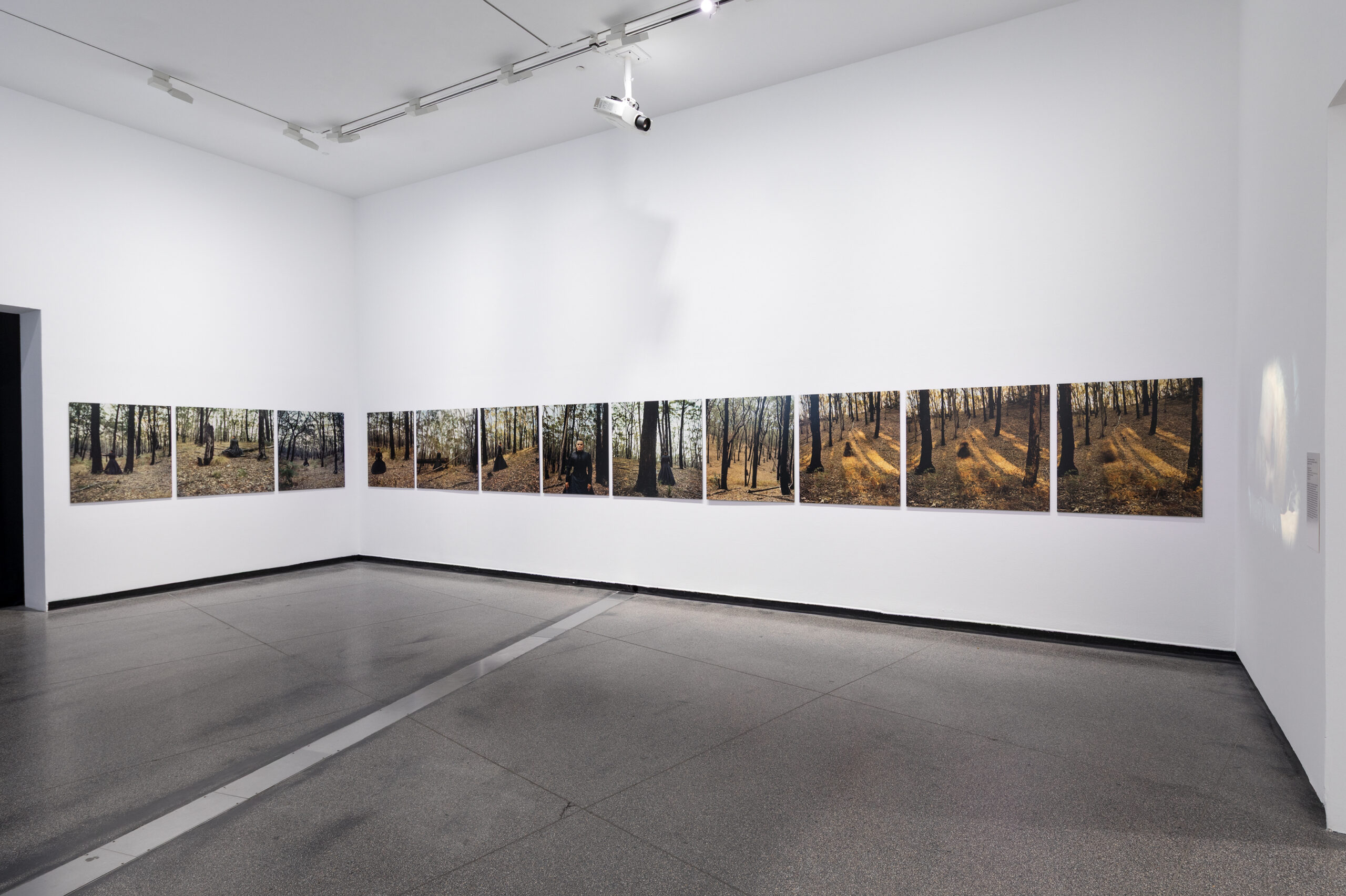
r e a was among the first Indigenous artists to exhibit at Australian Centre for Contemporary Art (ACCA), participating in Blakness: Blak City Culture in 1994. Working across photography, video, sound, performance, and multi-sensory installation, r e a explores their relationship to gender within the context of post-colonial Australia.

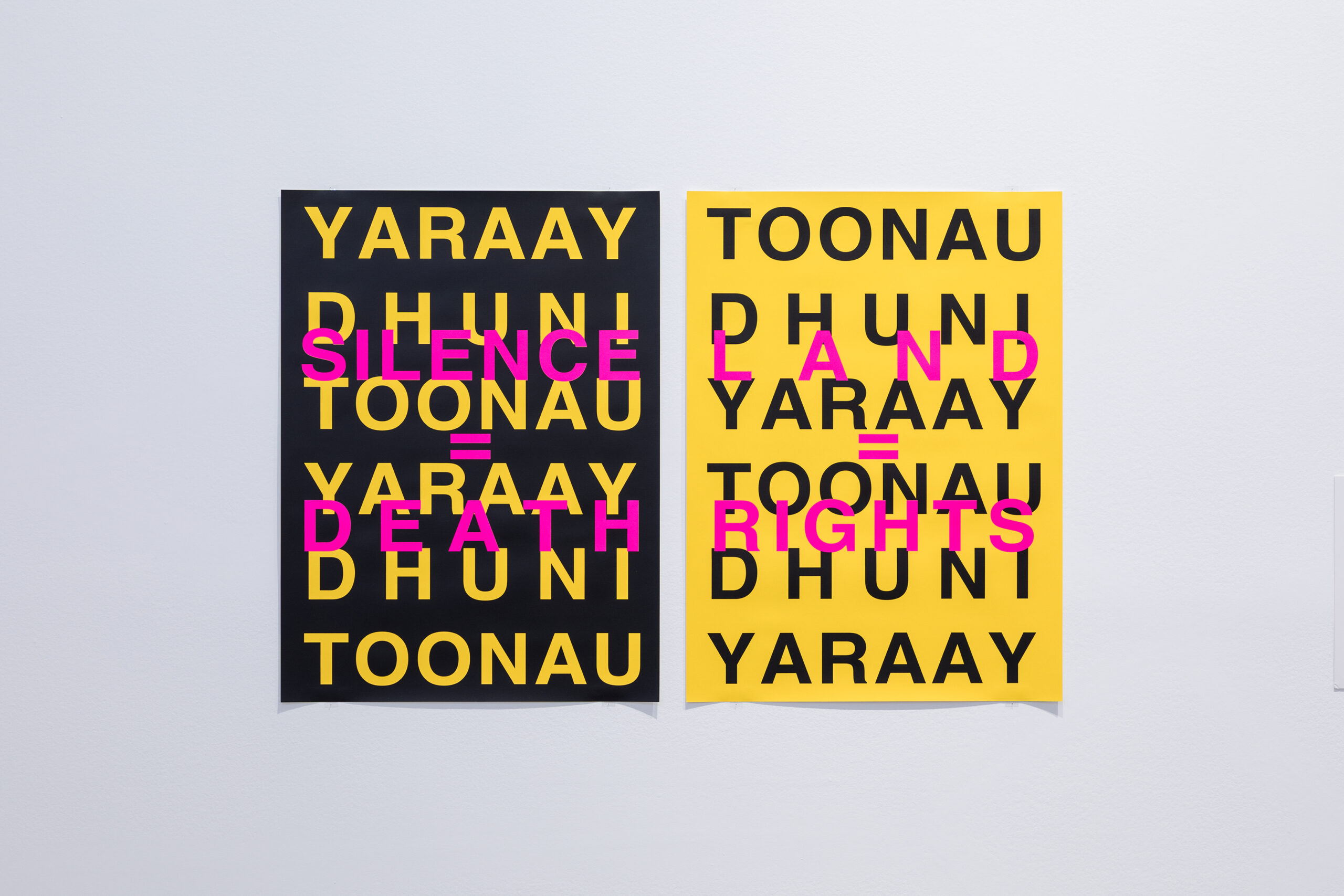
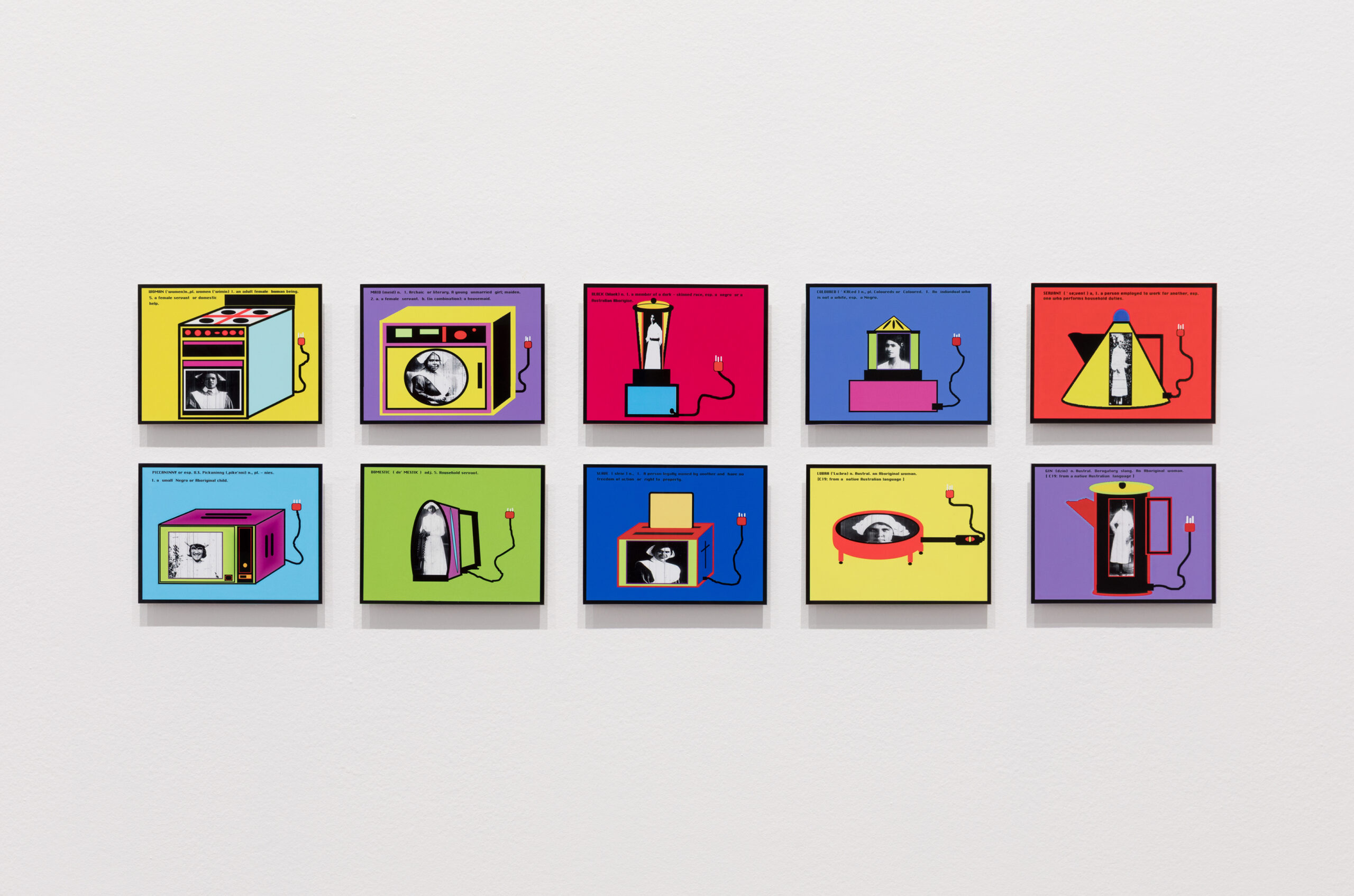
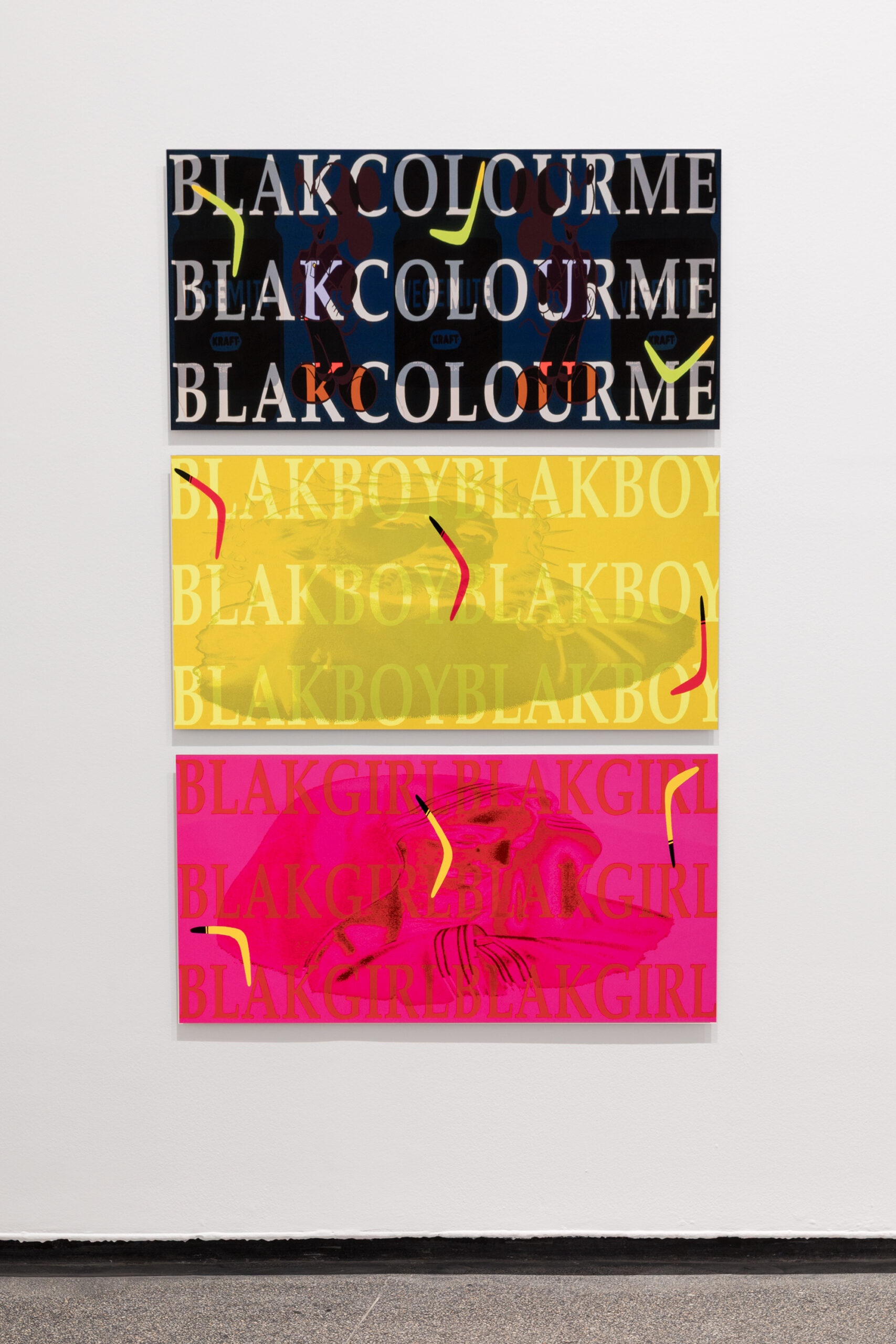
Archival storytelling is often central to r e a’s practice, which is deeply personal, generous, and provocative. Informed by new media theory, they layer text, image and colour to trace transgenerational histories and interrogate how attitudes toward race are embedded in both language and art.

This exhibition is part of ACCA’s 2025–2026 Summer Season highlighting the work of two leading artists: r e a and Tourmaline. These two exhibitions, r e a : c l a i m e d and Tourmaline: Transcendent,  while distinct, share an exploration of identity, history, and resilience during a critical moment for trans, Black, and First Nations people globally.

Artist: r e a
Curated by: Myles Russell-Cook

Advisory note: This exhibition contain material that references traumatic and distressing experiences, including moments in Queer history and the histories and lived experiences of First Nations peoples. References to Indigenous deaths in custody, forceable removal of children, forced domestic servitude, and youth suicide.

How to use this kit

This exhibition kit has been developed by ACCA Education to support learning in conjunction with the ACCA exhibition, r e a : c l a i m e d . One key artworks from the exhibition has been highlighted, with discussion questions to prompt students’ thinking. A secondary activity, mapped to the Victorian and Australian Curriculum, can be found in the For Teachers section. Upon request, VCE students and teachers can view Support Material for further reading and teaching notes drawn from ACCA’s VCE Programs. Link to a primary activity via the Tourmaline: Transcendent | Education Kit here.
About the Artist

r e a (they/them)
Born 1962 in Coonabarabran, New South Wales
Lives and works lives and works on Darug and Gundungurra Country, also known as the Blue Mountains.

For over thirty years, r e a – of the Gamilaraay, Wailwan and Biripi peoples – has been a leading figure in Indigenous new media art in Australia and internationally. An artist, curator, activist and educator, r e a’s work spans photography, video, digital media, film and installation, exploring Indigenous identity, representation and post-colonial experience. 

r e a is the artist’s full name. Due to academic conventions, some texts appear under r e a Saunders or Dr Regina M. Saunders (Morris). The name r e a noir is also used – referencing the colour black and a playful nod to Renoir.

Exhibition Wall Labels
ACCA Podcast: Artist Talk
 

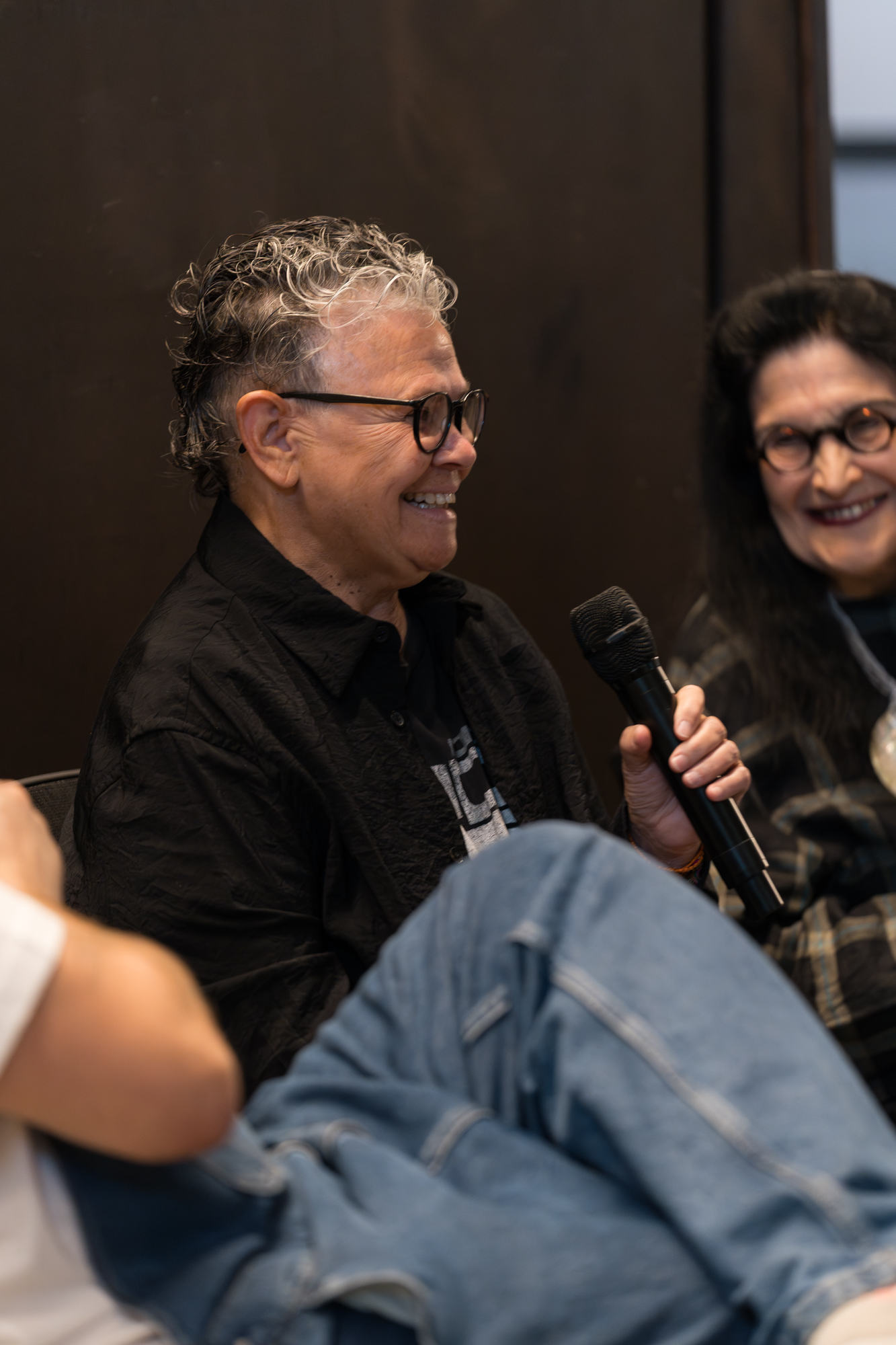
Artist talk and book launch for r e a : c l a i m e d 2025, Australian Centre for Contemporary Art, 2025. Photography: Astrid Mulder

Key Artwork

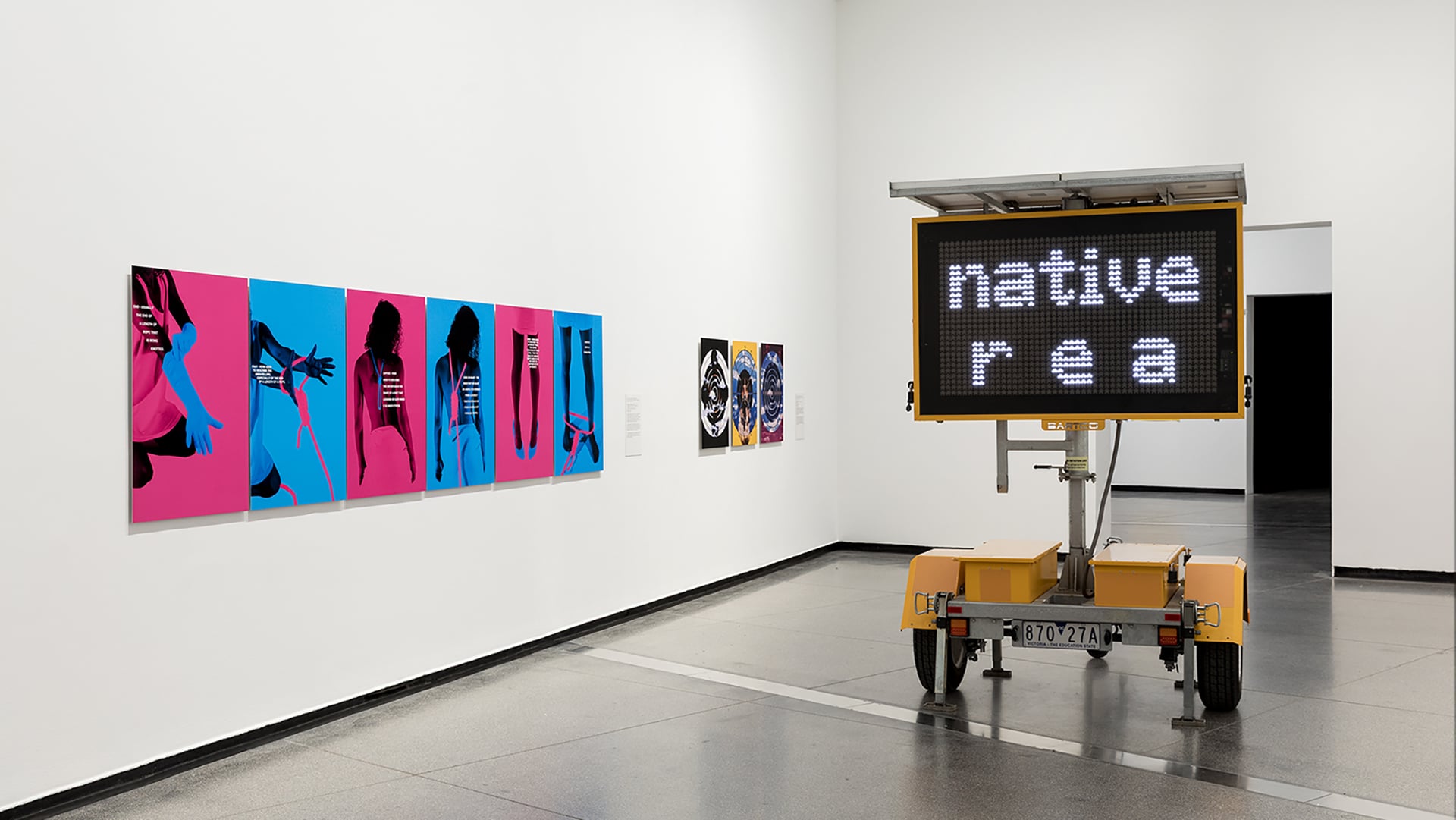
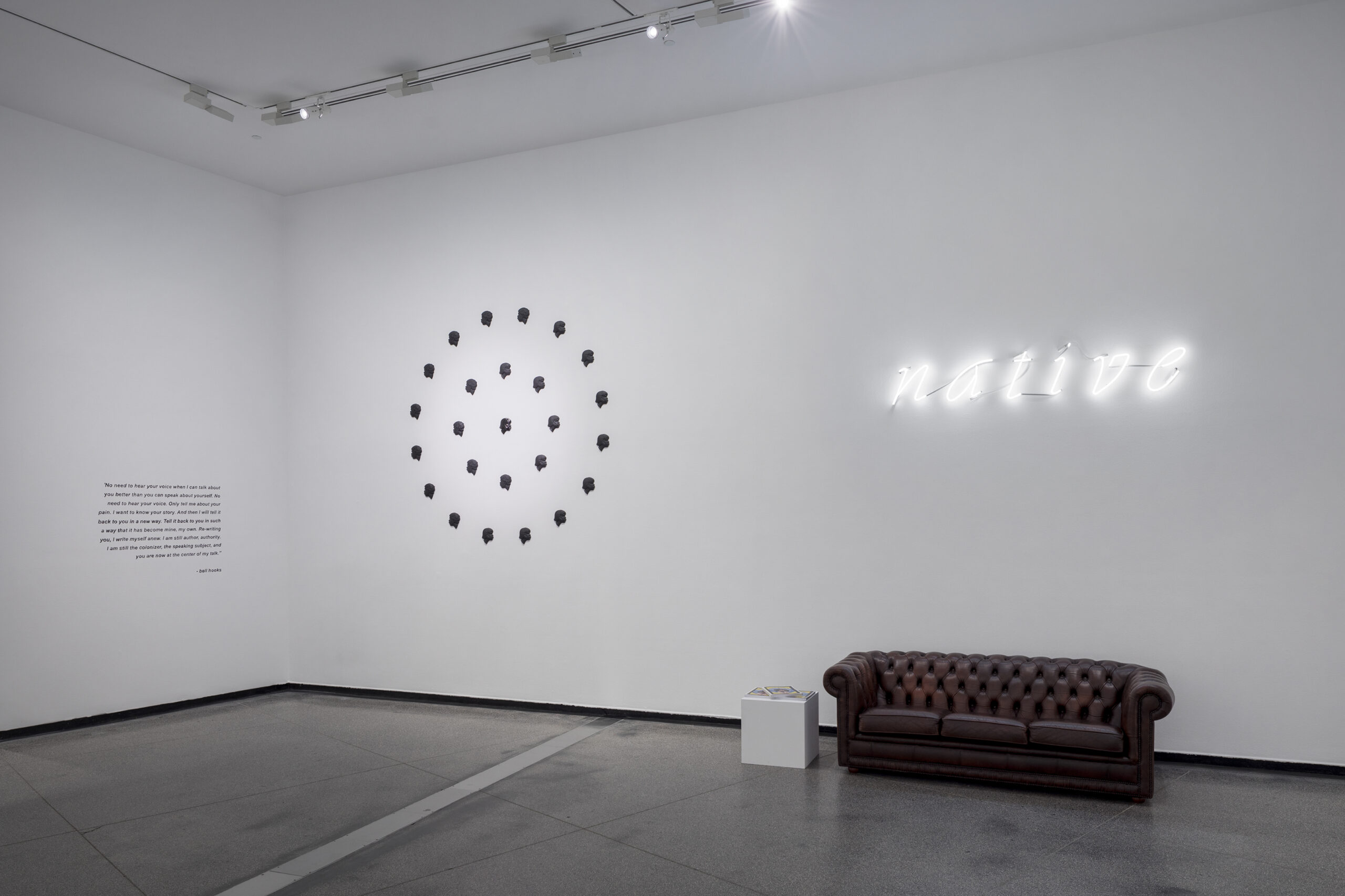
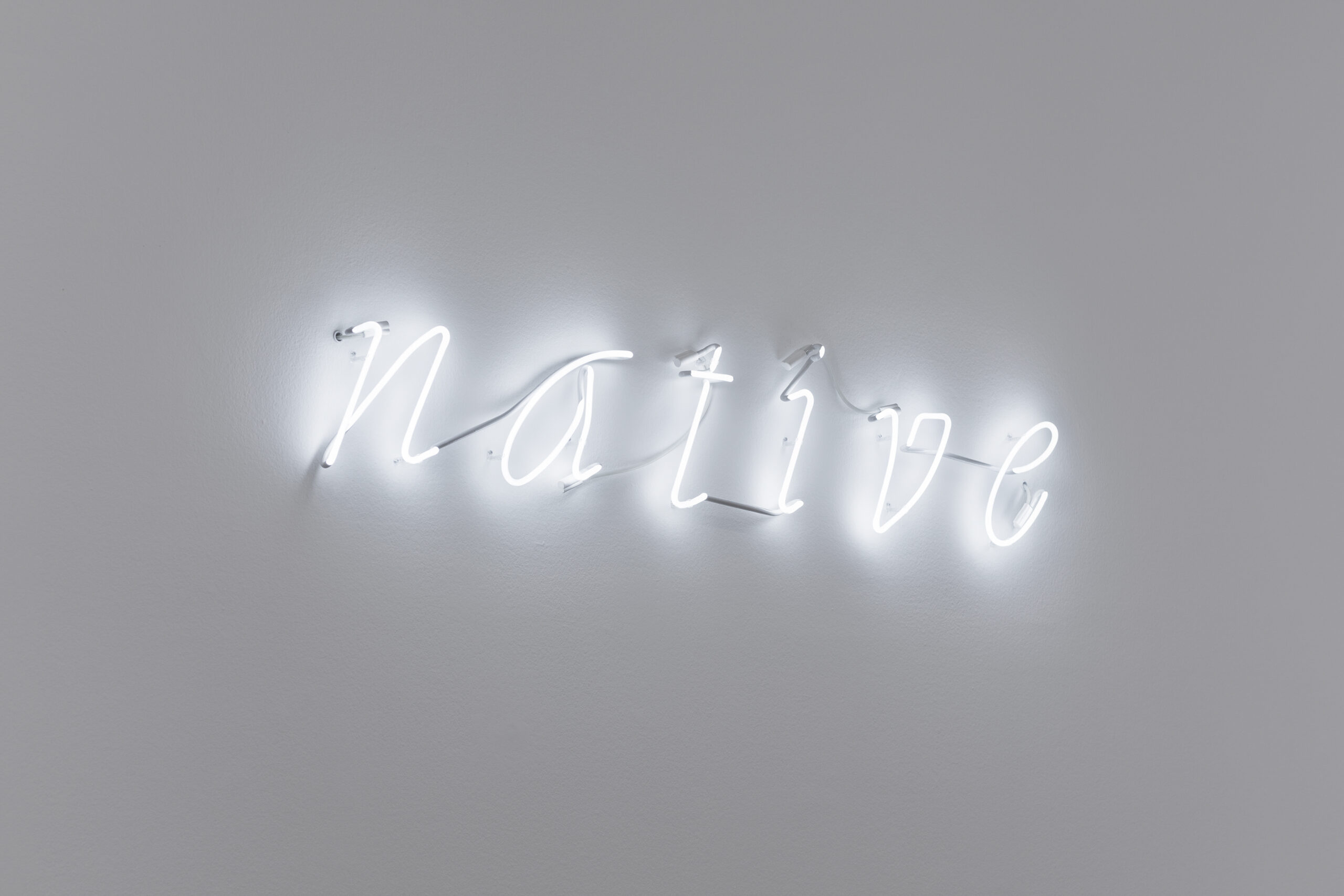
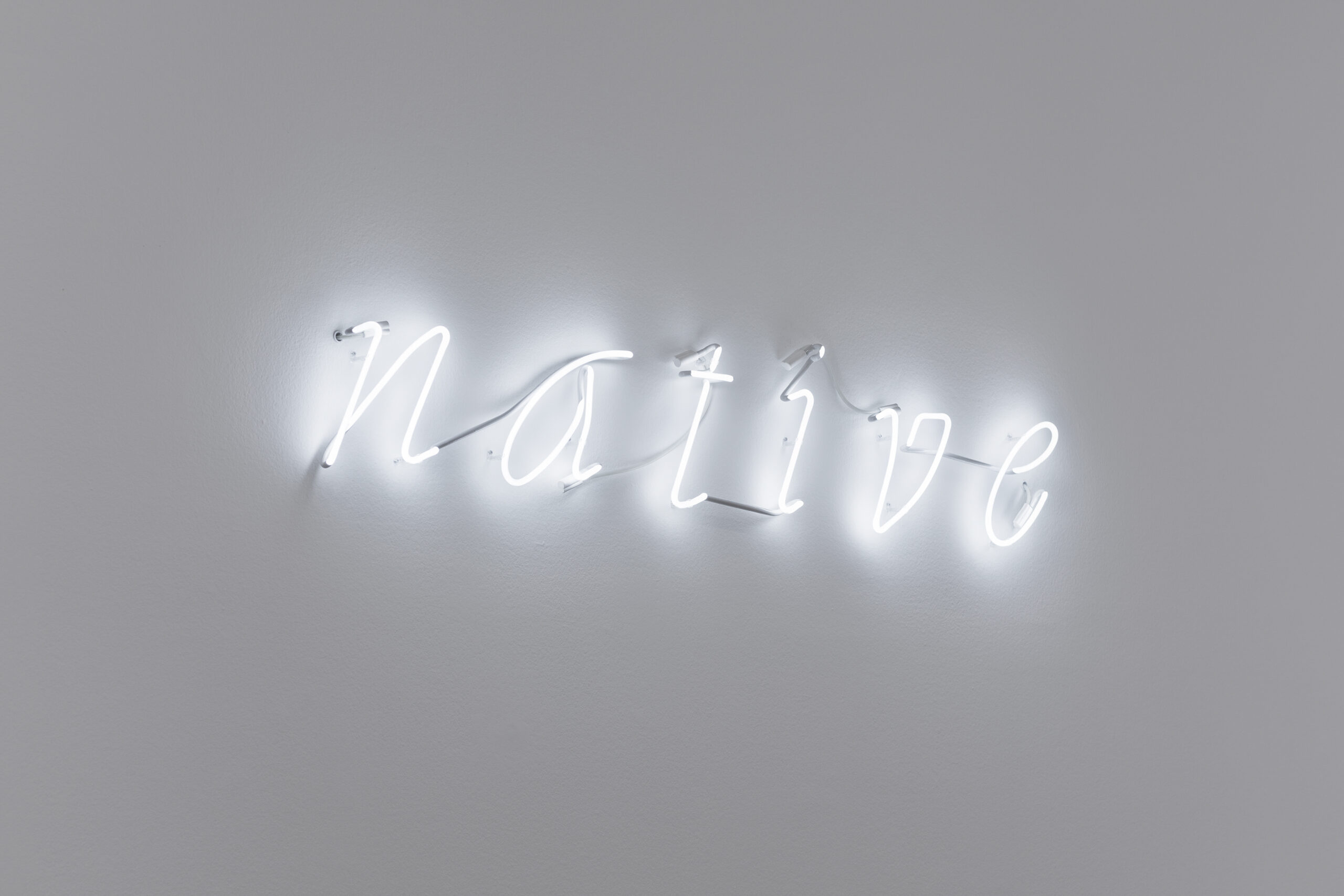
r e a, NATIVE 2013, installation view, Australian Centre for Contemporary Art, Melbourne, 2025
Courtesy the artist.
Photograph: Andrew Curtis.

r e a, Native, 2013

neon
Edition of 3 + 1AP
Courtesy the artist

Key ideas/concepts: Identity, language, history, First Nations rights, use of text in artworks, installation.

NATIVE 2013 is derived from r e a’s site-responsive installation, The Native Institute 371.979915, which featured sound, neon, and an LED sign. This installation was originally created as part of The Native Institute, Indigenous Artists’ Residency at Blacktown Art Centre in 2013. The white neon spells the word ‘native,’ continuing the artist’s exploration of reclamation and the reframing of language.

The glowing text underscores the legacies of its history, illustrating how a single word can evoke multiple meanings. The term ‘native’ speaks to various truths, including the use of language as a tool for discrimination and the systematic displacement of many First Peoples. This disruption has significantly impacted the ongoing practice of culture and language, prompting reflection on the values and priorities we let shape our present.

In this third iteration of the now-iconic work, r e a employs the language of the readymade to amplify voices, particularly those of young Aboriginal children, who are reclaiming their history and identity.

Discussion Questions

  • What do you think is significant about the artist’s use of materials in this work (e.g. the use of neon)?
  • How would you describe the effect of this word?
  • How important is the font that the artist has used? What aesthetic qualities or mood is created? 

For Teachers

Primary activities

Tourmaline: Transcendent | Education Kit for Primary Activity here

Secondary activities

Language and Identity

This activity is devised in response to artworks in the exhibition r e a : c l a i m e d, including NATIVE 2013. r e a’s practice explores the importance of language in shaping identity and shifting power. Many artworks by r e a, such as NATIVE 2013 incorporate actual text as a key component. In this activity, students will consider how to use words in artworks to express themes of identity.

Step One: For this activity, you will be invited to reflect on your identity. To start, brainstorm three words that capture (parts of) your identity. Write these down on a piece of paper, then, from each of these three words, see if you can think of three more words (or phrases). You should end up with 12 in total.

Step Two: Select the word (or phrase) that you feel best encapsulates your identity.

Step Three: Consider how you could create an artwork that incorporates your word, perhaps using a material which emphasises its meaning. You might like to use traditional art materials (e.g. paint, clay, collage) or a natural material (e.g. leaves, sticks, rocks) or an everyday material (e.g. an object you have in your bag, bedroom or home). Trial a few different materials before selecting the most effective.

Step Four: r e a often creates installations to display their artworks (for example, NATIVE 2013 is a neon sign hung on a wall). Consider how you can transform your artwork and word into an installation. Are there different materials you could add to the work to create a more immersive experience for the viewer? How important is the site where you place the work?

Step Five: Once you are happy with your work and its display, share this with your teacher and classmates. Reflect on whether your sense of identity has shifted at all during the activity.

Extension: r e a often works with digital media. What happens if you take a photograph of your work, or scan it (if it’s 2D)? Try manipulating the resulting image using programs like Adobe Photoshop. Experiment with saturating the colours or changing the palette completely. Add layers of text or imagery and trial distorting or camouflaging your subject matter. What new meanings and aesthetics emerge with this experimentation?

Australian Curriculum / Visual Arts / Years 7-10

  • Investigate the ways that artists across cultures, times, places and/or other contexts develop personal expression in their visual arts practice to represent, communicate and/or challenge ideas, perspectives and/or meaning (AC9AVA10E01)
  • Experiment with visual conventions, visual arts processes and materials to develop skills (AC9AVA8D01)


Victorian Curriculum / Visual Arts / Levels 7-10

  • Investigate the ways that artists across cultures, times, places and other contexts develop personal expression in their visual arts practice to communicate and/or challenge ideas, perspectives and meaning (VC2AVA10E01)
  • Develop and refine skills in visual arts practices using visual conventions, visual arts processes and materials to create artworks (VC2AVA8D01)
  • Select and apply visual conventions, visual arts processes and materials to create artworks that reflect personal expression, and communicate and/or challenge ideas, perspectives and meaning (VC2AVA10C02)

Curriculum Interpretation

This activity is devised in response to artworks in the exhibition r e a : c l a i m e d, including NATIVE 2013.

By undertaking these activities, students:

  • Experiment with the use of text in visual works.
  • Explore and express their identity through artmaking processes.
  • Develop their use of a range of media spanning manual to digital.

Terms of Use

This education resource has been produced by ACCA Education to provide information and classroom support material for education visits to the exhibition r e a : c l a i m e d The reproduction and communication of this resource is permitted for educational purposes only.

Supported by